
Which mattress to buy comes down to three things: how you sleep, how much you weigh, and how hot you run. Side sleepers usually do best with medium foam or hybrid, back sleepers with medium-firm, and stomach sleepers with firmer support. Match those, then check the trial period and warranty before you pay.
Start With Your Sleep Position
Sleep position decides how much pressure lands on your shoulders, hips, and lower back, so it is the best first filter. Firmness scales are not standardized, so a “6” at one brand can feel different at another. Treat the numbers below as a starting range.
| Main position | Firmness (1-10) | What to look for |
|---|---|---|
| Side | 4-6, medium-soft to medium | Contouring foam or a hybrid with pressure relief at shoulders and hips |
| Back | 5-7, medium to medium-firm | Supportive coils or dense foam that keeps the lower back from sinking |
| Stomach | 6-8, medium-firm to firm | A firm, thinner comfort layer so the hips do not dip |
| Combination | 5-6, medium | Responsive foam, latex, or a hybrid that is easy to move on |
If you mostly sleep on your side, our guide to the best mattress for side sleepers goes deeper on pressure relief and firmness.
Pick the Mattress Type
The construction affects feel, temperature, durability, and price more than the brand name does. These are the main types:
- Memory foam: Slow-contouring, quiet, and good at isolating motion from a partner. It can sleep warm, and some people dislike the “sinking in” feeling. Gel or open-cell foams may help with heat, though results vary by model.
- Hybrid: A coil base with foam or latex on top. It tends to have more bounce, better edge support, and more airflow than all-foam beds. It is also heavier and often costs more.
- Innerspring: Coils with a thin comfort layer. Usually cheaper and cooler, but often less pressure relief and more motion transfer.
- Latex: Springy, durable, and naturally breathable. Quality latex is heavy and generally pricey.
- Adjustable air: Lets you and a partner set different firmness levels. It has more parts that can fail, so read the warranty.
If you are unsure, a medium-feel hybrid is the safest middle ground for most adults, because it balances support, airflow, and contouring.
Factor In Body Weight and Sleeping Partners
Weight changes how a mattress feels. A bed that feels medium to a 150-pound sleeper can feel soft to someone at 250 pounds, and firm to someone at 110 pounds.
- Under about 130 pounds: You may not compress thick, dense foam enough to get contouring, so a softer or medium-soft bed often feels better.
- About 130 to 230 pounds: Most mattresses are designed around this range, so standard medium and medium-firm models usually work as described.
- Over about 230 pounds: Look for a firmer feel, higher-density foam, and a thicker build (often 12 inches or more) with sturdy coils. Check the manufacturer’s stated weight limit, which varies by model.
For couples, combine both people’s needs. Motion isolation (foam or pocketed-coil hybrid) helps light sleepers. If one of you is much heavier, a hybrid with strong edge support keeps the bed from tilting toward one side. Size matters too: a queen is 60 x 80 inches, which gives each person about the width of a crib mattress. A king (76 x 80) gives more room, and a California king is 72 x 84 for tall sleepers.
Hot Sleepers, Back Pain, and Other Special Cases
Sleeping hot: Hybrids, innerspring, and latex generally sleep cooler than dense memory foam. A breathable cover and a moisture-wicking mattress protector also help. Room temperature matters as much as the mattress, and many sleep experts suggest a bedroom around 65 to 68 degrees F.
Back pain: There is no single best firmness. The goal is a neutral spine, where your hips do not sink far below your shoulders. Medium to medium-firm works for many people, but if pain is persistent, talk to a doctor before assuming a new mattress will fix it.
Allergies: Look for a zippered, washable cover and use a protector. Latex and tightly constructed foam can resist dust mites better than older, fiber-filled beds.
Grounding products: Some shoppers want a conductive sheet or pad on top of their bed. That is an add-on, not a replacement for a supportive mattress, and the health claims are still debated. If you are curious, see our roundup of grounding mattress pads for what to check before buying.
Budget Memory Foam: What to Expect
If you need a bed for a guest room, kid’s room, or first apartment, a boxed memory foam mattress can be a reasonable choice. Expect thinner support cores and shorter lifespans than premium beds, but not necessarily a bad night’s sleep.
For examples in this category, see our reviews of the VIBE 12-inch gel memory foam full mattress and the Novilla twin 12-inch memory foam mattress. Both cover size, feel, and what to check before ordering.
With any budget foam bed, open it as soon as it arrives, give it time to expand (many brands say up to 72 hours), and note the return window. Some foam beds have a slight odor at first that fades with airing out.
What to Check Before You Buy
- Trial period: Many online brands offer around 100 nights, but terms vary. Confirm whether returns are free, whether you must keep it a minimum number of days, and whether donation or pickup is required.
- Warranty: Ten years is common. Read what counts as a defect. Many warranties only cover sagging beyond a set depth, often around 1 to 1.5 inches, and may be voided by stains or the wrong base.
- Base compatibility: Slatted frames often need slats spaced no more than about 3 inches apart. Some adjustable bases and platform frames have specific requirements, so check the mattress maker’s guidance.
- Thickness and materials: Look for foam densities and layer thickness on the product page. Vague terms like “premium foam” tell you little. Check certifications such as CertiPUR-US for foam, and ask how the brand meets flammability rules, since some use fiberglass-free barriers.
- Delivery and removal: Ask about white-glove delivery and old mattress haul-away, especially for heavy hybrids. Local rules for disposal vary.
- Your room: Measure doorways and stairwells. A queen hybrid can weigh well over 100 pounds.
Common Mistakes to Avoid
- Buying on the showroom test alone. A few minutes on a store mattress will not reveal how it feels after eight hours. Use the trial period, and give it at least two to four weeks to adjust, unless it is clearly painful.
- Choosing firm because it sounds healthier. A bed that is too firm can create pressure points, especially for side sleepers.
- Ignoring the base. An old sagging box spring or weak frame can undermine a new mattress and may void the warranty.
- Skipping a protector. Stains can void warranties. A waterproof protector is cheap insurance.
- Keeping an old mattress too long. Many last roughly 7 to 10 years, depending on type, weight, and care. Replace sooner if you wake up sore or see visible sagging.
If you are setting up a new place and mattress shopping is one of several big purchases, our new homeowner checklist can help you decide what to buy first.
Our Top Picks
Ready to shop? These are the top-rated options from our hands-on roundup, Best Memory Foam Mattresses of 2026.

Sweetnight CoolNest 14 Inch King Size Cooling Memory Foam Mattress | Medium Feel, CertiPUR-US Certified, Pressure Relief
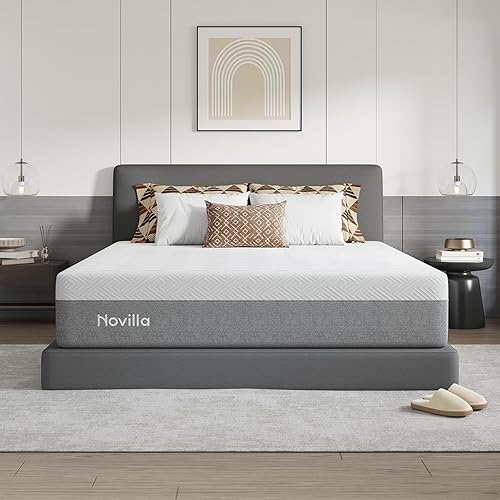
Novilla Bliss 14 Inch King Gel Memory Foam Mattress - Cooling Comfort, Pressure Relief, CertiPUR-US Certified, 10-Year Warranty

Novilla Queen Size Mattress 14 Inch Gel Memory Foam Mattress for Cooling Night Sleep & Pressure Relief, CertiPUR-US Certified
As an Amazon Associate we earn from qualifying purchases. Product prices and availability are accurate as of the date/time indicated.
Frequently Asked Questions
What is the best type of mattress for most people?
A medium-feel hybrid is the safest choice for most adults. It combines coil support with foam or latex comfort layers, offers decent airflow, and suits several sleeping positions. Personal factors like weight, partner motion, and heat can still point to foam or latex.
How long should I try a new mattress before returning it?
Give it two to four weeks unless it causes clear pain, since your body needs time to adjust. Check the brand’s return policy first, because some require a minimum trial period or charge fees for pickup.
How often should I replace my mattress?
Many mattresses last about 7 to 10 years, depending on materials, body weight, and care. Replace yours sooner if it has visible sagging, you wake up stiff or sore, or you sleep better elsewhere.
Is a firmer mattress better for back pain?
Not necessarily. The best mattress keeps your spine in a neutral line, which for many people means medium to medium-firm. Too firm can create pressure points. If pain is persistent, see a doctor rather than relying on a new mattress alone.