The best place to put an air purifier is an open spot in the room you use most, with about 12 inches of clear space from walls and furniture unless your manual says otherwise. In a bedroom, that usually means a few feet from the bed, with the airflow not aimed at your face. Size matters as much as position.
What is the best spot in a room for an air purifier?
Pick a spot where room air can flow freely into the intake and the cleaned air can spread across the room. Use this checklist:
- Open floor or a low, stable table. Not wedged behind a couch, chair or curtain.
- Close to where you spend time. Near the bed, sofa or desk beats the far corner of the room.
- Near the source when there is one. A spot near the pet’s favorite area or the kitchen doorway catches particles before they spread.
- Away from competing airflow. Keep it clear of heating and cooling vents, fans and open windows.
- Near an outlet. The cord should not cross a walkway or run under a rug.
A purifier only cleans air that passes through its filter. Room air mixes constantly, so the exact spot matters less than keeping the intake and outlet unblocked and the unit sized for the room. If pet hair and dander are your main concern, see our best air purifiers for pets for models built for that job.
How much space does an air purifier need around it?
Follow the manual first, because clearance depends on where the intake and exhaust are. Many brands say about 12 inches from walls and furniture. Some recommend 2 to 3 feet, and at least one brand says its floor-standing units need only 3 to 4 inches on each side.
| Design | Placement rule of thumb |
|---|---|
| Rear or side intake | Keep the intake side about 12 inches or more from the wall, or whatever the manual lists |
| 360-degree intake | Can usually sit closer to a wall or corner; confirm in the manual |
| Top exhaust | Keep shelves, curtains and ceilings clear above it |
| Front exhaust | Point it into the room, not at a wall, a bed or a seat |
If you cannot find a number, use 12 inches as a starting point and move the unit farther out if airflow sounds restricted or the fan runs louder than usual.
Best place to put an air purifier in a bedroom, living room or kitchen
| Room | Best spot | Avoid |
|---|---|---|
| Bedroom | 3 to 6 feet from the head of the bed, on the floor or a low stand | Airflow blowing on your face; blankets near the intake |
| Living room | Open side of the seating area, clear of couch backs | Behind furniture or curtains |
| Kitchen | A few feet from the cooktop, on a dry surface or the floor | Beside the sink, over heat, in splatter range |
Bedroom
Use 3 to 6 feet from the head of the bed as your default. A nightstand is fine if the unit is quiet on its low or sleep setting and the exhaust is not aimed at you. Guides disagree on exact distances because noise, exhaust direction and room layout vary, so move it until you no longer feel a draft.
Living room and open-plan spaces
Place it on the side of the seating area that has the most open floor. In an open-plan space, size the purifier for the whole connected area, not just the sofa corner. In a studio, put it between the bed and the living area.
Kitchen
Keep it a few feet from the stove so heat and grease do not reach it, and run the range hood while you cook. For cooking smoke, a purifier with strong smoke performance helps; our best air purifiers for smoke roundup covers that.
Should an air purifier sit on the floor or higher?
For most floor-standing models, the floor or a low stable surface is fine. Advice on height ranges from 2 feet to 6 feet depending on the source, but there is no single proven number. Room air circulates, so an unblocked intake matters more than height.
- Default: floor-standing units stay on the floor; tabletop units go on a sturdy table or dresser.
- Raise it slightly: to about 2 to 3 feet if the unit sits behind low furniture or a pet could block it.
- Do not: put it on a bed, couch or other soft surface, or on a high shelf where it can tip or the cord can be pulled.
Only tabletop models are designed to sit on furniture. Check the manual for the intended placement.
How do I size an air purifier for the room it goes in?
Use the AHAM 2/3 rule: the smoke CADR (clean air delivery rate) should be at least two-thirds of the room’s floor area in square feet, assuming an 8-foot ceiling. That works out to about 5 full air changes per hour.
Worked example: a 12 by 15 foot bedroom is 180 square feet. Two-thirds of 180 is 120, so you want a smoke CADR of at least 120. With a 9-foot ceiling, multiply by 9/8: 120 x 1.125 = 135.
| Room area | Minimum smoke CADR (estimate, 8-ft ceiling) |
|---|---|
| 100 sq ft | 67 |
| 150 sq ft | 100 |
| 200 sq ft | 133 |
| 300 sq ft | 200 |
| 400 sq ft | 267 |
Method: room area x 2/3, rounded up. A purifier too small for the room will not clean the area it is advertised for, and no placement fixes that. If you are still choosing, our guide on how to choose an air purifier covers CADR and filters.
What placement mistakes make an air purifier work worse?
- Pushing a rear-intake unit into a corner. It starves the intake. Only do this if the manual says it is fine.
- Hiding it behind a couch or curtains. Fabric blocks airflow and can sit against the intake.
- Placing it next to an HVAC vent or fan. Strong competing airflow can pull cleaned air away before it mixes.
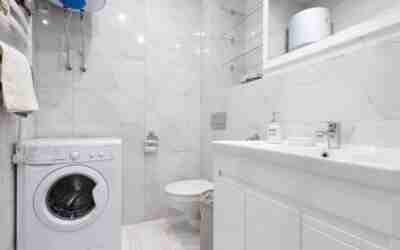
- Putting it near a humidifier or steam. Moisture is bad for electronics and filters. Keep it dry and away from bathrooms and sinks.
- Leaving the door open. The unit then works on the hallway too. Keep doors and windows closed when you can.
- Expecting one unit to clean the whole house. One purifier treats one room or one connected open area.
- Blocking the exhaust with bedding or a wall. The air has to leave freely.
Should you run it all the time, and what safety rules apply?
Yes, running it continuously on a low or auto setting works better than short bursts, since particles keep entering the room. Our guide on how long an air purifier should run per day explains the schedule.
- Cords: plug straight into a wall outlet when possible. Do not run the cord under a rug or share an overloaded extension cord.
- Ozone: avoid ozone-producing or ionizer models in bedrooms. Choose HEPA models without ozone generation, such as units certified by the California Air Resources Board (CARB).
- Water: keep it away from sinks, tubs and humidifier mist.
- Kids and pets: place it where they cannot tip it, chew the cord or block the vents.
- Filters: unplug before changing them and follow the replacement interval in the manual, since it varies by model.
Our Top Picks
Ready to shop? These are the top-rated options from our hands-on roundup, Best Air Purifier For Home of 2026.

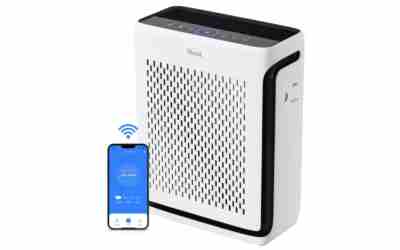
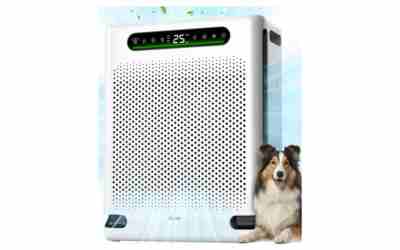
LEVOIT Vital 100S-P Air Purifier for Home, Pets, and Bedroom, Up to 1073 Sq Ft, HEPA Sleep Mode, Washable Pre-Filter, Smart Air Quality Monitor, White

KNKA APH4000 Air Purifier for Home Bedroom, HEPA Sleep Mode Air Cleaner with Washable Pre-Filter, AHAM Verified, AQI Display, Pet Mode for Pet Dander, Dust & Pollen, Up to 1,695 Sq Ft, White

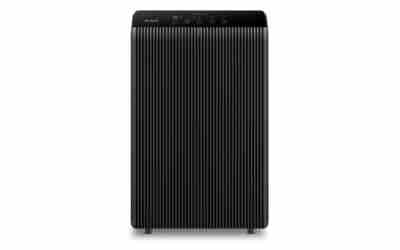
FreAire HAP605 Air Purifier for Large Rooms
As an Amazon Associate we earn from qualifying purchases. Product prices and availability are accurate as of the date/time indicated.
Frequently Asked Questions
Can I put an air purifier in a corner?
Only if the manual allows it. Units with 360-degree intake can often sit near a wall or corner, but rear-intake models need open space behind them. If the fan gets louder or airflow feels weak, move it a foot or more out.
Can I put an air purifier on my nightstand?
Yes, if it is a compact model made for tabletops, it is stable, and it is quiet on its sleep setting. Make sure the exhaust is not aimed at your face and that blankets or books do not cover the vents.
Does an air purifier work with the door open?
It still filters air, but it also pulls in air from the hallway and nearby rooms, so it takes longer to clean the room. Keep doors closed when you can, or choose a higher CADR if the space is connected.
Is one air purifier enough for a whole house?
Usually not. A portable unit cleans the room or connected open area it is sized for. For a whole home, use one properly sized unit in each room you care about most, such as the bedroom and main living area.
{“@context”: “https://schema.org”, “@type”: “FAQPage”, “mainEntity”: [{“@type”: “Question”, “name”: “Can I put an air purifier in a corner?”, “acceptedAnswer”: {“@type”: “Answer”, “text”: “Only if the manual allows it. Units with 360-degree intake can often sit near a wall or corner, but rear-intake models need open space behind them. If the fan gets louder or airflow feels weak, move it a foot or more out.”}}, {“@type”: “Question”, “name”: “Can I put an air purifier on my nightstand?”, “acceptedAnswer”: {“@type”: “Answer”, “text”: “Yes, if it is a compact model made for tabletops, it is stable, and it is quiet on its sleep setting. Make sure the exhaust is not aimed at your face and that blankets or books do not cover the vents.”}}, {“@type”: “Question”, “name”: “Does an air purifier work with the door open?”, “acceptedAnswer”: {“@type”: “Answer”, “text”: “It still filters air, but it also pulls in air from the hallway and nearby rooms, so it takes longer to clean the room. Keep doors closed when you can, or choose a higher CADR if the space is connected.”}}, {“@type”: “Question”, “name”: “Is one air purifier enough for a whole house?”, “acceptedAnswer”: {“@type”: “Answer”, “text”: “Usually not. A portable unit cleans the room or connected open area it is sized for. For a whole home, use one properly sized unit in each room you care about most, such as the bedroom and main living area.”}}]}