
A 16-inch roasting pan, roughly 16 x 13 x 3 inches, is the safest choice for most turkeys up to about 20 pounds. Pick your roasting pan size for turkey by the bird’s weight, leave about 2 inches of space around it, then confirm the pan fits your oven with the rack in place. A chart and fit checks follow.
Roasting pan size for turkey by weight
Pan sizes are sold by length, usually 14, 16 or 18 inches. Use the chart as a starting point, not a guarantee, because birds vary in shape and brands measure pans differently.
| Turkey weight | Typical pan size (L x W x depth) |
|---|---|
| Up to about 12 lb | 14 x 10 x 2.75 in |
| 12 to 16 lb | 15.75 x 12 x 3 in |
| 16 to 20 lb | 16 x 13 x 3 in |
| 20 lb and up | 18 in or longer, if your oven allows (see below) |
If you cook a turkey once or twice a year and want one pan that covers most birds, buy the 16-inch size. It handles a typical 14 to 20 pound holiday turkey and still fits in most standard ovens.
Check whether the listed size is the inside of the pan or the outside including handles. Handles can add several inches to the length, which matters when you test oven fit.
How much room the turkey needs in the pan
Aim for roughly 2 inches of open space around the bird. Sources differ a little, with some saying 1 to 3 inches, but the idea is the same: the turkey should sit comfortably inside the pan without legs or wings hanging over the edge, and without being so loose that drippings spread thin and scorch.
A worked example: say your 18 pound turkey measures about 15 inches from neck end to tail end and about 10 inches across the breast (measure yours, because shapes vary). Adding about 2 inches on each side points to an inside pan size near 19 x 14 inches. Few home pans are that big, so a 16-inch pan is a tight but common fit, and that is fine as long as nothing overhangs and the sides are not crowded against the bird.
Shape matters as much as weight
- A wide-breasted bird needs a wider pan than a long, narrow one of the same weight.
- Tucking the wing tips and tying the legs loosely makes the bird more compact.
- Measure the bird at its longest and widest points before you pick a pan.
Turkeys over 20 pounds
A 22 to 24 pound bird often needs an 18-inch pan or larger, and that may not fit your oven. Options: spatchcock the turkey so it lies flat, break it into breast and leg quarters across two pans, or roast two smaller birds. Larger birds also take much longer to cook, so plan the schedule around a thermometer, not the clock.
How deep should a turkey roasting pan be?
Look for sides about 2 to 3 inches tall. Advice online conflicts, so here is the trade-off:
- Sides taller than about 3 inches can shield the thighs and the lower part of the bird from oven heat and airflow, so skin and dark meat brown more slowly.
- Sides shorter than about 2 inches brown well but hold few drippings. A 20 pound bird can release a lot of juice, and a shallow pan makes spills more likely when you move it.
Two to three inches is the middle ground: enough room to catch drippings for gravy, low enough for hot air to reach the bird. If your pan is shallow, do not overfill it with broth or water. A small amount of liquid in the bottom (a cup or two) can keep drippings from burning, but it is optional.
Check the pan fits your oven before you buy
The pan has to fit the oven, not just the bird. Do this before shopping:
- Measure the interior width, depth and height of your oven. Many standard 30-inch ovens have an interior around 24 inches wide, but this varies by model, so measure yours.
- Measure the door opening, since the pan with handles must pass through it.
- Set the rack in the lower third of the oven. Leave at least 2 inches between the top of the turkey and the heating element or broiler. Tall birds in tall pans can get close.
- Leave about an inch or more between the pan and the oven walls so air can circulate. A pan that touches the walls causes uneven browning.
- Stack the pan, rack and an imaginary bird: add the pan depth, the rack height and the bird’s height, then compare with the space under the upper heating element.
If you have a double oven or a smaller wall oven, the 14-inch pan and a bird under about 14 pounds may be the realistic limit. Convection ovens and ovens with a bottom heating element hidden under the floor can behave differently, so check your manual for rack guidance.
Rack, material and handles
Use a rack
A rack lifts the turkey off the pan bottom so hot air flows underneath. Without one, the underside sits in drippings and can turn soggy. A flat or V-shaped rack both work. A V-rack holds the bird upright and is handy for breast-side-up roasting. If you have no rack, a bed of thick-cut onions, carrots and celery works as a simple substitute.
Pan material
- Stainless steel (often with an aluminum core): durable, doesn’t react with acidic ingredients, and can go on the stovetop to make gravy.
- Hard-anodized or heavy aluminum: heats evenly and is lighter, but check the maker’s care instructions.
- Nonstick coating: easier cleanup, but metal utensils can scratch it, and some coatings have oven temperature limits. Check the label.
- Disposable foil: cheap and convenient, but flimsy when loaded with a heavy bird.
Handles and stability
A 20 pound turkey plus pan, rack and hot drippings can easily exceed 25 pounds. Look for sturdy, riveted handles that you can grip with oven mitts, and a pan that does not flex when lifted. Thin pans with weak handles are the ones that buckle.
No roasting pan? What to use instead
Disposable aluminum pan
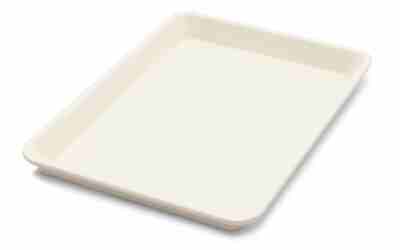
Yes, you can roast a turkey in one. Set it on a rimmed baking sheet before it goes in the oven, and keep it on the sheet when you take it out, so the pan does not bend and dump hot grease. A half sheet aluminum baking pan is a good support, and its size (about 18 x 13 inches) fits in most ovens. Buy a heavy-duty or extra-large disposable pan and put a wire rack inside if it fits.
Rimmed sheet pan with a rack
This works well for a spatchcocked turkey or a bone-in breast. Rimmed sheets hold less liquid than a roasting pan, so a second pan on the rack below helps catch drips. Do not use a sheet pan without a rim.
Dutch oven
Only for small birds or a turkey breast of a few pounds, because the pot has to hold the bird with space around it. Check that the lid, if you use one, leaves enough room to brown the skin, and remember that cast iron is very heavy to lift.
Cast-iron skillet or oven-safe casserole
Fine for a small turkey breast or cut-up parts. Avoid anything not labeled oven-safe to the temperature you plan to use.
Common mistakes and safety notes
- Buying by pan length alone. Check depth, handle length and oven fit too.
- Skipping the rack. The underside steams instead of roasting.
- Pan too small. A crowded pan drips onto the oven floor and can smoke.
- Pan too tall for the oven. The skin can brown too fast or scorch near the top element.
- Trusting the clock. Cook to 165°F in the thickest part of the thigh and breast; see the best place to put a thermometer in a turkey for placement tips.
Lifting safely: pull the oven rack out partway before moving the pan, use two hands and dry oven mitts, and keep a clear path to the counter. Tilting the pan can slosh hot grease, so move slowly. Confirm any specific temperature or food safety guidance on USDA’s website if you’re unsure.
Our Top Picks
Ready to shop? These are the top-rated options from our related roundup, Best Sheet Pan of 2026.

ZONGXFF Stainless Steel Baking Sheet Set of 3

Nordic Ware Naturals Big Sheet Pan, 21x15 inch

Nordic Ware Naturals Half Sheet 2-Pack Aluminum Baking Pan
As an Amazon Associate we earn from qualifying purchases. Product prices and availability are accurate as of the date/time indicated.
Frequently Asked Questions
What size roasting pan do I need for a 20 pound turkey?
A 16 x 13 x 3 inch pan is generally rated for turkeys up to about 20 pounds. A wide-breasted 20 pound bird can be a tight fit, so measure the turkey first. For larger birds, look at an 18-inch pan only if it fits your oven.
Can I roast a turkey in a disposable aluminum pan?
Yes, if you support it. Set the disposable pan on a rimmed baking sheet before it goes in the oven and lift both together. Choose a heavy-duty or extra-large pan, because thin foil can bend under a heavy bird and spill hot grease.
Do I need a roasting pan with a rack?
A rack is strongly recommended. It lifts the turkey off the pan bottom so hot air circulates underneath and the skin does not sit in drippings. If you have no rack, roughly chopped onions, carrots and celery make a workable bed.
Will a 16-inch roasting pan fit in my oven?
Most standard ovens fit one, but check. Measure your interior width and the door opening, include handles in the pan length, and leave about an inch of air space on the sides and 2 inches above the bird. Oven sizes vary by model.
{“@context”: “https://schema.org”, “@type”: “FAQPage”, “mainEntity”: [{“@type”: “Question”, “name”: “What size roasting pan do I need for a 20 pound turkey?”, “acceptedAnswer”: {“@type”: “Answer”, “text”: “A 16 x 13 x 3 inch pan is generally rated for turkeys up to about 20 pounds. A wide-breasted 20 pound bird can be a tight fit, so measure the turkey first. For larger birds, look at an 18-inch pan only if it fits your oven.”}}, {“@type”: “Question”, “name”: “Can I roast a turkey in a disposable aluminum pan?”, “acceptedAnswer”: {“@type”: “Answer”, “text”: “Yes, if you support it. Set the disposable pan on a rimmed baking sheet before it goes in the oven and lift both together. Choose a heavy-duty or extra-large pan, because thin foil can bend under a heavy bird and spill hot grease.”}}, {“@type”: “Question”, “name”: “Do I need a roasting pan with a rack?”, “acceptedAnswer”: {“@type”: “Answer”, “text”: “A rack is strongly recommended. It lifts the turkey off the pan bottom so hot air circulates underneath and the skin does not sit in drippings. If you have no rack, roughly chopped onions, carrots and celery make a workable bed.”}}, {“@type”: “Question”, “name”: “Will a 16-inch roasting pan fit in my oven?”, “acceptedAnswer”: {“@type”: “Answer”, “text”: “Most standard ovens fit one, but check. Measure your interior width and the door opening, include handles in the pan length, and leave about an inch of air space on the sides and 2 inches above the bird. Oven sizes vary by model.”}}]}