No. Skip the frozen roast in crock pot cooking: USDA advises thawing meat fully first, because a slow cooker heats too slowly to get a solid block of meat out of the 40–140°F danger zone in time. Thaw the roast in the fridge, in cold water, or in the microwave. If you are out of time, use a pressure cooker or the oven instead.
Frozen roast in crock pot: why USDA says thaw first
Bacteria multiply fastest between 40°F and 140°F, the “danger zone.” USDA guidance says food in a slow cooker should get above 140°F within about 2 hours. A thick, frozen roast acts like an ice block in the pot. The outside warms slowly, the center stays cold, and the meat can sit in the danger zone far longer than it should.
Ohio State Extension, citing USDA’s Food Safety and Inspection Service, makes the same point for frozen beef and poultry: they may not reach 140°F quickly enough in a slow cooker.
Other things that make it worse:
- Low heat settings, which warm the meat more slowly than high.
- A large roast, since thicker meat takes longer to heat through.
- Cold liquid or vegetables added around the meat, which slow the heat-up further.
Slow cookers vary by brand and model, but none are designed to rescue a solid frozen block. Thaw first, or pick a different cooking method.
How to thaw a roast safely (with times by weight)
There are three safe ways to thaw a roast. Only the fridge method lets you wait before cooking.
| Method | Time estimate | Cook right after? |
|---|---|---|
| Refrigerator (40°F or below) | About 24 hours per 4–5 lb | No. Cook within 3–5 days |
| Cold water | About 30 minutes per lb | Yes |
| Microwave | Several minutes, set by weight per your manual | Yes |
Refrigerator
Set the roast on a rimmed plate or pan to catch drips, and keep it on the bottom shelf. A 2–3 lb roast needs roughly a day. A 5 lb roast may take longer if your fridge runs cold, so start early. This is the method USDA prefers for slow cooker meals.
Cold water
Seal the roast in a leak-proof bag and submerge it in cold tap water. Change the water every 30 minutes. A 4 lb roast takes about 2 hours. Never use warm or hot water.
Microwave
Use the defrost setting and rotate the roast as your manual directs. Some edges may start to cook, so move the meat into the cooker or oven right away. Large roasts may not fit.
Worked example: It is noon and you have a frozen 4 lb chuck roast. Thaw it in cold water until about 2 p.m., then sear it, add broth and vegetables, and cook on high. Dinner is ready around 7 p.m. Check for tenderness early, since cookers differ.
What if you already put a frozen roast in the slow cooker?
Do not let it keep going. Use this decision rule:
- Just started (under about an hour) and still cold? Take the roast out and move it to a pressure cooker or oven (see below).
- Meat has been warming for 2 hours or more and still feels icy in the center? Throw it out. It likely spent too long in the danger zone.
- Not sure how long it has been in there? Discard it. A roast is cheaper than a bout of food poisoning.
Do not try to thaw a roast by leaving it in the cooker on “warm.” That setting is for holding fully cooked food, not for heating raw meat.
How to cook a roast from frozen: pressure cooker, oven or stovetop
Pressure cookers and ovens are better than slow cookers for frozen roasts because they heat the meat faster. All times below are estimates and depend on roast shape, thickness, and appliance. Always confirm with a thermometer.
Pressure cooker or Instant Pot
A general rule is to add about 50% to the thawed cooking time. For a 3 lb chuck roast cut into 2–3 large chunks, plan on roughly 75–90 minutes at high pressure, followed by a natural release. Check your model’s manual, since some brands limit the size of frozen cuts or the minimum liquid. Use at least 1 cup of broth or water. Our Instant Pot Duo Plus 9-in-1 review covers a model that handles this kind of job.
Oven
Place the frozen roast in a Dutch oven with broth, cover tightly, and cook at 300°F. Expect about 50% longer than a thawed roast, which means roughly 4 to 5 hours for 3 lb. Check at the 3-hour mark.
Stovetop
This works for small roasts under about 2 lb. Brown nothing, since the meat is frozen. Simmer covered in liquid over low heat and flip every 30 minutes. It takes longer and needs more attention than the other methods.
For all three, skip the sear on a frozen roast. Searing is hard on ice-covered meat and tends to spatter.
Slow cooker times and temperatures for a thawed roast
Once the roast is fully thawed, the slow cooker does what it does best. These ranges fit a 3 lb chuck roast. Times vary by cooker model and how full the pot is.
| Setting | Approximate time |
|---|---|
| Low | 8–10 hours |
| High | 4–6 hours |
Tips that help:
- Add at least a cup of liquid and keep the pot between one-half and two-thirds full.
- Resist lifting the lid. Each peek lets out heat and can add time.
- Pick a pot that fits the roast. Our guide to the best size crock pot explains how to match capacity to the meal.
Two temperatures to know
USDA’s safe minimum for whole cuts of beef is 145°F with a 3-minute rest. That makes the meat safe, but a chuck roast will still be tough at that point. Pot roast becomes fork-tender at around 195–205°F, when the connective tissue breaks down. So “safe” and “done” are different. Check with a thermometer in the thickest part, away from the bone.
Looking for dinner ideas? Browse our best Crock-Pot recipes cookbook picks.
Leftovers: how fast to chill and how to reheat
Refrigerate leftovers within 2 hours of the meat being done. Don’t leave the roast sitting in the cooker on warm for the evening. Divide it into shallow containers so it cools quickly.
Reheat to 165°F on the stove, in the microwave, or in the oven. Do not use the slow cooker for reheating. It heats too slowly, which brings back the same danger-zone problem. Cooked roast keeps about 3–4 days in the fridge, or freeze it for longer storage.
Frozen ground beef, chicken, and pork: the same rule, and then some
The thaw-first rule applies to every raw meat, and some cuts carry extra risk:
- Ground beef: Frozen or raw ground meat is discouraged in a slow cooker because of E. coli risk. Brown it first and cook it to 160°F.
- Poultry: Thaw completely. Chicken must reach 165°F.
- Pork roasts and shoulder: Thaw first. Pork’s minimum is 145°F with a 3-minute rest, though pulled pork is usually cooked to a much higher temperature for tenderness.
Quick checklist before you start the cooker: is the meat fully thawed, is there enough liquid, is the pot not overfilled, and is your thermometer ready?
Our Top Picks
Ready to shop? These are the top-rated options from our hands-on roundup, Best Combination Slow Cooker Pressure Cooker of 2026.
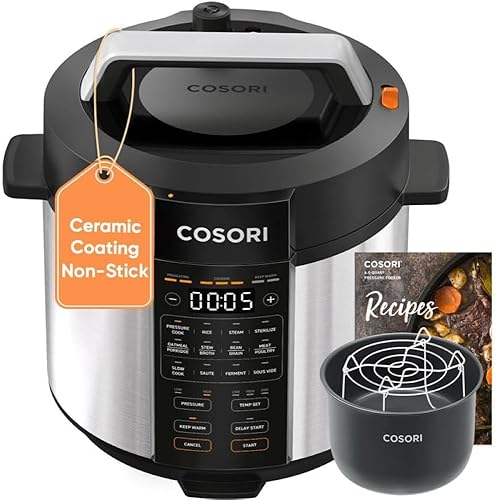
Cosori 6QT 9-in-1 Pressure Cooker, Ceramic Pot

Instant Pot Duo 6 Qt 7-in-1

Instant Pot Duo Plus 6 Qt 9-in-1 Electric Pressure Cooker
As an Amazon Associate we earn from qualifying purchases. Product prices and availability are accurate as of the date/time indicated.
Frequently Asked Questions
Can you thaw a roast in the slow cooker?
No. A slow cooker heats too slowly to thaw meat safely, and the roast can stay in the 40–140°F danger zone for hours. Thaw it in the refrigerator, in cold water, or in the microwave first.
Can you cook a frozen roast in the oven?
Yes. Use a covered Dutch oven with broth at about 300°F and allow roughly 50% more time than a thawed roast. For a 3 lb roast, that is often 4 to 5 hours. Confirm doneness with a thermometer.
Is it safe to put frozen chicken in a slow cooker?
No. Frozen chicken faces the same problem as a frozen roast: it may not reach a safe temperature quickly enough. Thaw it completely first, and cook chicken to an internal temperature of 165°F.
What internal temperature should a pot roast reach?
USDA’s safe minimum for beef roasts is 145°F with a 3-minute rest. For fork-tender pot roast, most cooks aim for about 195–205°F, when the connective tissue has broken down. Use a thermometer in the thickest part.
{“@context”: “https://schema.org”, “@type”: “FAQPage”, “mainEntity”: [{“@type”: “Question”, “name”: “Can you thaw a roast in the slow cooker?”, “acceptedAnswer”: {“@type”: “Answer”, “text”: “No. A slow cooker heats too slowly to thaw meat safely, and the roast can stay in the 40–140°F danger zone for hours. Thaw it in the refrigerator, in cold water, or in the microwave first.”}}, {“@type”: “Question”, “name”: “Can you cook a frozen roast in the oven?”, “acceptedAnswer”: {“@type”: “Answer”, “text”: “Yes. Use a covered Dutch oven with broth at about 300°F and allow roughly 50% more time than a thawed roast. For a 3 lb roast, that is often 4 to 5 hours. Confirm doneness with a thermometer.”}}, {“@type”: “Question”, “name”: “Is it safe to put frozen chicken in a slow cooker?”, “acceptedAnswer”: {“@type”: “Answer”, “text”: “No. Frozen chicken faces the same problem as a frozen roast: it may not reach a safe temperature quickly enough. Thaw it completely first, and cook chicken to an internal temperature of 165°F.”}}, {“@type”: “Question”, “name”: “What internal temperature should a pot roast reach?”, “acceptedAnswer”: {“@type”: “Answer”, “text”: “USDA’s safe minimum for beef roasts is 145°F with a 3-minute rest. For fork-tender pot roast, most cooks aim for about 195–205°F, when the connective tissue has broken down. Use a thermometer in the thickest part.”}}]}