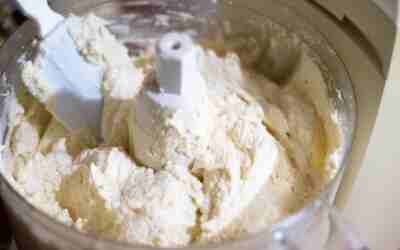

Yes, you can use a food processor to make dough: pie crust, pizza and small bread batches take about a minute or less, while wet or heavy doughs need a mixer.
Which doughs work in a food processor?
Decision rule: if the dough is medium-to-stiff and the flour fits your bowl’s limit, a processor can handle it. If it is wet and sticky, or you want more than one loaf, use a mixer or your hands.
| Dough | Works? | Why |
|---|---|---|
| Pie crust and pastry | Best use | Cuts cold butter into flour fast and evenly. Pulse only. |
| Cookie, shortbread, scone dough | Yes | Pulse until just combined. |
| Pizza dough | Yes | Medium hydration forms a ball quickly. |
| Lean sandwich bread, dinner rolls | Yes, one batch at a time | Stay under the bowl’s flour limit. |
| Egg pasta dough | Yes | Pulse until crumbs hold together when pinched. |
| Brioche and other butter-rich dough | Limited | Friction warms the butter. Short bursts and a mixer work better. |
| Ciabatta and other very wet dough | Poor | Too loose to form a ball; it smears the bowl. |
| Bagels, heavy rye, stiff whole grain | Risky | Dense dough strains the motor. |
Metal blade or plastic dough blade?
Use the metal S-blade for most doughs. It cuts butter into flour, pulls pizza and bread dough into a ball quickly and is the blade most processor dough recipes assume. Some models also include a plastic dough blade. If yours does, follow the bread recipes in your manual for which blade to use and how long to run it.
- Metal blade: pie crust, cookie dough, pizza, pasta and bread.
- Plastic dough blade: only if your manual’s recipe calls for it.
- Disc attachments: slicing and shredding discs are not for dough.
Whichever blade you use, the bowl should be dry and the lid locked before the motor starts.
How much flour can your bowl handle?
Your manual’s stated dough limit overrides everything below. If it gives no number, use this rough estimate as a cautious starting point.
| Rated bowl size | Flour per batch (estimate) |
|---|---|
| 11 cups | About 2¾ cups |
| 14 cups | About 3½ cups |
Estimate method: one-quarter of the bowl’s rated capacity, in cups of flour (11 ÷ 4 = 2.75; 14 ÷ 4 = 3.5). This is a rule of thumb, not a manufacturer rating. If your manual lists a lower number, use the lower number.
Bigger bowls and stronger motors give more room, and small 3-cup choppers are not built for yeast dough. If you need more dough, make two batches instead of one overfull one.
Thinking of buying a processor mainly for dough? Read is a food processor worth it first. It excels at pie crust and pizza, but it is not a full stand mixer replacement.
Steps to use a food processor to make dough
This example makes one pizza or small loaf batch in an 11-cup or larger bowl: 2½ cups (about 300 g) bread flour, 1½ teaspoons instant yeast, 1½ teaspoons salt, 1 tablespoon olive oil and about ¾ cup plus 1 tablespoon cool water (roughly 65% hydration).
- Set up safely. Fit the metal blade, lock the lid and keep hands and utensils out of the bowl while it runs. Unplug the machine before you reach in or take out the blade, because it is sharp.
- Pulse the dry ingredients. Add flour, yeast and salt and pulse 3 to 5 times to blend.
- Add liquid through the feed tube. With the motor running, pour in the oil and cool water in a steady stream.
- Process until a ball forms. This takes about 20 to 30 seconds. If the dough sticks to the bowl, add flour 1 tablespoon at a time.
- Knead briefly. Run it another 20 to 30 seconds. Total running time is about a minute or less.
- Check the temperature. Blade friction warms the dough, and too much heat can hurt the rise. Many bakers aim to keep yeast dough below about 80°F (a rule of thumb). If it feels warm, or an instant-read thermometer reads above 80°F, stop and let it rest 10 minutes.
- Finish by hand. Turn the dough onto a lightly floured counter and knead 30 to 60 seconds. This gives you a feel for the texture and fixes small problems.
- Rise. Cover and let it rise until doubled, usually 1 to 1½ hours at room temperature.
Pie crust version
Pulse 1¼ cups flour and ½ teaspoon salt. Add 8 tablespoons (1 stick) cold, cubed butter and pulse in 1-second bursts until the pieces are pea-sized. Add 3 to 4 tablespoons ice water and pulse until the dough clumps when squeezed. Stop before it forms a ball, then chill it for at least 30 minutes.
How do you know the dough is kneaded?
Do the windowpane test. Pinch off a walnut-sized piece and stretch it gently between your fingers. If it thins into a translucent sheet without tearing, the gluten is developed. If it tears right away, knead by hand another 1 to 2 minutes and test again.
Use these signs to fix problems:
- Sticky and smeared on the bowl: add flour 1 tablespoon at a time and pulse. If it stays soupy, the dough is too wet for a processor.
- Warm or tacky to the touch: rest it 10 minutes, or chill it briefly, before kneading further.
- Tight and tearing: add 1 teaspoon water, rest 10 minutes and knead by hand.
- Rubbery, will not stretch: let it rest covered for 15 minutes so the gluten relaxes.
Tips for better processor dough
- Weigh the flour if you can. Scooped cups vary a lot, and too much flour is the most common cause of a tight, dry dough.
- Use cool liquid. It offsets the heat the blade adds.
- Keep butter cold for pastry. Cube it and chill it before it goes in the bowl.
- Add liquid gradually for pastry and whole grain doughs. Flours differ in how much water they absorb, so stop when the dough just holds together.
- Scrape down once. If dry flour is hiding in the corners of the bowl, stop, unplug, scrape and pulse again.
Food processor, stand mixer or hands?
- Food processor: the fastest option, about a minute of running time. It is best for pastry, pizza and a single small batch of lean dough.
- Stand mixer: better for wet, sticky or enriched doughs and for larger batches, though it takes several minutes of kneading.
- Hand kneading: needs no equipment and gives the most control, but it is the slowest and hardest with sticky dough.
Many home bakers use the processor for pastry and quick pizza dough and a mixer or their hands for everything else.
What not to make in a food processor
Skip very wet doughs like ciabatta, large double batches and stiff doughs such as heavy rye or bagels. Stiff or overfull loads can strain or overheat the motor. Follow the manual’s maximum capacity, rest the machine between batches and stop if it labors, slows or smells hot. Many models have an overload shutoff, but do not rely on it.
For regular loaves or big batches, a stand mixer is the better tool.
Our Top Picks
Ready to shop? These are the top-rated options from our hands-on roundup, Best Non Toxic Food Processor of 2026.

Ninja Mega Kitchen System BL770, 1500W Blender and Food Processor with 72-Oz Pitcher, 8-Cup Bowl, and 2 Nutri Ninja Cups

Ninja Professional Plus Food Processor BN601 9-Cup

Cuisinart DFP-14BCNY 14-Cup Food Processor
As an Amazon Associate we earn from qualifying purchases. Product prices and availability are accurate as of the date/time indicated.
Related reading: Can a Blender Replace a Food Processor? What It Can't Do · Can a Food Processor Grind Coffee Beans? How to Do It
Frequently Asked Questions
Can I double a dough recipe in my food processor?
Not in one load. Doubling usually pushes past the bowl’s rated flour limit. Mix two separate batches, then combine and knead the dough by hand.
Can I use a mini 3-cup food processor for dough?
Only for small amounts of pie crust or cookie dough, and only if the manual allows it. Mini choppers lack the bowl size and motor for yeast bread.
Can I make whole wheat dough in a food processor?
Yes, in smaller batches. Whole wheat absorbs more water and feels denser, so add liquid gradually and keep the flour below the bowl’s limit. Rest the dough 15 minutes before kneading by hand.
Why did my dough get warm in the food processor?
Blade friction heats the dough, especially with long run times. Use cool water, keep processing to about a minute and check the temperature. If it reads above 80°F, let it rest before continuing.
Can I use a blender instead of a food processor for dough?
Not reliably. Blender jars are tall and narrow, so thick dough stalls around the blade. See <a href=”https://ehomefinds.com/can-blender-replace-food-processor/”>can a blender replace a food processor</a> for what a blender can and cannot do.
{“@context”: “https://schema.org”, “@type”: “FAQPage”, “mainEntity”: [{“@type”: “Question”, “name”: “Can I double a dough recipe in my food processor?”, “acceptedAnswer”: {“@type”: “Answer”, “text”: “Not in one load. Doubling usually pushes past the bowl’s rated flour limit. Mix two separate batches, then combine and knead the dough by hand.”}}, {“@type”: “Question”, “name”: “Can I use a mini 3-cup food processor for dough?”, “acceptedAnswer”: {“@type”: “Answer”, “text”: “Only for small amounts of pie crust or cookie dough, and only if the manual allows it. Mini choppers lack the bowl size and motor for yeast bread.”}}, {“@type”: “Question”, “name”: “Can I make whole wheat dough in a food processor?”, “acceptedAnswer”: {“@type”: “Answer”, “text”: “Yes, in smaller batches. Whole wheat absorbs more water and feels denser, so add liquid gradually and keep the flour below the bowl’s limit. Rest the dough 15 minutes before kneading by hand.”}}, {“@type”: “Question”, “name”: “Why did my dough get warm in the food processor?”, “acceptedAnswer”: {“@type”: “Answer”, “text”: “Blade friction heats the dough, especially with long run times. Use cool water, keep processing to about a minute and check the temperature. If it reads above 80°F, let it rest before continuing.”}}, {“@type”: “Question”, “name”: “Can I use a blender instead of a food processor for dough?”, “acceptedAnswer”: {“@type”: “Answer”, “text”: “Not reliably. Blender jars are tall and narrow, so thick dough stalls around the blade. See can a blender replace a food processor for what a blender can and cannot do.”}}]}