
No, you generally should not vacuum broken glass, especially large shards, because they can slice bags and seals, jam the brush roll and cut you when you empty the machine. Pick up the big pieces by hand, wipe up the slivers, and vacuum broken glass only as a careful last pass on fine fragments.
Is it safe to vacuum broken glass?
Not as a first step, and not with most household vacuums. Glass is hard and sharp, and a vacuum pulls it fast through narrow parts that were designed for dust, crumbs and hair.
Here is what can go wrong:
- Cut bags and filters. A jagged shard can puncture a paper or cloth bag and leak fine dust back into the machine.
- Damaged seals and hoses. Thin silicone or rubber seals, especially in stick and handheld models, can be nicked by sharp edges.
- Jammed brush rolls. A shard can wedge between the roller and the housing and stall the motor or snap a belt.
- Scratched floors. Glass trapped in the brush or wheels can drag across hardwood or vinyl.
- Cuts to you. The worst moment is often emptying the bin or bag later, when shards are hidden in the dust.
How much damage happens depends on the model, the size of the glass and how the airflow path is built. Some vacuums survive a few tiny pieces without harm. Your owner’s manual is the final word, and many manuals say not to pick up sharp objects.
How to clean up broken glass step by step
This sequence works for a dropped drinking glass, a jar or a picture frame. Do it before you reach for any vacuum.
- Stop and clear the area. Keep kids and pets out of the room. If a robot vacuum is scheduled to run, pause it or take it off the dock.
- Put on protection. Wear closed, thick-soled shoes (not socks or slippers) and work gloves. Add safety glasses if the glass shattered into many pieces.
- Pick up large shards by hand. Place them in a sturdy cardboard box or a thick paper bag, not loose in a trash bag.
- Sweep the rest. Use a broom and dustpan. Sweep from the outside of the mess toward the center so you don’t push pieces across the room.
- Press up the slivers. Dab the floor with a damp paper towel, a slice of soft bread or a wide piece of tape. Use a fresh piece each time and drop each one into the box.
- Check with a flashlight. Hold the light low and nearly parallel to the floor. Slivers sparkle when the beam skims across them.
- Vacuum only if needed. If tiny bits remain in grout lines or corners, make one slow final pass with the right vacuum (see the table below).
- Wipe the area one last time with a damp cloth or mop, then recheck with the flashlight.
Tempered glass, such as a shower door, oven door or side car window, breaks into many small pebble-like pieces that scatter well beyond the spot where it broke. Check a wider area, including under furniture and along baseboards.
Which vacuums can handle broken glass, and which can’t
Use this table for the final pass only, after you’ve removed everything you can by hand. Verdicts are general. Always check your manual, because filters, hoses and bag materials vary by model.
| Vacuum type | Verdict | Why |
|---|---|---|
| Shop vac (wet/dry, rigid hose) | Best option for fine bits | Rigid, wide hose and a rugged canister; use a filter bag or the filter the manual calls for |
| Bagged upright or canister | Tiny slivers only | A thick bag may hold up, but shards can still cut paper bags or hoses |
| Bagless upright or canister | Avoid, or tiny bits only | Glass can scratch the bin and cut filters, and you have to empty it by hand |
| Stick or cordless | Avoid | Narrow paths and thin seals or filters are easy to nick |
| Handheld | Avoid | Small filters and tight nozzles clog or cut easily |
| Robot vacuum | Never | Wheels and brushes can grind shards into the floor, and the small bin is hard to empty safely |
| Wet/dry household vacuum (with water tanks or pumps) | Avoid | Glass can damage narrow tubing and pumps |
Choose a shop vac if you have a lot of fine glass on a garage, basement or hard floor. Choose a bagged vacuum if it’s all you have and only a few tiny slivers remain. Choose no vacuum at all if you can still see pieces bigger than a grain of rice.
On filtration, a true HEPA filter is rated to capture 99.97% of particles at 0.3 microns, so it is the better choice if broken glass produced a lot of fine dust. If you’re shopping, our guide to the best vacuums for pet hair covers models with sealed systems and washable filters that also suit messy cleanups. If your robot vacuum was running when the glass broke, see our robot vacuum roundup for what to look for in a bin and brush design, but keep it off glass.
How do you get glass out of carpet and rugs?
Carpet hides glass better than any other surface, and bare feet or paws find it first. Go slowly.
- Pick up every visible piece with gloved fingers or tweezers.
- Press a lint roller, wide tape or a damp towel over the area to lift slivers from the fibers.
- Shine a flashlight low across the pile. Slivers stand out as small flashes.
- Run a hand lightly over the carpet while wearing thick gloves to feel what you can’t see.
- Only now vacuum, preferably with a bagged machine or a shop vac, going slowly in two directions.
- Empty or replace the bag outdoors, then repeat the flashlight check.
For a small area rug, take it outside, wearing gloves, and shake it gently away from walkways, kids and pets. Then lay it flat and tape-roll the surface. Thick shag and looped (Berber-style) carpets trap more glass, so allow extra time and consider having a pro check heavy contamination.
Before pets or children use the room again, do a final barefoot-safe check: look at the floor in daylight and with a flashlight, and wipe the nearby hard-floor edges. A hardwood floor with leftover glass can scratch, so a soft mop pass helps. If you’re shopping for a floor-safe machine for later cleanups, see our picks for the best vacuums for hardwood floors.
What to do if you already vacuumed broken glass
Stop the machine and unplug it. Don’t keep running it to “finish the job.”
- Put on gloves and eye protection and take the vacuum outside or onto newspaper.
- Empty the bag or bin slowly into a sturdy box, never a loose trash bag. Don’t shake it hard or reach in blindly.
- Inspect the bag for cuts, the hose for scratches or blockages, the brush roll for lodged pieces, and any filters for slits.
- Replace cut bags and damaged filters. Rinse washable filters per the manual and let them dry fully.
- Run the machine briefly on a bare floor you’ve already cleaned and listen for grinding, rattling or a burning smell. Stop if you notice any.
If suction is weak afterward, a shard is probably blocking the hose or the cyclone. Check the manual or contact the manufacturer, since warranty terms and parts differ by model.
How to dispose of broken glass and protect kids and pets
Wrap small pieces in several layers of newspaper, or place them in a rigid box or heavy paper bag. Tape it shut and mark it “BROKEN GLASS” so sanitation workers know. Loose glass in a thin trash bag can tear through and injure someone.
Most curbside recycling programs do not accept drinking glasses, mirrors, window glass or ovenware because they melt differently from bottles and jars. Rules vary by city, so check your local waste provider’s website for what goes in the trash and what, if anything, goes elsewhere.
Until cleanup is finished:
- Keep children and pets out of the room, with a closed door or baby gate.
- Keep everyone in shoes, including you.
- If a pet walks through the area, check paw pads for glass, redness or limping, and call your vet if you see any cuts or embedded slivers.
- Recheck the area the next day in daylight, since small pieces sometimes surface after a floor has been walked on.
Our Top Picks
Ready to shop? These are the top-rated options from our hands-on roundup, Best Cordless Vacuum For Pet Hair of 2026.

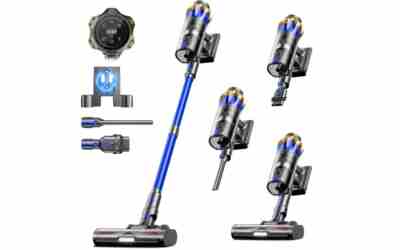
Bitybird Cordless Vacuum Cleaner 650W 60KPA 70Min Runtime with Anti-Tangle Brush and Flexible Hose

JELLYPIG Cordless Vacuum Cleaner 650W 55KPA 70Mins Self-Standing Touch Screen Anti-tangle for Home Pet Hair

Bissell PowerClean FurFinder Corded Stick Vacuum
As an Amazon Associate we earn from qualifying purchases. Product prices and availability are accurate as of the date/time indicated.
Frequently Asked Questions
Can you vacuum broken glass with a shop vac?
Usually yes, for small leftover fragments, and a shop vac is the most common choice. Remove big pieces first, use the filter or bag your manual specifies, and empty it carefully into a box. Check that your model is rated for debris like glass.
Can a robot vacuum pick up broken glass?
No. Robot vacuums can drag shards under their wheels, scratch floors and jam the brush. Pause the schedule or dock it until the glass is cleaned up by hand, then inspect the wheels, brush and bin before running it again.
Will broken glass ruin my vacuum cleaner?
Not always, but it can. Sharp pieces may cut bags, filters and seals or clog the hose and brush roll. Damage depends on the model and the size of the glass, so inspect every part afterward and replace anything cut.
How do you find tiny glass slivers I can’t see?
Turn off overhead lights and shine a flashlight across the floor at a low angle. Slivers glint in the beam. Then press a damp paper towel, tape or a slice of bread over those spots to lift them, and recheck.
{“@context”: “https://schema.org”, “@type”: “FAQPage”, “mainEntity”: [{“@type”: “Question”, “name”: “Can you vacuum broken glass with a shop vac?”, “acceptedAnswer”: {“@type”: “Answer”, “text”: “Usually yes, for small leftover fragments, and a shop vac is the most common choice. Remove big pieces first, use the filter or bag your manual specifies, and empty it carefully into a box. Check that your model is rated for debris like glass.”}}, {“@type”: “Question”, “name”: “Can a robot vacuum pick up broken glass?”, “acceptedAnswer”: {“@type”: “Answer”, “text”: “No. Robot vacuums can drag shards under their wheels, scratch floors and jam the brush. Pause the schedule or dock it until the glass is cleaned up by hand, then inspect the wheels, brush and bin before running it again.”}}, {“@type”: “Question”, “name”: “Will broken glass ruin my vacuum cleaner?”, “acceptedAnswer”: {“@type”: “Answer”, “text”: “Not always, but it can. Sharp pieces may cut bags, filters and seals or clog the hose and brush roll. Damage depends on the model and the size of the glass, so inspect every part afterward and replace anything cut.”}}, {“@type”: “Question”, “name”: “How do you find tiny glass slivers I can’t see?”, “acceptedAnswer”: {“@type”: “Answer”, “text”: “Turn off overhead lights and shine a flashlight across the floor at a low angle. Slivers glint in the beam. Then press a damp paper towel, tape or a slice of bread over those spots to lift them, and recheck.”}}]}