Plan on 1 to 4 hours to dry herbs in a dehydrator set to 95-115°F, according to Clemson Cooperative Extension. Thin leaves like basil and mint finish fastest, while rosemary and other thick or needle-type herbs can take longer. Humidity, tray load and your model all change the clock, so judge doneness by feel, not just time.
How long does it take to dry herbs in a dehydrator?
Most leafy herbs are crisp in 1 to 4 hours at 95-115°F. That range comes from Clemson Cooperative Extension, which also says to preheat the dehydrator before loading the trays. Start checking at about 1 hour for tender herbs and about 2 hours for sturdier ones.
You will see blogs claiming 8-12 hours or even a couple of days. Those numbers usually come from heavy trays, humid kitchens, thick stems, or temperatures set at the low end. They are not wrong for those conditions, but they are not the typical case for a single layer of leaves on a working dehydrator.
The practical rule: set a timer for the shortest time in the range, then check every 30 to 60 minutes. Pull the trays that finish early and keep the rest going.
What temperature is best for basil, mint, rosemary and thyme?
Use 95-115°F for nearly all herbs, per Clemson Extension. Low heat protects the essential oils that give herbs their color and aroma. Too much heat drives those oils off and leaves you with dull, flat-tasting flakes.
- Tender, high-moisture herbs (basil, mint, lemon balm, tarragon, cilantro, parsley): use 95-105°F, but do not let them sit damp. Extension sources warn that high-moisture herbs such as basil, mint and lemon balm can mold if they dry too slowly.
- Woody or needle herbs (rosemary, thyme, sage, oregano): 100-115°F works well. They hold less water per leaf but dry slowly because of thick stems and waxy surfaces.
- Very humid weather: Clemson notes you may need up to 125°F. Use that only if herbs are not drying and keep a close eye on color.
Your thermostat may not be accurate. Many home dehydrators run a few degrees off, so check your manual and, if you can, set a small oven thermometer on a tray.
Dry times by herb: a table to start from
These are typical ranges for a single layer of leaves at 95-115°F, based on extension guidance and common home-drying practice. They are starting points, not lab results. Your model, humidity and tray load will move them.
| Herb | Suggested temp | Typical time | Done when |
|---|---|---|---|
| Basil | 95-105°F | 1-3 hours | Leaves crumble, no black spots |
| Mint | 95-105°F | 1-3 hours | Leaves crackle, stems snap |
| Parsley | 95-110°F | 1-3 hours | Crumbles between fingers |
| Cilantro | 95-105°F | 1-3 hours | Brittle, fully crisp |
| Dill (leaves) | 95-105°F | 1-3 hours | Feathery fronds crumble |
| Lemon balm | 95-105°F | 1-3 hours | Crisp, no soft spots |
| Oregano | 100-115°F | 1-3 hours | Leaves strip easily from stem |
| Sage | 100-115°F | 2-4 hours | Fuzzy leaves feel dry, not leathery |
| Thyme | 100-115°F | 2-4 hours | Leaves fall off when rubbed |
| Rosemary | 100-115°F | 2-5 hours, sometimes more | Needles snap, not bend |
Rosemary is the herb with the widest spread in online advice, from a few hours to over ten. Needles hold moisture, so a crowded tray or a humid day pushes you toward the long end. Check thick sprigs by snapping a needle rather than trusting the clock.
How to prep and arrange herbs on the trays
Good prep shortens drying time more than any setting.
- Harvest in the morning after dew has dried, when oils are strong.
- Rinse only if dirty. If you wash, shake off water, then spin or pat the leaves completely dry. Surface water adds hours and raises mold risk.
- Remove tough stems and any yellow or damaged leaves. Small tender stems of mint or parsley can stay on.
- Leave leaves whole. Smaller pieces dry faster but lose more aroma, so crush after drying.
- Spread in a single layer with gaps so air can flow. Do not stack or overlap.
- Use a mesh screen or fine liner for small leaves like thyme so they do not drop through. Do not use solid sheets that block airflow unless your manual allows them.
- Preheat the dehydrator, then load.
Put thicker herbs on the trays nearest the fan or heating element if your model dries unevenly, and rotate trays halfway through if the manual suggests it. Do not mix mint with other herbs on the same tray, since strong oils can transfer.
How do you know herbs are fully dry? The snap and crumble test
Clemson says herbs are done when they crumble and the stems break when bent. Test it this way:
- Take one leaf and one stem from the middle of the fullest tray, not the edge.
- Let them cool for a minute, since warm leaves feel softer than they are.
- Rub the leaf between your fingers. It should shatter into flakes, not bend or tear.
- Bend the stem. It should snap cleanly, not flex.
Trap to avoid: leaves dry before stems. If you jar herbs with stems that still bend, the leftover moisture can cause mold in a sealed jar. Either strip the leaves and dry the stems longer, or discard the stems.
After drying, do a quick conditioning step. Loosely pack the cooled herbs in a jar, close it, and shake it once a day for about a week. Fog on the glass or soft, clumping leaves means they need more drying time. Dry them again before storing.
Why are my herbs taking too long, chewy or moldy?
Time varies because moisture has to leave the leaf and get carried away by air. Anything that slows airflow or adds water makes the clock longer.
- Humidity: in a damp kitchen the air takes up less moisture. Run the dehydrator in a drier room or use the higher end of the range, up to 125°F as a last resort per Clemson.
- Tray load: a full tray can take twice as long as a light one. Dry in batches rather than crowding.
- Dehydrator type: rear-fan models with horizontal airflow usually dry more evenly than stackable round units with a bottom or top fan, which often need tray rotation. Wattage matters less than airflow design, and it varies by model.
- Starting moisture: wet leaves, thick stems and washed but not dried herbs all add time.
- Thermostat drift: a unit running cooler than its dial will be slow.
Chewy herbs need more time. Browned or bitter herbs were dried too hot. Mold or an off smell means throw the batch out; do not try to rescue it.
Do not leave a dehydrator running unattended for long stretches near its limit, and keep the vents clear. Check your manual for maximum run time.
How to store dried herbs and how long they last
Store cooled, fully dry herbs in airtight glass jars or containers, in a cool, dark cupboard away from the stove. Light and heat fade color and flavor faster than time does.
- Keep leaves whole until you cook. Crushed herbs lose flavor sooner.
- Label the jar with herb and date.
- Use within about a year for best flavor. Many extension and food-safety sources describe dried herbs as safe for longer if kept dry, but they get weaker. Replace them when they smell faint.
- Check jars in the first week for moisture or clumps.
No temperature dial on your machine? Many basic units run at a single fixed temperature, often around 130-155°F, which is too hot for delicate herbs. Look for an adjustable model. Our Cosori CP267-FD 6-tray dehydrator review and NESCO FD-75A Snackmaster Pro review cover two adjustable models, and our best affordable dehydrator roundup helps if budget is the limit. If you also want to dry mushrooms or jerky, the best Excalibur dehydrator guide covers larger, rear-fan units.
No dehydrator at all? Air drying small bunches works in a dry, shaded, ventilated spot. Most home ovens bottom out near 170°F, which is too hot for herbs. See our guide on using a toaster oven as a dehydrator for what can work and where it falls short.
Our Top Picks
Ready to shop? These are the top-rated options from our hands-on roundup, Best Affordable Dehydrator of 2026.

Cosori Food Dehydrator 6 Tray 600W
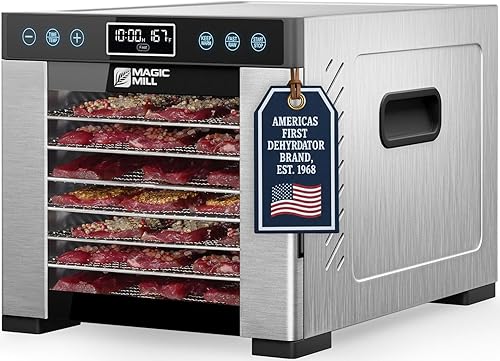
Magic Mill MFD-7700 7-Tray Stainless Steel Dehydrator

Cosori P501 5-Tray Stainless Steel Dehydrator
As an Amazon Associate we earn from qualifying purchases. Product prices and availability are accurate as of the date/time indicated.
Frequently Asked Questions
Should I wash herbs before dehydrating them?
Only if they are dirty. If you wash them, shake off the water and pat or spin the leaves until no moisture remains on the surface. Wet leaves dry slowly and are more likely to mold, especially high-moisture herbs like basil and mint.
Can I dry herbs in a dehydrator with no temperature control?
You can try, but many fixed-temperature units run well above 115°F, which can dull flavor and color. Check the manual, load a light single layer, and check early and often. An adjustable model is better for delicate herbs.
How long do dehydrated herbs last?
Stored whole in airtight jars in a cool, dark place, dried herbs keep best flavor for about a year. They may stay safe longer if kept dry, but aroma fades. Replace them when they smell weak or look faded.
Why are my dehydrated herbs still chewy?
They need more time, or the tray was too full or the room too humid. Spread leaves in a single layer, keep the temperature in the 95-115°F range, and keep drying until leaves crumble and stems snap.
{“@context”: “https://schema.org”, “@type”: “FAQPage”, “mainEntity”: [{“@type”: “Question”, “name”: “Should I wash herbs before dehydrating them?”, “acceptedAnswer”: {“@type”: “Answer”, “text”: “Only if they are dirty. If you wash them, shake off the water and pat or spin the leaves until no moisture remains on the surface. Wet leaves dry slowly and are more likely to mold, especially high-moisture herbs like basil and mint.”}}, {“@type”: “Question”, “name”: “Can I dry herbs in a dehydrator with no temperature control?”, “acceptedAnswer”: {“@type”: “Answer”, “text”: “You can try, but many fixed-temperature units run well above 115°F, which can dull flavor and color. Check the manual, load a light single layer, and check early and often. An adjustable model is better for delicate herbs.”}}, {“@type”: “Question”, “name”: “How long do dehydrated herbs last?”, “acceptedAnswer”: {“@type”: “Answer”, “text”: “Stored whole in airtight jars in a cool, dark place, dried herbs keep best flavor for about a year. They may stay safe longer if kept dry, but aroma fades. Replace them when they smell weak or look faded.”}}, {“@type”: “Question”, “name”: “Why are my dehydrated herbs still chewy?”, “acceptedAnswer”: {“@type”: “Answer”, “text”: “They need more time, or the tray was too full or the room too humid. Spread leaves in a single layer, keep the temperature in the 95-115°F range, and keep drying until leaves crumble and stems snap.”}}]}