Yes, you can use parchment paper in a dehydrator. Most dehydrators run below about 160°F, far under the temperature parchment is rated for. Use it for fruit leather, purées and sticky foods, cut it so air can still move, and never swap in wax paper, plastic wrap or freezer paper.
Is parchment paper in a dehydrator safe?
Yes. Home dehydrators typically top out around 155–165°F, depending on the model. Most parchment packaging lists an oven-safe limit of roughly 420–450°F, though the exact number varies by brand. Check the box. At dehydrator heat, parchment will not scorch, smoke or melt.
Two things can still go wrong:
- Contact with the heating element. Light sheets can lift and touch the element on some designs, especially with a strong fan.
- Blocked airflow. A full sheet that covers vents or the center opening can stall drying and leave damp spots.
Both are fixable with how you cut and place the paper. Also skim your manual. Some manufacturers publish liner guidance, and that overrides general advice.
When parchment helps and when to skip it
Use parchment when food is wet, sticky or small enough to fall through the mesh. Skip it when you want maximum airflow.
Good uses
- Fruit leather and vegetable leather. Spread purée about 1/8 inch thick so it releases cleanly.
- Sauces, pastes and thin purées for powders or sheets, such as tomato or pumpkin.
- Very sticky fruit, such as pineapple slices or dates cut small, when mesh sticks and tears.
- Tiny items like herb leaves or chopped berries that would drop through.
Skip it for
- Apple rings, banana chips, mushrooms and jerky strips. These dry well directly on the tray and drip or stick very little. For mushrooms, see our guide to the best food dehydrator for mushrooms.
- Anything very runny. Liquid can pool or run off a flat sheet. Use a solid tray insert with a raised lip instead.
Parchment vs. wax paper, foil, plastic wrap and other liners
Not all kitchen papers are interchangeable. Wax paper is the one people mix up most often.
| Liner | OK in a dehydrator? | Choose it if | Where it loses |
|---|---|---|---|
| Parchment (unbleached or bleached) | Yes | You’re making leather or drying sticky purées | Blocks airflow from below; slows drying |
| Silicone-coated parchment | Yes | You want easier release and reuse | Same airflow limit; coating wears out over time |
| Silicone or fruit-leather tray | Yes (check fit) | You make leather often | Costs more; must match your tray size |
| Fine mesh screen | Yes | You dry herbs, berries or small pieces | Won’t hold purée |
| Aluminum foil | Not recommended | Rarely a good idea | Non-porous, traps moisture, can stick to wet foods |
| Wax paper | No | Never | Wax can melt onto food and trays |
| Plastic wrap | No | Never | Not made for sustained heat; can warp or melt |
| Freezer paper | No | Never | Has a plastic or wax coating |
Bleached versus unbleached parchment makes no meaningful difference for drying. Unbleached is simply brown. What matters is that the label says parchment (silicone-coated or quilon-treated), not wax-coated.
How to cut and fit parchment so air still flows
A full solid sheet is the main reason parchment slows drying. Cutting it to fit solves most of that.
- Trace the tray. Set the tray on the paper and trace it with a pencil. Round stackable trays, such as many Nesco-style models, have a center hole. Cut that hole out too, so air can rise through the stack.
- Trim 1/2 to 1 inch smaller than the tray on all sides. Leaving a gap at the edges lets air pass around the sheet.
- Punch holes if you want. A few small holes or slits across the sheet (a paper punch or sharp knife works) let moisture escape from the underside. Do not punch so many that purée leaks through.
- Check rear-fan models. On box-style units with a back fan, such as many Excalibur designs, air moves front to back across each tray. Keep the paper flat and don’t let it ride up toward the fan. See our Excalibur dehydrator roundup for how those trays are laid out.
- Anchor light sheets. A thick layer of purée holds paper down. For lighter loads, tuck the corners under the tray rim or set a small clean weight on a corner until the food is loaded.
- Keep paper away from any heating element. If your unit has an exposed element, trim the sheet short in that area.
Worked example: A tray measures about 15 inches square (confirm yours). Cut a sheet near 14 inches square. That leaves roughly 1/2 inch of open edge on each side for air to pass.
Does parchment paper slow down dehydrating?
Usually yes, a little. Mesh lets air hit food from above and below. Parchment blocks the underside, so moisture leaves from the top surface only. Expect longer and sometimes uneven drying. I can’t give a reliable percentage, because it depends on the food’s thickness, your model’s airflow and the room’s humidity.
Here is a practical way to handle it:
- Dry thin. Keep purée to about 1/8 inch. Thicker layers are where parchment hurts most.
- Flip partway. Once the top is no longer tacky and the leather peels cleanly (often several hours in), peel it off the paper and set it directly on the mesh or a perforated sheet to finish. Check your recipe’s time; many fruit leathers run around 135°F.
- Rotate trays. If your unit has uneven airflow, swap trays top to bottom midway.
- Judge by feel, not the clock. Finished leather should be pliable and not sticky or wet in the center. Press the thickest spot.
If you want drying speed more than easy release, a model with strong horizontal airflow helps. Our NESCO FD-75A Snackmaster Pro review covers a stackable design, and the Cosori CP267-FD review covers a box-style one.
Can you reuse parchment, and what are the alternatives?
Often yes, if it stays clean. After fruit leather, the paper usually peels off with little residue. Wipe it with a dry or barely damp cloth, let it dry fully, and store it flat. Toss any sheet that is brown, brittle, torn, greasy or stained from fatty or oily foods. Uncoated or thin parchment tends to wear out faster than silicone-coated.
If parchment isn’t working, try these instead:
- Fruit-leather or solid tray inserts sized for your model. Many have a raised lip for runnier purées.
- Silicone mats cut to fit. Confirm they’re rated for your dehydrator’s temperature.
- Fine mesh sheets for small items.
- Lightly oiled mesh for sticky fruit, if you don’t mind a thin film. Use sparingly.
No dehydrator yet? A low-temperature oven can stand in, but it has limits. Read whether a toaster oven can work as a dehydrator. If you’re shopping, our list of the best affordable dehydrators is a place to start.
Quick checklist before you load the trays
- The package says parchment, not wax paper or freezer paper.
- Sheet is cut smaller than the tray, with the center hole open on round trays.
- Nothing covers vents, the fan or the heating element.
- Light paper is anchored and cannot lift in the airflow.
- Purée is 1/8 inch thick or close to it.
- Temperature is within the dehydrator’s own range, normally under 160°F.
- Your manual has no warning about liners.
Common mistakes: using wax paper because it looks similar, covering the whole tray edge to edge, reusing greasy or browned sheets, and spreading purée too thick so the middle stays wet while the edges crisp.
Food safety note: Parchment helps with release, not with safety. Dry foods fully, and for meat jerky follow USDA guidance on heating meat to a safe internal temperature (160°F for beef, 165°F for poultry) before or after drying. Jerky usually doesn’t need parchment anyway; browse our best home dehydrator for jerky picks if that’s your goal.
Our Top Picks
Ready to shop? These are the top-rated options from our hands-on roundup, Best Excalibur Dehydrator of 2026.

PSIIDAN FD-1033 8-Tray 650W Food Dehydrator
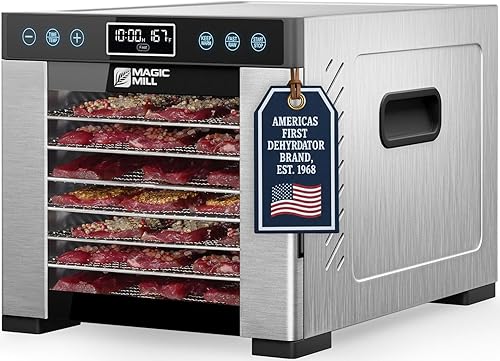
Magic Mill MFD-7700 7-Tray Stainless Steel Dehydrator

Excalibur DH10SSSS13 10-Tray Digital Dehydrator
As an Amazon Associate we earn from qualifying purchases. Product prices and availability are accurate as of the date/time indicated.
Frequently Asked Questions
Can you use wax paper in a dehydrator?
No. The wax coating can soften and melt onto your food and trays, even at dehydrator temperatures. Freezer paper has a similar coating. If you need a liner, use real parchment, a silicone sheet or a fruit-leather tray made for your model.
Can you use aluminum foil in a dehydrator?
It’s not recommended. Foil is non-porous, so it traps moisture and slows drying, and wet or acidic foods can stick to it or react with it. Parchment or a silicone sheet works better for purées and sticky foods.
What can I put on dehydrator trays to stop food sticking?
Use parchment, a silicone mat or a fruit-leather insert for wet or sticky foods. For firm foods, a light wipe of oil on the mesh can help. Check your manual first, since some manufacturers sell fitted liners for their trays.
Do I need to punch holes in parchment for a dehydrator?
Not required, but a few small holes or slits help moisture escape from the underside and can shorten drying. Cut the sheet slightly smaller than the tray too. Skip the holes for very thin purées, which may leak through.
{“@context”: “https://schema.org”, “@type”: “FAQPage”, “mainEntity”: [{“@type”: “Question”, “name”: “Can you use wax paper in a dehydrator?”, “acceptedAnswer”: {“@type”: “Answer”, “text”: “No. The wax coating can soften and melt onto your food and trays, even at dehydrator temperatures. Freezer paper has a similar coating. If you need a liner, use real parchment, a silicone sheet or a fruit-leather tray made for your model.”}}, {“@type”: “Question”, “name”: “Can you use aluminum foil in a dehydrator?”, “acceptedAnswer”: {“@type”: “Answer”, “text”: “It’s not recommended. Foil is non-porous, so it traps moisture and slows drying, and wet or acidic foods can stick to it or react with it. Parchment or a silicone sheet works better for purées and sticky foods.”}}, {“@type”: “Question”, “name”: “What can I put on dehydrator trays to stop food sticking?”, “acceptedAnswer”: {“@type”: “Answer”, “text”: “Use parchment, a silicone mat or a fruit-leather insert for wet or sticky foods. For firm foods, a light wipe of oil on the mesh can help. Check your manual first, since some manufacturers sell fitted liners for their trays.”}}, {“@type”: “Question”, “name”: “Do I need to punch holes in parchment for a dehydrator?”, “acceptedAnswer”: {“@type”: “Answer”, “text”: “Not required, but a few small holes or slits help moisture escape from the underside and can shorten drying. Cut the sheet slightly smaller than the tray too. Skip the holes for very thin purées, which may leak through.”}}]}