Choose a blender by your hardest job: 500–800 watts handles smoothies with soft fruit, sauces and soups, while 1,000 watts or more is better for ice, frozen fruit and nut butter. Then check jar size, jar material, noise and warranty. Wattage alone does not predict results, so blade design and jar shape matter too.
Which type of blender fits what you make?
Start with the type, because it decides what you can make and how much space you need. Pick the one that matches your most frequent job, not your rarest.
| Type | Best for | Where it loses |
|---|---|---|
| Countertop jar blender | Smoothies, sauces, soups, family batches | Takes counter or cabinet space; more parts to wash |
| Personal (single-serve) | One smoothie or shake, small portions | Small cup; struggles with big or thick batches |
| High-speed countertop | Ice, frozen fruit, nut butter, nut milk | Costs more, louder, larger and heavier |
| Immersion (stick) | Soups and sauces blended in the pot | Poor at ice and thick frozen smoothies |
Choose this if
- Countertop jar: you cook for a family and want one machine for most jobs.
- Personal: you make one drink at a time and have limited storage.
- High-speed: you regularly blend ice, frozen fruit, fibrous greens or nuts.
- Immersion: you mostly puree soup or sauce. Our immersion blender recipes show what a stick blender does well.
How many watts do you need to choose a blender?
Most households need 500–800 watts for soft jobs and 1,000 watts or more for hard ones. These are rules of thumb, not standards, and real performance varies by model.
| What you blend | Rule-of-thumb motor power |
|---|---|
| Soft fruit smoothies, sauces, batter, milkshakes | 500–800 W |
| Crushed ice, frozen fruit, fibrous greens | 1,000 W or more |
| Nut butter, nut milk | 1,000 W or more, plus a tamper if included |
| Soup in the pot | Any immersion blender |
Why watts do not equal performance
Two blenders with the same wattage can perform very differently. Four things change the result:
- Blade design: sharp, well-angled blades pull food down instead of spinning it in place.
- Jar shape: a tapered or ridged jar creates a vortex that keeps ingredients moving.
- Motor torque: this is rarely published, so judge it by results in reviews.
- Speed range: a low start speed prevents air pockets that stall the blades.
When reading reviews, look for specific tests: ice crushed to snow, frozen fruit without stopping to stir, and smooth nut butter. If a reviewer says the blades spin in an air pocket, that is a jar and blade problem, not a watt problem. For drink-focused picks, see our best blenders for smoothies.
What jar size and material should you choose?
Personal cups commonly run about 10–24 oz, and full-size jars about 48–64 oz. Varies by model; check the label or manual. Stated capacity is the total volume, and the usable amount is lower because you must stay under the max-fill line.
Worked example: a family of four
Four 12-oz smoothies total 48 oz. A jar labeled 48 oz leaves no headroom and will overflow or leak, so you would need a 64-oz jar, or two batches in a smaller one.
| Jar material | Pros | Cons |
|---|---|---|
| Plastic or Tritan | Light, shatter-resistant, usually cheaper | Can cloud, scratch or hold odors over time |
| Glass | Resists stains and odors; does not scratch easily | Heavier; can break if dropped |
| Stainless steel | Durable, sleek | You cannot see the contents while blending |
If you want to avoid plastic in contact with food, see our picks for a non-toxic glass blender. Whatever you choose, use only the jars and lids made for your model.
Which features are worth paying for?
Pay for the features you will use weekly and skip the rest.
- Variable speed: worth it. It gives control for chunky salsa versus smooth soup.
- Pulse: worth it for chopping and for short bursts that stop overheating.
- Presets: convenient but optional. Manual speed control does the same job.
- Tamper: useful for thick mixtures like nut butter and frozen desserts.
- Dishwasher-safe parts: check the manual for top-rack limits and whether the base is excluded.
Cleaning and noise
A quick clean works for most blenders: add warm water and a drop of dish soap, run for 30–60 seconds, then rinse. Unplug the blender before removing the jar or handling blades, which are sharp.
Noise varies widely by model, and high-power blenders tend to be louder. Decibel ratings are rarely printed, so check the return policy and test it at home if you blend early in the morning.
Hot liquids need extra care
Steam builds pressure in a closed jar and can push the lid off, causing burns. Only blend hot liquids if the manual says your jar is rated for them. Fill below the hot-liquid line, vent the lid as directed, start on the lowest speed and hold the lid with a towel. If the manual does not allow it, use an immersion blender in the pot instead.
Never put hands or utensils into a running blender, and do not run the motor empty or overfilled.
What to check before you buy: warranty, parts and returns
The purchase price is only part of the cost. A cheap blender with a 90-day warranty and no replacement jars can cost more than a mid-priced one you can repair.
- Warranty length: compare the motor warranty and the jar warranty. They are often different, and terms vary by brand.
- Replacement parts: confirm that jars, lids, gaskets and blade assemblies are sold separately and are in stock.
- Return window: a generous window lets you test noise, cleaning and storage at home.
- Footprint: measure the space under your cabinets with the jar on the base. Many full-size jars are too tall to store there.
- Weight: if you lift it daily, a heavy glass jar adds up.
Once you have a shortlist, compare it against our best blenders roundup to see how models in your price range stack up.
Quick rules to choose a blender in one minute
- Mostly soup or sauce in the pot: buy an immersion blender.
- One drink at a time with soft ingredients: buy a personal blender.
- Smoothies and sauces for the family: a 500–800 W jar blender with a 48–64 oz jar is enough.
- Ice, frozen fruit or nut butter several times a week: look for 1,000 W or more and a tamper.
- Cooking for a household of four or more: choose the 64-oz jar, not the 48-oz one.
Common mistakes to avoid
- Buying on peak wattage alone and ignoring blade and jar design.
- Trusting the stated jar volume instead of the max-fill line.
- Buying a model with no available replacement jar or blade.
- Blending hot liquid in a jar the manual does not rate for it.
Our Top Picks
Ready to shop? These are the top-rated options from our hands-on roundup, Best Blender to Puree Food for Elderly of 2026.
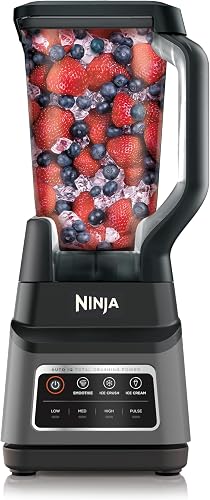
Ninja Professional Plus Blender BN701 1400W Auto-iQ 72oz Pitcher - Smoothies, Frozen Drinks, Ice Cream

Ninja Professional Blender BL610 1000W 72oz Pitcher Total Crushing Technology

Ninja Fit QB3001SS Personal Blender, 700W, 16oz Cups
As an Amazon Associate we earn from qualifying purchases. Product prices and availability are accurate as of the date/time indicated.
Frequently Asked Questions
Is a high-speed blender worth the money?
It is worth it if you regularly blend ice, frozen fruit, leafy greens or nuts, where extra power and a tamper give smoother results. For soft fruit smoothies and sauces, a 500–800 W blender is usually enough.
What is the difference between a blender and a food processor?
A blender liquefies and purees food in a tall jar, so it suits smoothies and soups. A food processor has a wide bowl and slicing or shredding discs, so it suits chopping, dough and grated vegetables.
Can I use a blender instead of a juicer?
Partly. A blender keeps the fiber, so you get a thick, pulpy drink. To get something closer to juice, blend the produce with a little water and strain it through a fine mesh bag or cloth.
Should I buy a blender with a self-clean cycle?
It is a convenience, not a necessity. Most blenders clean in under a minute with warm water and a drop of dish soap. Choose dishwasher-safe parts if you want less hand washing, and check the manual for rack limits.
{“@context”: “https://schema.org”, “@type”: “FAQPage”, “mainEntity”: [{“@type”: “Question”, “name”: “Is a high-speed blender worth the money?”, “acceptedAnswer”: {“@type”: “Answer”, “text”: “It is worth it if you regularly blend ice, frozen fruit, leafy greens or nuts, where extra power and a tamper give smoother results. For soft fruit smoothies and sauces, a 500–800 W blender is usually enough.”}}, {“@type”: “Question”, “name”: “What is the difference between a blender and a food processor?”, “acceptedAnswer”: {“@type”: “Answer”, “text”: “A blender liquefies and purees food in a tall jar, so it suits smoothies and soups. A food processor has a wide bowl and slicing or shredding discs, so it suits chopping, dough and grated vegetables.”}}, {“@type”: “Question”, “name”: “Can I use a blender instead of a juicer?”, “acceptedAnswer”: {“@type”: “Answer”, “text”: “Partly. A blender keeps the fiber, so you get a thick, pulpy drink. To get something closer to juice, blend the produce with a little water and strain it through a fine mesh bag or cloth.”}}, {“@type”: “Question”, “name”: “Should I buy a blender with a self-clean cycle?”, “acceptedAnswer”: {“@type”: “Answer”, “text”: “It is a convenience, not a necessity. Most blenders clean in under a minute with warm water and a drop of dish soap. Choose dishwasher-safe parts if you want less hand washing, and check the manual for rack limits.”}}]}