Running a built-in dishwasher freestanding is generally unsafe, because this 24-inch-wide unit with unfinished sides needs a typical 34-inch-tall cabinet opening.
Can a built-in dishwasher be freestanding? The short answer
Short answer: generally no. A standard US built-in dishwasher is about 24 inches wide and made to slide into a cabinet opening that is typically 34 inches tall, then be fastened under a countertop. Its sides, top and back are usually left unfinished because the cabinets and counter are meant to cover them.
Three things can change the answer: your model, local code and what ‘freestanding’ means to you. If it means standing alone in a room with nothing around it, the answer is no. If it means sitting in an island or a new cabinet run, that is a normal install, as long as you build the enclosure and follow the install guide for your model.
In the US, ‘built-in’ means under-counter, ‘portable’ means on wheels with a faucet hookup, and ‘convertible’ means a portable that can later be built in. UK listings use ‘integrated’ and ‘freestanding’ differently, so check US specs before relying on UK advice.
Why a built-in dishwasher can’t stand on its own
A built-in leans on the kitchen around it for four jobs.
- Staying upright. Pulling out a loaded lower rack with the door open shifts weight forward. Mounting brackets, usually screwed to the underside of the countertop or to the side cabinets, plus the leveling feet, keep the unit from tipping.
- Covering raw surfaces. Unfinished sides and top mean bare metal, exposed edges and fasteners, and often an insulation blanket meant to sit inside a cabinet opening.
- Shielding connections. The electrical connection and water fittings are designed to stay enclosed. In the open, hoses and wiring are exposed to bumps, pets and kids.
- Containing heat and noise. Cabinets and the counter surround the tub and help muffle sound. Standing alone, expect a louder machine, and a heated dry cycle puts warm surfaces within reach.
Without a counter there is also no usable top. The lid is a bare panel, not a work surface, so nothing should be set or stacked on it.
These four jobs are why a built-in is sold as part of a kitchen, not as a stand-alone appliance. Take away the cabinet and counter, and each one has to be replaced with something the manufacturer never designed or tested.
Built-in vs freestanding vs portable dishwashers
| Type | Sides and top | Hookup | Choose it if | Where it loses |
|---|---|---|---|---|
| Built-in (under-counter) | Unfinished, meant to be enclosed | Permanent water, drain and electrical | You have or are building a cabinet opening | Cannot stand alone; hard to move |
| Freestanding | Finished sides and top, front controls | Home plumbing and power; some models can slide under a counter if the manual says so | You want a stand-alone unit without wheels | Still needs proper hookups |
| Portable (on wheels) | Finished cabinet | Hose adapter to the kitchen faucet, drains into the sink, plugs into an outlet | You rent or can’t change the plumbing | Takes floor space; must sit near the faucet and be hooked up for each load |
Some convertible portables can be built in later, but only models labeled that way. A built-in cannot be converted the other way around, and a freestanding model goes under a counter only if its manual approves that.
Plumbing and electrical connections a dishwasher needs
Any dishwasher that is not a portable uses three permanent connections, and the specifics depend on the model and local code.
- Water supply: a hot-water line, usually from a shutoff valve under the sink.
- Drain: a hose to the sink drain or disposal, routed as a high loop or through an air gap so dirty water can’t flow back into the dishwasher. Which one your area requires is a local plumbing code question.
- Power: either hardwired through a junction box or a cord and plug, depending on the model. Recent editions of the National Electrical Code require GFCI protection for dishwashers in homes, but the code your town has adopted is what counts.
This is why location matters. A spot with no supply, drain or circuit needs all three added, which is a bigger job than simply moving the machine.
Portables work differently. They come with a hose that clips to a faucet adapter and drains into the sink. A built-in isn’t designed for that and its manual won’t list it, so a faucet hookup is not a workaround.
Safer ways to get a dishwasher that stands alone
- Buy a portable. It rolls to the sink and needs no permanent plumbing, which suits renters.
- Buy a freestanding model. If you want it under a counter, confirm in that model’s manual that under-counter use is approved.
- Build an enclosure, or go compact. A cabinet box or island with a countertop on top gives the brackets something to grip, and it is effectively a standard built-in install. If space is tight and you cook for one or two people, a countertop unit avoids the cabinet work entirely.
Decision rule: if the dishwasher can’t be enclosed under a counter or in a cabinet, buy one made to stand alone. Keep the built-in only if you will build the cabinet around it.
If you already own a built-in, the same rule applies. Either plan the cabinet run it needs, or look into returning or reselling it and choosing a portable or freestanding model instead.
How to measure for a dishwasher opening
- Width: standard built-ins are 24 inches, and some narrower models exist.
- Height from floor to the underside of the counter: the typical opening is about 34 inches, but confirm against the model’s spec sheet.
- Depth, plus room for the door to open fully with a loaded rack pulled out.
- Distance from the spot to the water supply, drain and outlet.
- The cutout drawing in the install guide, which lists the exact opening size.
Measure in more than one place, since floors and cabinets are rarely perfectly level. Adjustable leveling feet cover small differences, and the guide lists how much range your model allows.
Warranty, install guide and when to call a pro
The install guide ships with the unit and is also on the manufacturer’s site by model number, which is printed on the model label, often along the door edge. It gives the cutout size, bracket instructions and connection requirements. Follow the manual or label for every clearance, temperature and load limit.
Most warranties assume installation by those instructions. Running a unit outside the guide, or without the cabinet that supports it, may give the maker grounds to deny a claim. Read your warranty text, because terms vary by brand.
Call a licensed plumber or electrician when:
- there is no water supply, drain or outlet where you want the dishwasher
- the unit is hardwired and has to be disconnected or moved
- you need a new circuit or GFCI protection
- your area requires a permit or an air gap you don’t have
- you see a leak, scorched wiring or a tripping breaker after a move
Your local building department can tell you which codes apply. If you rent, get the landlord’s approval before any change.
Our Top Picks
Ready to shop? These are the top-rated options from our hands-on roundup, Best Dishwashers of 2026.
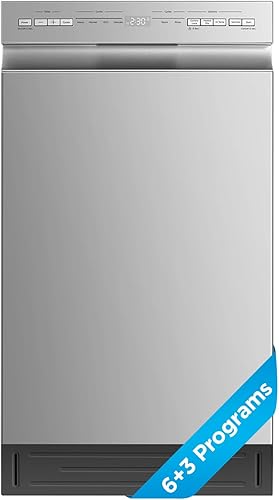
Midea MDF18A1AST 18 Inch Built-in Dishwasher

COMFEE' CDC22P1BBB Countertop Dishwasher

COMFEE' CDC17P0ABB Countertop Dishwasher
As an Amazon Associate we earn from qualifying purchases. Product prices and availability are accurate as of the date/time indicated.
Frequently Asked Questions
Can I convert a portable dishwasher into a built-in?
Only if it is a model sold as convertible, which the manual will say. Otherwise the cabinet, hookups and trim are not designed for it. Decision rule: if the manual doesn’t list the conversion, don’t attempt it.
Can I add side panels to a built-in dishwasher?
Only if the manufacturer lists a panel or trim kit for that exact model. Homemade panels cover the bare metal but do not replace the support of a cabinet. Contact the brand with your model number before buying anything.
Can a built-in dishwasher go in a kitchen island?
Yes, because an island is a cabinet enclosure with a countertop, which is what a built-in needs. Drain routing is the hard part, and rules vary by locality, so ask your building department before the cabinets are set.
Is a built-in dishwasher too big for an older kitchen?
Not usually on width, since 24 inches is the standard cabinet size, but older openings can be shorter or shallower. Compare your measurements to the model’s spec sheet, and look at narrower models if the opening is tight.
Can I put a freestanding dishwasher where a built-in used to be?
Often yes, if the opening fits and the freestanding model’s manual approves under-counter use. Check width, height and depth against its spec sheet, and expect to adjust the hookups to match.
Can I run a built-in dishwasher in an unheated garage?
Check the install guide for temperature limits on the room. Water left in the lines and pump can freeze and crack parts. A garage also lacks the cabinet enclosure the unit is designed for.
{“@context”: “https://schema.org”, “@type”: “FAQPage”, “mainEntity”: [{“@type”: “Question”, “name”: “Can I convert a portable dishwasher into a built-in?”, “acceptedAnswer”: {“@type”: “Answer”, “text”: “Only if it is a model sold as convertible, which the manual will say. Otherwise the cabinet, hookups and trim are not designed for it. Decision rule: if the manual doesn’t list the conversion, don’t attempt it.”}}, {“@type”: “Question”, “name”: “Can I add side panels to a built-in dishwasher?”, “acceptedAnswer”: {“@type”: “Answer”, “text”: “Only if the manufacturer lists a panel or trim kit for that exact model. Homemade panels cover the bare metal but do not replace the support of a cabinet. Contact the brand with your model number before buying anything.”}}, {“@type”: “Question”, “name”: “Can a built-in dishwasher go in a kitchen island?”, “acceptedAnswer”: {“@type”: “Answer”, “text”: “Yes, because an island is a cabinet enclosure with a countertop, which is what a built-in needs. Drain routing is the hard part, and rules vary by locality, so ask your building department before the cabinets are set.”}}, {“@type”: “Question”, “name”: “Is a built-in dishwasher too big for an older kitchen?”, “acceptedAnswer”: {“@type”: “Answer”, “text”: “Not usually on width, since 24 inches is the standard cabinet size, but older openings can be shorter or shallower. Compare your measurements to the model’s spec sheet, and look at narrower models if the opening is tight.”}}, {“@type”: “Question”, “name”: “Can I put a freestanding dishwasher where a built-in used to be?”, “acceptedAnswer”: {“@type”: “Answer”, “text”: “Often yes, if the opening fits and the freestanding model’s manual approves under-counter use. Check width, height and depth against its spec sheet, and expect to adjust the hookups to match.”}}, {“@type”: “Question”, “name”: “Can I run a built-in dishwasher in an unheated garage?”, “acceptedAnswer”: {“@type”: “Answer”, “text”: “Check the install guide for temperature limits on the room. Water left in the lines and pump can freeze and crack parts. A garage also lacks the cabinet enclosure the unit is designed for.”}}]}