
You don’t need a dehydrator to make jerky, because a home oven can heat the meat to a safe temperature and then dry it slowly.
Do you need a dehydrator to make jerky? Not if you have an oven
A dehydrator does three jobs: it holds a low, steady temperature, moves air across the meat, and keeps strips spread apart. An oven, smoker or some air fryers can do the same jobs with a little help.
What you need for any method:
- Lean meat with the fat trimmed off
- Wire racks that let air reach both sides of each strip
- An oven thermometer, because many ovens don’t hold the temperature on the dial
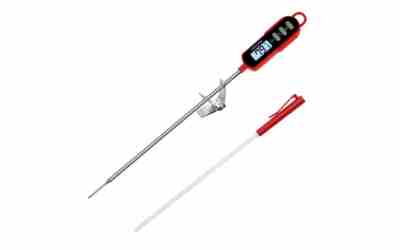
- A probe thermometer to check the meat itself
Two caveats depend on your oven. Many ovens bottom out around 170°F and some at 200°F, so test yours before you start. Some ovens also shut off or won’t hold heat with the door open, so check the manual before propping the door. If the manual says not to, dry with the door closed and check the strips earlier.
What temperature makes homemade jerky safe?
USDA advises heating meat to 160°F (poultry to 165°F) before or during drying. Low-temperature drying removes water, but it does not reliably kill bacteria such as Salmonella and E. coli. The heating step does that, and many recipes skip it.
Treat jerky as two separate temperature jobs:
- Heating step: bring the meat to the safe temperature above, checked with a probe thermometer in the thickest strips. The oven runs at 275°F for this step, and it is short because thin strips reach the target quickly. Watch the probe, not the clock.
- Drying step: drop the oven to its lowest setting so moisture leaves slowly. USDA lists 130–140°F as the dehydrator range. Most ovens can’t go that low, so dry at the lowest setting you have and check the strips sooner.
Keeping these jobs separate is what makes oven jerky work. Staying at 275°F cooks the meat into a chewy strip instead of drying it, and staying at a low temperature the whole time skips the kill step.
Start with fresh meat, marinate it in the refrigerator, and never reuse marinade that touched raw meat unless you boil it first.
How to make jerky in an oven, step by step
- Slice. Trim all visible fat. Partly freezing the meat makes slicing easier. Cut strips about 1/4 inch thick. Slicing with the grain gives chewier jerky, and slicing against it gives a more tender bite.
- Marinate. Refrigerate the strips in the marinade overnight. Pat them dry before cooking.
- Test the oven. Put the oven thermometer on the middle rack, set the oven to its lowest temperature, and read it after 20 minutes. Note the real number.
- Set up the pans. Lay strips on wire racks set over foil-lined pans to catch drips. Leave space between strips so none touch.
- Heat the meat. Preheat the oven to 275°F and put the pans in. Poke the probe into the thickest strips and pull the pans when it reads the safe temperature from the section above.
- Drop to drying heat. Reduce the oven to its lowest setting. If the manual allows, prop the door open about an inch with a wooden spoon so moisture escapes.
- Dry and rotate. Swap and turn the pans every hour or so. Start checking at 3 hours.
Typical oven drying runs 3 to 6 hours, but slice thickness, oven temperature and humidity can push that longer. Go by how the jerky feels. Stay home while the oven is running with the door propped.
A toaster oven follows the same plan, though small ones run hot and crowd easily. Our notes on using a toaster oven as a dehydrator cover the limits.
Mistakes that ruin oven jerky
- Trusting the dial instead of an oven thermometer
- Cutting thick and thin strips in the same batch, so thin ones turn brittle while thick ones stay wet
- Leaving fat on, which turns rancid sooner and keeps strips greasy
- Skipping the heating step because the drying temperature seemed low enough
- Never lowering the oven after the heating step, which gives cooked meat rather than dried jerky
Dehydrator vs oven, smoker and air fryer for jerky
| Method | Drying temperature | Typical drying time | Batch size | Evenness | Where it loses |
|---|---|---|---|---|---|
| Dehydrator | 130–140°F (USDA range) | About 3–6 hours | Largest, multiple trays | Best: a fan moves air across every tray | Another appliance to store |
| Oven | Lowest setting after the heating step | About 3–6 hours | Limited by racks and pans | Moderate: no fan, so pans need rotating every hour | Oven tied up for hours, door often propped |
| Smoker | Lowest steady setting it holds | About 3–6 hours | Large grates | Varies: temperature swings with fuel and vents | Hours of tending and heat spikes |
| Air fryer | Dehydrate mode or lowest setting, per manual | About 3–6 hours | Smallest | Good airflow, but a crowded basket creates hot spots | Many lowest settings run too hot without a dehydrate mode |
Drying times vary with slice thickness, humidity and how steady the temperature stays, so judge doneness by feel. All four methods still need the heating step. A smoker can handle it by running hot enough to bring the meat up first, then dropping the temperature to dry.
Choose the oven if you make jerky a few times a year and your oven holds a low setting. Choose the smoker if you want smoke flavor and don’t mind watching it. Choose the air fryer only for a small batch and only if the manual lists a dehydrate mode or a low enough temperature. Choose a dehydrator for big batches and little babysitting.
How do you know jerky is done, and how do you store it?
Take one piece out, let it cool for a few minutes, then bend it. Done jerky bends and cracks on the surface but doesn’t snap in two. If it bends like fresh meat or shows wet spots, it needs more time. If it snaps clean, it’s overdone.
Storing it:
- Cool the jerky fully on a rack before packing. Warm jerky sweats in a closed container.
- Pack it loosely in an airtight container or zip bag for a day. If condensation appears, return it to the oven to dry further.
- USDA gives these storage times for homemade jerky: about 1–2 weeks in a pantry, 1–2 months in the refrigerator and 6 months in the freezer.
- Throw out any jerky with mold, an off smell or a slimy feel.
When is a dehydrator worth buying for jerky?
Buy one when the oven becomes the problem. As a rule of thumb, if you make jerky more than a few times a year or want several pounds per batch, a dehydrator pays off in time and consistency.
It’s also worth it if:
- Your oven can’t hold a low temperature even with a thermometer check
- You need the oven for dinner while the jerky dries
- You process game meat in volume after hunting season
If that describes you, our guide to the best dehydrator for deer jerky covers the options. If you make jerky once or twice a year, use the oven plan above.
Our Top Picks
Ready to shop? These are the top-rated options from our hands-on roundup, Best Home Dehydrator For Jerky of 2026.

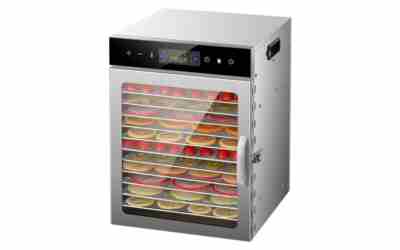
PSIIDAN FD-1033 Food Dehydrator, 8 Trays
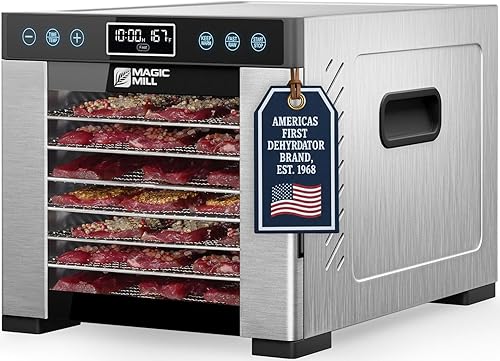
Magic Mill MFD-7700 7-Tray Stainless Steel Dehydrator

NESCO FD-75A Snackmaster Pro 5-Tray Dehydrator
As an Amazon Associate we earn from qualifying purchases. Product prices and availability are accurate as of the date/time indicated.
Frequently Asked Questions
Can I use a convection oven for jerky?
Yes, if it has a low enough setting. The fan moves air across the strips like a dehydrator does, so jerky may dry sooner and unevenly at the edges. Start checking an hour earlier than usual and still rotate the pans.
Do I need curing salt to make jerky in the oven?
No. The heating step is what makes oven jerky safe, and curing salt is optional for color and flavor. If you add it, follow the amounts on the product label.
Can I use a baking sheet only, without a wire rack?
You can, but the undersides stay wet and dry slowly. Turn the strips every 30 to 45 minutes and blot any pooled liquid. A wire rack set over a pan is the better choice because air reaches both sides.
Can I dry two pans at once?
Yes, on two oven racks, as long as strips don’t touch and air can move between the pans. Swap the top and bottom pans each time you turn the strips so both dry evenly.
Is my oven too small for a big jerky batch?
It is if you can’t keep strips from touching. Dry what fits in a single layer and run a second batch, since crowded strips dry unevenly. Decision rule: if you need more than two oven loads at once, a dehydrator is the better tool.
{“@context”: “https://schema.org”, “@type”: “FAQPage”, “mainEntity”: [{“@type”: “Question”, “name”: “Can I use a convection oven for jerky?”, “acceptedAnswer”: {“@type”: “Answer”, “text”: “Yes, if it has a low enough setting. The fan moves air across the strips like a dehydrator does, so jerky may dry sooner and unevenly at the edges. Start checking an hour earlier than usual and still rotate the pans.”}}, {“@type”: “Question”, “name”: “Do I need curing salt to make jerky in the oven?”, “acceptedAnswer”: {“@type”: “Answer”, “text”: “No. The heating step is what makes oven jerky safe, and curing salt is optional for color and flavor. If you add it, follow the amounts on the product label.”}}, {“@type”: “Question”, “name”: “Can I use a baking sheet only, without a wire rack?”, “acceptedAnswer”: {“@type”: “Answer”, “text”: “You can, but the undersides stay wet and dry slowly. Turn the strips every 30 to 45 minutes and blot any pooled liquid. A wire rack set over a pan is the better choice because air reaches both sides.”}}, {“@type”: “Question”, “name”: “Can I dry two pans at once?”, “acceptedAnswer”: {“@type”: “Answer”, “text”: “Yes, on two oven racks, as long as strips don’t touch and air can move between the pans. Swap the top and bottom pans each time you turn the strips so both dry evenly.”}}, {“@type”: “Question”, “name”: “Is my oven too small for a big jerky batch?”, “acceptedAnswer”: {“@type”: “Answer”, “text”: “It is if you can’t keep strips from touching. Dry what fits in a single layer and run a second batch, since crowded strips dry unevenly. Decision rule: if you need more than two oven loads at once, a dehydrator is the better tool.”}}]}