
Most people size a generator by looking at the total wattage printed on the box and comparing it to a mental checklist of what they own — fridge, some lights, maybe the furnace. Then they get it home, plug in the fridge and the well pump at the same time, and the generator trips or stalls even though the number on the box was supposedly “big enough.” The math people skip isn’t the sum of what everything uses while running. It’s the one-time surge a motor pulls the instant it kicks on, stacked on top of everything else that’s already running. Get that one number right and sizing a generator stops being a guess.
The Quick Answer: Running Watts, Plus Your Single Biggest Surge
The formula that actually works is simpler than most calculators make it look:
- Add up the running watts of everything you want powered at the same time.
- Add the starting watts of the single largest motor in that list — not all of them, just the biggest one, because appliances rarely start at the exact same instant.
- That total is your minimum generator size. Add roughly 15-20% headroom on top so the unit isn’t running flat-out constantly.
Everything below exists to help you fill in real numbers instead of guessing at either side of that equation.
Running Watts vs. Starting (Surge) Watts, Explained
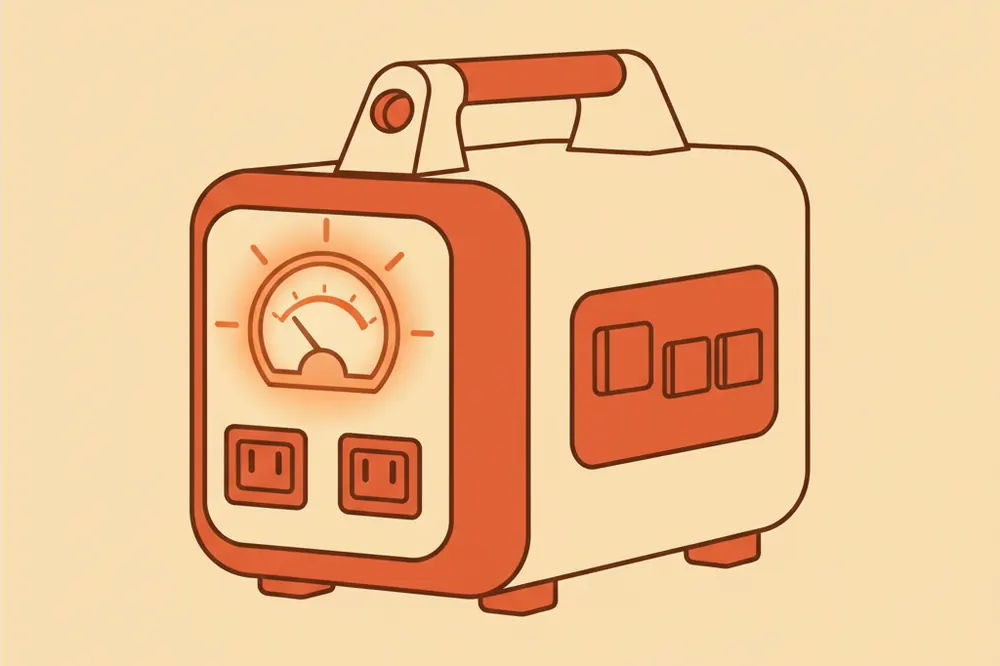
Running watts (also called rated watts) is the steady power a device draws once it’s already on. Starting watts (surge, peak, or locked-rotor watts) is the brief spike — usually well under a second — that an electric motor pulls the instant it switches on, before it’s up to speed. Purely resistive devices like space heaters, toasters, and incandescent bulbs barely have a surge at all: what they draw running is close to what they draw starting. Anything with a compressor or a motor is a different story.
Why a generator that looks “big enough” on paper still trips
A generator’s rated wattage is what it can sustain continuously — not the ceiling it can survive for even a second. If your running load is already sitting at, say, 3,800 watts on a 4,000-watt unit and the well pump kicks on with a 2,500-watt surge, the generator doesn’t get a “please wait” grace period. It sees an instantaneous demand of 6,300 watts against a machine that can’t deliver it, and it stalls or trips its breaker. This is the single most common reason people report a “big enough” generator failing in practice — the sizing math only accounted for running watts and ignored the surge stacking on top.
How Many Watts Does Your House Actually Use? (Reference Table)
These are typical published ranges, not your exact appliance — nameplates vary by model, age, and horsepower, so treat this as a starting point and check the sticker on your own unit (usually on the back or bottom) before finalizing a purchase.
| Appliance | Running Watts | Starting Watts |
|---|---|---|
| Refrigerator or freezer | 150 – 400W | 800 – 1,200W |
| Sump pump (1/3 HP) | 800 – 1,050W | 1,300 – 2,200W |
| Well pump (1/2 HP) | 1,000 – 1,500W | 2,000 – 4,000W |
| Well pump (3/4 – 1 HP) | 1,500 – 2,500W | 3,000 – 6,000W+ |
| Furnace blower fan (gas furnace) | 500 – 800W | 1,000 – 2,300W |
| Window air conditioner (10,000 BTU) | 1,000 – 1,500W | 2,200 – 3,600W |
| Central air conditioner (per ton) | ~1,500W per ton | ~3,000W per ton |
| Microwave | 600 – 1,500W | Close to running watts |
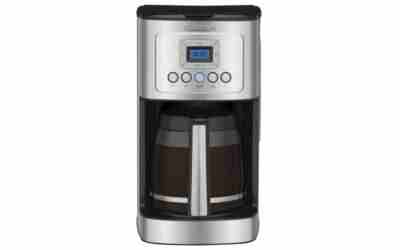
| Coffee maker | 800 – 1,500W | Close to running watts |
| 1,500W space heater | 1,500W | Close to running watts |
| LED lighting (per fixture) | 5 – 15W | Negligible |
| Laptop or phone charger | 30 – 65W | Negligible |
| Modern TV (LED, 50″) | 60 – 150W | Negligible |
Central air is the outlier worth flagging on its own: a 3-ton unit (common for a mid-size house) runs around 4,500 watts and can surge to roughly 9,000 watts starting — which alone exceeds what most portable generators produce. A soft-start kit, covered further down, is usually the more realistic answer than buying a much larger unit just for one appliance.
The Sizing Formula, Applied
Once you have running and starting watts for each item, the process is: sum every running watt figure for what you want on at once, identify the single highest starting-watt figure among those items, and add that one surge number — not the surge of every motor — to the running total.
The reason you only add the largest surge, not all of them stacked together, is timing: a refrigerator compressor and a well pump motor essentially never both hit their startup instant in the same fraction of a second unless you manually flip them on simultaneously. Generators are sized around the realistic worst case, not a scenario that basically doesn’t happen. If you genuinely can’t stagger two big motors — say, a sump pump and a well pump on the same circuit during a storm — treat both surges as a real risk and size for the combined total instead.
Worked Example 1: Just the Essentials (Outage Backup)
A common backup-power list: refrigerator, sump pump, a few lights, a Wi-Fi router, and phone charging.
- Refrigerator running: 300W
- Sump pump running: 900W
- 5 LED lights: 50W
- Router + phone chargers: 100W
- Running total: 1,350W
- Largest starting watts (sump pump): 2,000W
- Peak demand: 1,350W + 2,000W = 3,350W
A generator in the 3,500–4,000-watt class covers this with modest headroom — the size range most of our best portable generators and compact inverter generators roundups are built around.
Worked Example 2: Running Most of the House
Add a furnace blower and a window AC unit to the same list, which is closer to what a whole-house backup setup needs to cover:
- Refrigerator running: 300W
- Sump pump running: 900W
- Furnace blower running: 700W
- Window AC running: 1,300W
- Lights + electronics: 250W
- Running total: 3,450W
- Largest starting watts (window AC): 3,600W
- Peak demand: 3,450W + 3,600W = 7,050W
That pushes you into a 7,500–8,500-watt class generator, which is where most home backup power and whole-home generator picks start. Add central air to a list like this and the math typically jumps into standby-generator territory rather than portable — see the note on soft-start kits below before assuming you need to size that high.

Portable vs. Inverter vs. Whole-House: Which Category Actually Fits
Once you have a peak-demand number, it points you at a category more than a specific model:
- Under about 4,000W: covers a fridge, sump pump, lights, and electronics — the sweet spot for compact inverter generators, which also run quieter and produce cleaner power for sensitive electronics.
- 4,000–8,500W: adds a furnace blower and window AC or a well pump — this is the range most portable generators and home generator roundups are built for.
- Above 8,500–10,000W, or anything including central air: starts overlapping with permanently installed standby generators rather than portables, since central AC surge alone can eat most of a portable unit’s headroom.
One honest caveat: buying bigger “to be safe” isn’t free. Oversized generators running well below their rated load waste fuel and, on older carbureted models, are more prone to wet-stacking and carbon buildup from running underloaded for long stretches. Size to the real peak-demand number above, with headroom — not to the largest number that sounds safe.
Common Sizing Mistakes That Leave People Underpowered
- Adding every appliance’s starting watts together instead of just the single biggest one — this overestimates the requirement and pushes people toward a far more expensive unit than they need.
- Ignoring central air’s surge entirely because “it’s just an AC unit” — a 3-ton system’s ~9,000W starting draw is bigger than most portable generators produce, period.
- Sizing off nameplate running watts alone and skipping the starting-watts column completely — this is the single most common cause of a generator that trips the moment a compressor kicks on.
- Not accounting for well or sump pump surge during storms — exactly when you need backup power most is when these motors are cycling hardest.
- Forgetting a transfer switch or interlock kit isn’t optional — sizing the generator correctly doesn’t matter if there’s no safe, code-compliant way to actually connect it to your home’s circuits.
Staggering Startup Order Buys You More Headroom Than You’d Think
The formula above assumes worst-case timing — your biggest motor surging while everything else is already running. In practice, you control most of that timing. If you’re manually plugging appliances into a portable generator (rather than running through a transfer switch feeding your whole panel), start the biggest motor load first, on an otherwise-empty generator, and add smaller running loads afterward. A well pump or window AC starting cold against an idle generator asks for far less than the same surge stacked on top of a fridge, sump pump, and lights that are already pulling power.
This matters most with a transfer switch, where multiple circuits can call for power close together without you controlling the order by hand. Some transfer switches include a load-shedding or sequencing feature specifically to stagger big draws automatically — worth asking about if your peak-demand number is sitting close to your generator’s ceiling rather than comfortably under it.
A Soft-Start Kit Can Change the Math for Central Air
If central air is the one appliance forcing you toward a much bigger (and more expensive) generator, a soft-start capacitor kit installed on the AC compressor is worth investigating before you buy up a size class. These kits stretch the compressor’s startup over roughly a second instead of an instantaneous spike, cutting the starting-watts figure dramatically — often enough to bring a 3-ton unit’s surge down from around 9,000W to closer to 3,000–4,000W. It doesn’t change the running watts, only the surge, but the surge is usually what was pricing people out of a smaller, cheaper generator in the first place. This is a job for a licensed HVAC technician, not a DIY install, since it involves working inside the compressor’s electrical housing.
The Headroom Rule Worth Following
Once you’ve calculated your peak demand, add 15-20% before picking a model. Generators are happiest — quieter, more fuel-efficient, and longer-lived — running at roughly 50-80% of rated capacity rather than pinned at their ceiling. A unit that’s technically “just enough” on paper leaves zero margin for a slightly larger surge than expected, a second small appliance someone plugs in without thinking, or a hot day where the AC compressor works a little harder to start.
Frequently Asked Questions
What size generator do I need to run a whole house?
For a typical mid-size home without central air, 7,500-8,500 running watts covers a refrigerator, sump pump, furnace blower, window AC, and lighting with reasonable headroom. Add central air and you’re usually looking at a standby generator in the 12,000-20,000W range, or a soft-start kit to keep a smaller unit viable. For model picks in that wattage range, WikiGenerators maintains a dedicated home backup power generator guide.
Do I add up all the starting watts or just one?
Just the single largest one. Add every appliance’s running watts together, then add only the starting watts of the biggest motor in that list — appliances essentially never surge at the exact same instant unless you deliberately switch them on together.
Can a generator run a central air conditioner?
Only if it’s sized for the surge, not just the running load. A 3-ton central AC unit needs roughly 4,500 running watts but can spike to about 9,000 watts starting — bigger than most portable generators. A soft-start kit on the compressor can cut that surge enough to make a smaller generator workable.
Is it bad to buy a generator that’s bigger than I need?
It’s not dangerous, but it’s not free either. Oversized generators running well below their rated capacity burn fuel less efficiently and, on carbureted models, are more prone to carbon buildup from prolonged underloaded running. Size to your actual peak-demand number plus about 15-20% headroom rather than the biggest unit that sounds safe.
How do I find the exact wattage of my appliances instead of using estimates?
Check the nameplate — a sticker or engraved plate usually on the back, bottom, or inside a service panel of the appliance. It lists rated running watts (or amps, which you multiply by voltage to get watts) directly. Starting watts for motors aren’t always printed; when they’re not, the ranges in the table above are a reasonable stand-in, or you can ask the manufacturer directly for locked-rotor amperage.