
For most homeowners, the dehydrator vs freeze dryer decision comes down to this: buy a dehydrator (about $50–$500) for jerky, fruit and herbs, and a freeze dryer (about $2,000–$5,000) only if you want long-term storage of full meals, dairy and eggs. A dehydrator is cheaper, faster and lighter. A freeze dryer keeps more of the original texture and stores longer.
How a dehydrator and a freeze dryer work
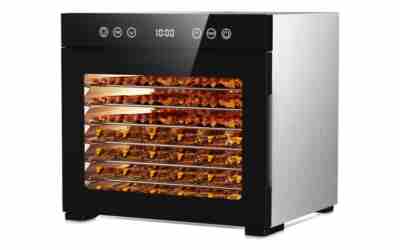
A dehydrator blows warm air across stacked trays. Temperatures typically run from about 95°F to 165°F, depending on the model and the food. Water evaporates over roughly 8–10 hours, and the food shrinks and ends up at about 10–15% moisture.
A freeze dryer chills food to around -30°F, then pulls a vacuum so the ice turns straight to vapor without melting. A full cycle takes about 20–40 hours and leaves food near 5% moisture, with almost no shrinkage.
That difference explains the results. Heat toughens and darkens food, while freeze drying leaves a light, crisp structure that soaks water back up fast. A freeze dryer also needs a vacuum pump. Oil-type pumps need regular oil changes, so follow the manual for your model.
Dehydrator vs freeze dryer side by side
| Factor | Dehydrator | Home freeze dryer |
|---|---|---|
| Typical price | About $50–$500 | About $2,000–$5,000 for basic models |
| Method | Warm moving air | Freeze, vacuum, then gentle heat |
| Batch time | About 8–10 hours | About 20–40 hours |
| Final moisture | About 10–15% | About 5% |
| Weight | About 10–20 lb | Over 100 lb |
| Power draw | Roughly a few hundred watts; varies by model | About 990–1,210 W for Harvest Right small and medium units, about 1,500 W large, about 1,700 W X-large |
| Texture | Chewy, leathery, shrunken | Crisp, airy, close to original shape |
| Rehydration | Slow and partial | Fast and close to fresh |
| Noise and space | Fan hum; fits on a counter | Pump noise for many hours; needs a sturdy floor or table spot with airflow around it |
Power and weight vary by brand and size, so confirm figures on the maker’s spec sheet before you buy.
What does each one cost to buy and run?
The machine price is the big gap. The running cost is smaller than most people expect.
Harvest Right puts a freeze dryer at about $1.25–$2.80 per batch, depending on your electricity rate. Metered tests show the heaters cycling on only part of the time, so average draw can sit well under the peak. One independent test measured about 725 W.
At a higher rate, the cost climbs. Estimate: 725 W × 30 hours ≈ 21.75 kWh, and at 20¢ per kWh that is about $4.35 per batch. A dehydrator is cheaper to run. Estimate: a 600 W unit × 10 hours = 6 kWh, and at 17¢ per kWh that is about $1.02.
Worked example: does a freeze dryer pay back?
Assumptions: a $2,500 machine, and $7 per batch for power ($4), mylar bags, oxygen absorbers and pump upkeep (estimate). The batch value is what you would otherwise spend on that food or throw out.
- $40 batch (meals, cheese, eggs you would buy freeze-dried): saves $33 per batch, so $2,500 ÷ $33 ≈ 76 batches. At one batch a week, that is about 1.5 years.
- $15 batch (cheap garden produce): saves $8 per batch, so $2,500 ÷ $8 ≈ 313 batches. At one batch a week, that is about 6 years.
The rule: a freeze dryer pays back only if you run it often on food that is costly or would be wasted. If budget is the main concern, start with an affordable dehydrator. A $100 unit costs less than three freeze-dryer batches’ worth of supplies.
Which foods suit a dehydrator and which need a freeze dryer?
Best in a dehydrator
- Jerky and other thin-sliced meat
- Fruit slices, fruit leather and banana or apple chips
- Herbs, which dry well at low temperatures (see how long to dry herbs in a dehydrator)
- Mushrooms and most vegetables
Best in a freeze dryer
- Full meals, soups and casseroles
- Dairy such as cheese, yogurt and milk
- Eggs, raw or scrambled
- Cooked meats, and treats like ice cream
A dehydrator cannot properly dry dairy, eggs or wet meals. They turn gummy or stay moist, which is unsafe to store.
Where both fall short: pure fat, honey, syrup and very sugary or oily foods. They dry poorly or spoil sooner in either machine.
Nutrition and flavor: freeze drying uses low temperatures, so it generally keeps more heat-sensitive vitamins and a flavor closer to fresh. Minerals and fiber hold up in both methods. Exact retention varies by food.
How long does dried food last?
Shelf-life claims vary a lot because the real limits are moisture, oxygen, packaging and storage temperature. Treat these as rules of thumb, not guarantees.
- Dehydrated fruit and vegetables in jars or zip bags: roughly 6–12 months at room temperature. Cooler, darker storage and oxygen absorbers extend that.
- Homemade jerky: best within a couple of months in the pantry. Refrigerate or freeze it for longer.
- Freeze-dried food in mylar bags with oxygen absorbers, stored cool and dark: Harvest Right says up to 25 years. Many users plan on far less for fatty foods.
- Freeze-dried food in a loosely sealed container: it reabsorbs moisture quickly, so use it within weeks to months.
Freeze-dried food keeps longer mainly because it starts drier and gets packaged airtight. A dehydrated food sealed the same way will also last longer than one left in a jar.
Dehydrator vs freeze dryer: which should you buy?
Choose a dehydrator if you make jerky, dried fruit or herbs, want a machine under $500, and want finished food in under a day. If jerky is your main goal, see our picks for the best home dehydrator for jerky. Where it loses: chewy texture, slow rehydration and shorter shelf life.
Choose a freeze dryer if you are building a long-term food supply, want dairy, eggs and whole meals preserved, or process a lot of garden food every week. Where it loses: price, batch time of 20–40 hours, weight and pump noise.
You can own both. A dehydrator handles jerky and herbs well, and a freeze dryer takes everything else.
Before you buy a freeze dryer
- Power: units draw up to about 13–15 amps at peak (Harvest Right, small and medium). Plug into a properly rated, grounded outlet, ideally a dedicated circuit, and skip extension cords. Follow the manual and local code.
- Weight: over 100 lb, so plan a two-person lift and a sturdy surface.
- Meat: USDA guidance is 160°F internal temperature for beef and 165°F for poultry. Freeze drying does not reliably kill bacteria, so cook meat first or treat the dried product as raw.
- Dryness and storage: low-acid foods are not shelf-stable unless fully dry and stored airtight. Moisture risks mold and bacterial growth, including botulism. Fatty freeze-dried foods spoil sooner.
Our Top Picks
Ready to shop? These are the top-rated options from our hands-on roundup, Best Excalibur Dehydrator of 2026.

PSIIDAN FD-1033 8-Tray 650W Food Dehydrator
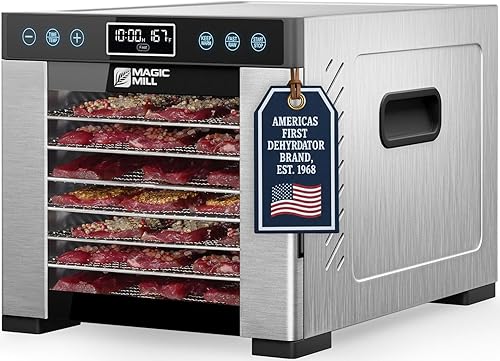
Magic Mill MFD-7700 7-Tray Stainless Steel Dehydrator

Excalibur DH10SSSS13 10-Tray Digital Dehydrator
As an Amazon Associate we earn from qualifying purchases. Product prices and availability are accurate as of the date/time indicated.
Frequently Asked Questions
Can I use a dehydrator for jerky and a freeze dryer for everything else?
Yes. A dehydrator makes chewy jerky well and costs far less to run. Use the freeze dryer for meals, dairy, eggs and fruit you want crisp. Cook or heat the meat to USDA temperatures for jerky: 160°F for beef, 165°F for poultry.
Can a dehydrator dry dairy or eggs?
Not safely for storage. Dairy and eggs are high in moisture, protein and fat, and a dehydrator leaves them gummy or damp. A freeze dryer handles cheese, yogurt, milk and eggs far better because it removes water without cooking the food.
Does freeze-dried food really last 25 years?
That is Harvest Right’s claim for food stored properly in mylar bags with oxygen absorbers, kept cool and dark. Real life depends on dryness, packaging and temperature. Fatty foods and poorly sealed bags spoil much sooner.
Does a freeze dryer need a special outlet?
Home units draw about 990–1,700 W depending on size, so use a properly rated, grounded outlet, ideally a dedicated circuit. Avoid extension cords and shared circuits with other big appliances. Check the manual and your local electrical code.
{“@context”: “https://schema.org”, “@type”: “FAQPage”, “mainEntity”: [{“@type”: “Question”, “name”: “Can I use a dehydrator for jerky and a freeze dryer for everything else?”, “acceptedAnswer”: {“@type”: “Answer”, “text”: “Yes. A dehydrator makes chewy jerky well and costs far less to run. Use the freeze dryer for meals, dairy, eggs and fruit you want crisp. Cook or heat the meat to USDA temperatures for jerky: 160°F for beef, 165°F for poultry.”}}, {“@type”: “Question”, “name”: “Can a dehydrator dry dairy or eggs?”, “acceptedAnswer”: {“@type”: “Answer”, “text”: “Not safely for storage. Dairy and eggs are high in moisture, protein and fat, and a dehydrator leaves them gummy or damp. A freeze dryer handles cheese, yogurt, milk and eggs far better because it removes water without cooking the food.”}}, {“@type”: “Question”, “name”: “Does freeze-dried food really last 25 years?”, “acceptedAnswer”: {“@type”: “Answer”, “text”: “That is Harvest Right’s claim for food stored properly in mylar bags with oxygen absorbers, kept cool and dark. Real life depends on dryness, packaging and temperature. Fatty foods and poorly sealed bags spoil much sooner.”}}, {“@type”: “Question”, “name”: “Does a freeze dryer need a special outlet?”, “acceptedAnswer”: {“@type”: “Answer”, “text”: “Home units draw about 990–1,700 W depending on size, so use a properly rated, grounded outlet, ideally a dedicated circuit. Avoid extension cords and shared circuits with other big appliances. Check the manual and your local electrical code.”}}]}