
Most home meat grinders cost between $25 and $400, depending on type and power. Hand-crank models sit at the low end, electric countertop grinders cover the middle, and heavy-duty units for hunters or bulk processing can pass $500. Here is what each price tier buys, what drives meat grinder cost, and where extra expenses show up.
Meat grinder cost at a glance
Prices vary by brand, retailer and sales, so treat these as typical ranges rather than quotes. The biggest factors are how the grinder is powered and how much meat you plan to process.
| Type | Typical price | Best for |
|---|---|---|
| Hand-crank | $25-$70 | Occasional grinding, small batches |
| Stand mixer attachment | $40-$100 | People who already own a compatible mixer |
| Entry electric | $60-$150 | Burgers, sausage, a few pounds at a time |
| Mid-range electric (#8 to #12) | $150-$400 | Regular grinding, small game, larger batches |
| Heavy-duty (#22 and up) | $400-$1,000+ | Hunters, bulk processing, long sessions |
| Commercial | $1,000-$3,000+ | Butcher shops, small businesses |
If you grind a couple of pounds a month, the low end is usually enough. If you process a whole deer or buy meat in bulk, spending more saves time and frustration.
Hand-crank grinders: the cheapest option
A manual grinder clamps to a counter and runs on muscle. Most cost roughly $25 to $70. Cheaper ones are often tinned cast iron, which can rust if you do not dry it right after washing. Stainless steel versions cost a bit more and are easier to maintain.
The tradeoff is effort. Grinding a few pounds of chilled beef is manageable, but tough, sinewy meat or large batches get tiring fast. Hand models also tend to smear fat if the blade is dull or the meat is not cold enough.
If you want to compare specific options, our guide to the best hand meat grinder covers what to look for in a manual model.
- Best fit: small households, occasional sausage or burger projects, backup use during power outages.
- Watch for: plastic gears, thin clamps that slip, and parts that are not dishwasher or rust safe.
Electric grinders: where most people land
Entry level: about $60 to $150
These countertop units usually have plastic housings and a small motor. They handle beef, pork and chicken in modest batches. Many advertise high wattage, but that number is often a peak or locked-rotor figure, not continuous power. Check for a rated or running wattage if the maker lists one.
Mid-range: about $150 to $400
This tier typically brings all-metal gears, a larger head (often #8 or #12), more grinding plates and a sausage stuffing kit. It is the sweet spot for people who grind every few weeks or process small game.
Heavy-duty: about $400 to $1,000+
Larger motors, bigger heads (#22, #32 and up), and better cooling let these run for long stretches without bogging down. They are overkill for burger night but make sense if you process meat by the dozens of pounds. Some models need a dedicated circuit or draw more power than a standard kitchen outlet comfortably supports, so check the amperage on the spec label.
Stand mixer attachments and other shortcuts
If you already own a stand mixer with a power hub, a grinder attachment is often the cheapest way to get motorized grinding. Expect roughly $40 to $100 depending on whether the housing is plastic or metal. Compatibility depends on your mixer model, so confirm before buying.
The downside is that mixer motors are not built for heavy, sustained grinding. Running a large batch through one can overheat the mixer, and many manufacturers recommend resting between batches. Attachments are best for a few pounds at a time.
Another cost comparison: having a butcher grind meat for you is often inexpensive per pound, but you lose control over cuts, fat ratio and freshness. Many people buy a grinder for those reasons, not only to save money.
What drives the price up
- Motor power and cooling: Bigger motors cost more and handle tougher meat without stalling.
- Head size: Numbers like #8, #12 and #22 indicate the grinding head size. Larger heads move meat faster.
- Materials: Metal gears and stainless steel parts last longer than plastic ones.
- Reverse function: Helpful for clearing jams, and common above the entry tier.
- Accessories: Extra plates, stuffing tubes, kubbe attachments and meat trays can add to the price.
- Warranty and parts availability: Brands that sell replacement blades and plates are usually worth a bit more.
Keep in mind that a cheap grinder with a dull stock blade can mash meat rather than cut it, which affects texture. A sharp blade and plate matter as much as raw power.
Meat grinder cost for hunters
Processing venison or other wild game is harder on a grinder than store-bought beef. Game meat can have sinew and silver skin, and you may be grinding 30 to 60 pounds or more in one session. Many hunters end up in the mid-range to heavy-duty tier, roughly $250 to $700 or more, because underpowered units overheat and jam.
If that is your use case, see our picks for the best meat grinder for venison, the best meat grinder for wild game, and the best meat grinder for deer processing.
A grinder can pay for itself over time. Commercial processing fees vary widely by region and processor, so compare local quotes against the cost of doing it yourself. Remember you also need freezer space, packaging and time.
Extra costs and how to choose
Budget beyond the sticker price for a few items:
- Replacement plates and blades: Often $10 to $40 or more, depending on size.
- Vacuum or freezer bags: Needed for storing ground meat safely.
- Sausage casings and stuffing gear: Only if you plan to make links.
- A food thermometer: Ground meat should reach 160°F for beef, pork and lamb, and 165°F for poultry. A leave-in meat thermometer makes this easy.
Quick decision guide: Grind a few pounds now and then? Hand-crank or mixer attachment. Grind monthly for family meals? Mid-range electric. Process whole animals or bulk meat? Heavy-duty electric.
Whatever you buy, keep meat and metal parts very cold, ideally near 32°F to 35°F or just slightly frozen on the surface, and clean the grinder promptly. Cold meat grinds cleaner, and prompt cleaning protects the parts you paid for.
Our Top Picks
Ready to shop? These are the top-rated options from our hands-on roundup, Best Hand Meat Grinder of 2026.

Huanyu Manual Stainless Steel Meat Grinder
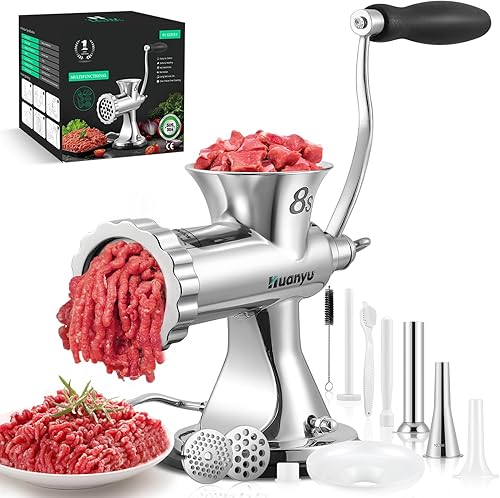
Huanyu Manual Stainless Steel Hand Crank Meat Grinder

VEVOR Manual Meat Grinder #12, Stainless Steel
As an Amazon Associate we earn from qualifying purchases. Product prices and availability are accurate as of the date/time indicated.
Frequently Asked Questions
What is a good price for a home meat grinder?
For most households, $100 to $300 buys a sturdy electric grinder with metal gears and extra plates. Occasional users can do well with a $25 to $70 hand-crank model, while heavy use or game processing usually justifies spending more.
Is it cheaper to grind your own meat?
Not always per pound. Grinding your own helps when you buy whole cuts on sale, process game, or want control over fat and freshness. A grinder pays off over time with regular use, but occasional users may not save much.
Are expensive meat grinders worth it?
They are if you grind large batches. Higher-priced models offer stronger motors, metal gears, better cooling and replaceable parts, which reduce jams and overheating. For a few pounds a month, a mid-range or even entry model is usually enough.
Do I need to buy extra parts for a meat grinder?
Often not at first, since most include a couple of plates and a blade. You may later want spare plates, a sharper blade, or a sausage stuffing kit. Compatible replacement parts vary by model, so check availability before buying.