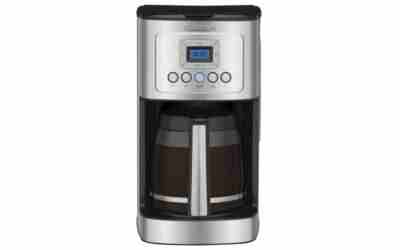

A coffee maker that starts running slow, sputtering, or turning coffee sour isn’t broken – it’s scaled up. Mineral deposits from hard water build up inside the boiler and lines of every drip machine and espresso maker, and left alone they’ll shorten the machine’s life and ruin the taste of everything it brews. Here’s how to descale one properly, how often based on your water, and why vinegar is the wrong tool for more machines than people think.
Why Scale Builds Up and Why It Matters
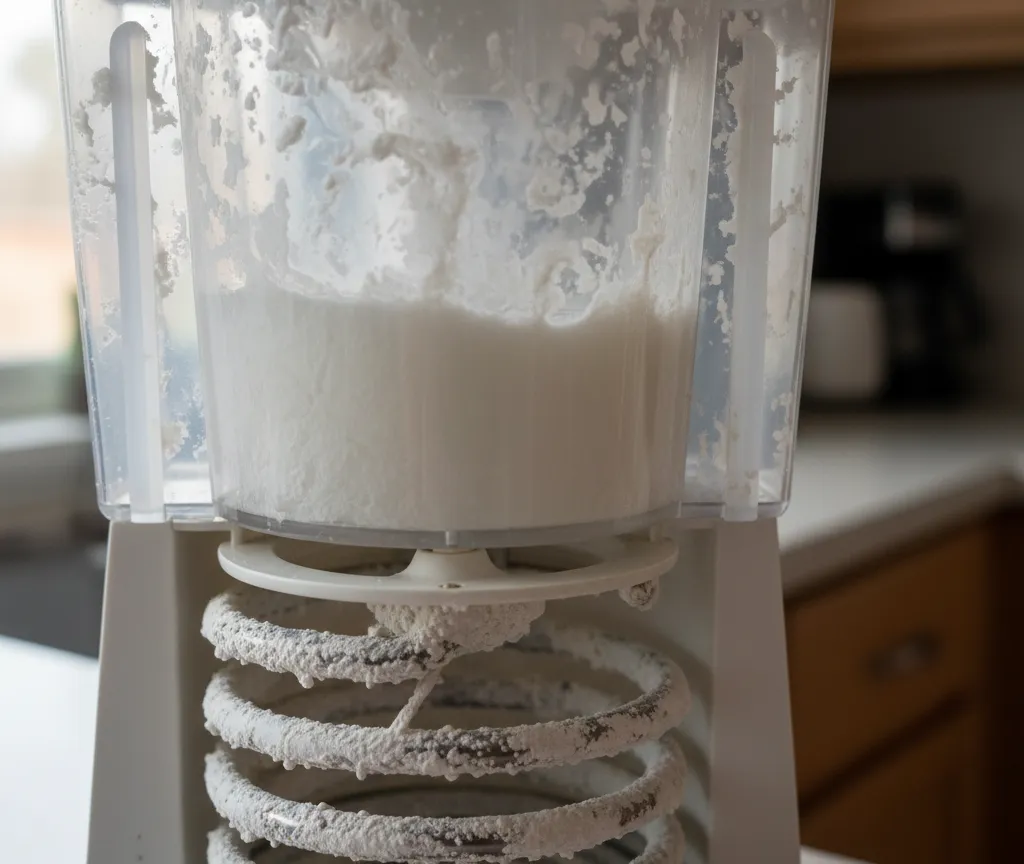
Tap water carries dissolved calcium and magnesium, and every time a coffee maker heats water, some of those minerals drop out of solution and stick to whatever’s hot: the heating element, the internal tubing, the boiler in an espresso machine. That layer of scale is a poor conductor of heat, so the machine has to run its heater longer to reach brewing temperature, which wastes energy and puts more wear on the element itself. Scale also narrows the internal tubing, which is why a scaled-up machine starts brewing slower or dripping unevenly long before it fails outright.
The taste problem shows up before the mechanical one. Scale buildup changes how hot water flows through the grounds and how long it stays in contact with them, which is the most common reason a coffee maker that used to taste fine starts tasting bitter, sour, or just flat. If cleaning the carafe and swapping the filter hasn’t fixed a taste complaint, scale inside the machine is almost always the actual cause.
Vinegar vs. Descaling Solution
White vinegar works as a descaler because its acidity dissolves calcium deposits, and it’s cheap and always in the kitchen. That’s the entire case for it. Vinegar is also harsh enough to degrade the rubber gaskets and seals in some machines over repeated use, and it can pit or dull aluminum internal parts in a way a purpose-built descaling solution doesn’t, since commercial descalers use milder food-safe acids (usually citric acid) formulated specifically not to attack the materials inside a coffee or espresso machine.
The practical rule: check the manual first. Many drip coffee makers explicitly approve vinegar and give a specific dilution ratio. Most espresso machines, and any drip machine with aluminum internals or a stated warranty exclusion for vinegar use, call for a dedicated descaling solution instead – using vinegar on one of these doesn’t just risk a worse clean, it can void the warranty outright. When the manual doesn’t say, or you’ve lost it, a citric-acid descaling solution is the safer default for either machine type.
How Often, Based on Your Water
Descaling frequency isn’t a fixed calendar interval – it tracks how hard your water is and how much you brew. As a starting point:
- Soft water, daily use: every 2-3 months.
- Moderately hard water, daily use: monthly.
- Hard or very hard water, daily use: every 2-4 weeks, or switch to filtered/bottled water for brewing to cut the mineral load at the source.
- Any water hardness, occasional use: every 3-6 months regardless of how little the machine runs, since minerals still accumulate from water sitting in the reservoir between uses.
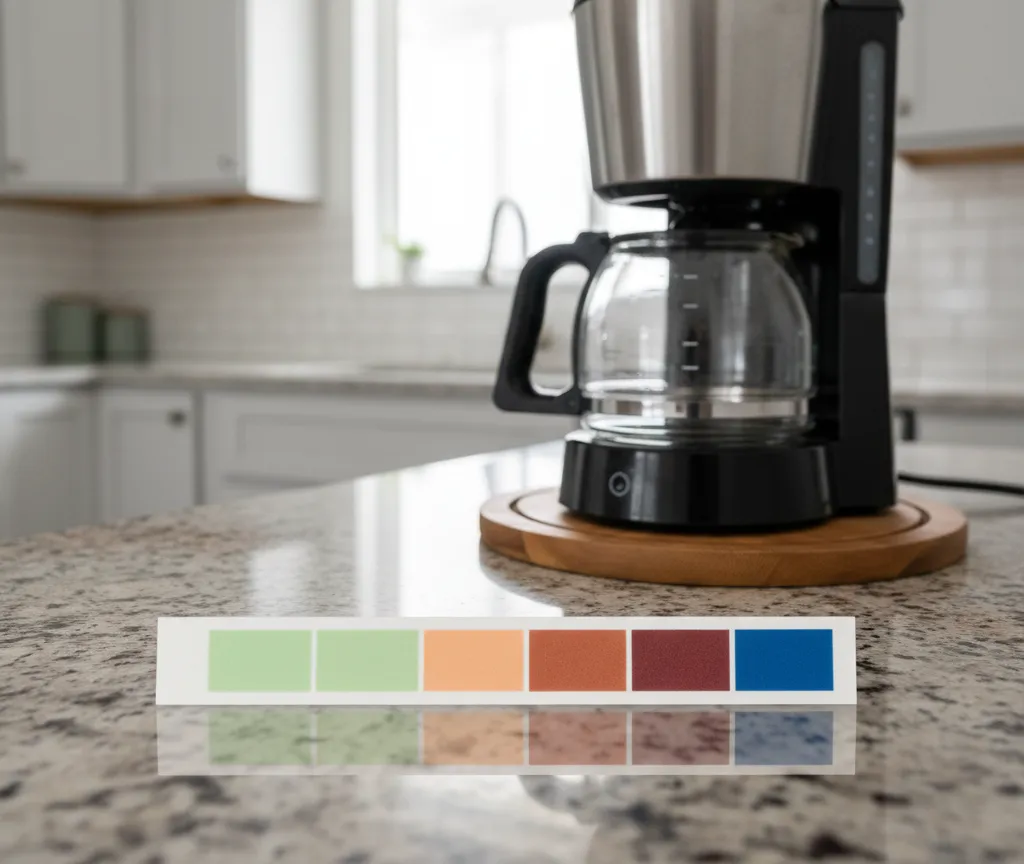
If you don’t know your water hardness, a cheap test strip settles it in seconds, or check your municipal water utility’s annual water quality report, which lists hardness in grains per gallon. Most machines also give a visual cue worth trusting over any schedule: a slower brew cycle, louder gurgling than normal, or a descale-indicator light if the machine has one all mean it’s time now, not next month.
How to Descale a Drip Coffee Maker
Empty the carafe and remove the paper filter and any grounds. Mix your descaling solution or vinegar per the label or manual ratio (a common vinegar mix is one part white vinegar to two parts water) and pour it into the reservoir like you would with water for brewing. Run a full brew cycle with no coffee or filter in place, then run one to two full cycles of plain water afterward to flush out any remaining solution or vinegar taste. Wipe down the carafe, warming plate, and reservoir opening, and let everything air-dry before the next brew.
How to Descale an Espresso Machine
Espresso machines vary more by model than drip makers do, so check the manual for the exact cycle – many built-in and automatic machines have a dedicated descale mode that walks through the process on the display, including how much solution to use and how many rinse cycles to run afterward. For manual machines, the general process is similar to a drip maker: run the descaling solution through the water lines and steam wand with no coffee involved, then flush thoroughly with several cycles of plain water since any leftover descaler reaching the group head or wand will taste in the next few shots. Never use vinegar in a machine whose manual specifies a citric-acid descaler only – the acid difference matters more here than in a drip maker because espresso machines run hotter internal pressures and have more gaskets exposed to whatever’s flowing through them.
Frequently Asked Questions
How often should I descale my coffee maker? Every 2-3 months with soft water, monthly with moderately hard water, and every 2-4 weeks with hard water if brewing daily – occasional-use machines still need it every 3-6 months.
Is vinegar or descaling solution better? Vinegar works and is cheap, but it can degrade rubber seals and aluminum parts over repeated use. A citric-acid descaling solution is gentler on internals and is required by many espresso machine manufacturers, so check the manual before choosing.
Why does my coffee maker taste bitter or sour all of a sudden? Scale buildup changes how water flows through the grounds and how long it stays in contact with them. If the carafe is clean and the filter is fresh, scale inside the machine is the most likely cause.
Can I use tap water in a descaling cycle, or does it need to be distilled? Tap water is fine for the descaling solution itself; the goal is removing existing scale, not preventing new deposits. If your water is very hard, switching to filtered water for everyday brewing will slow how fast scale returns.
Quick Decision Guide
- Manual approves vinegar and machine has no aluminum internals: a diluted vinegar rinse is fine.
- Espresso machine, or manual specifies citric acid: use a dedicated descaling solution, not vinegar.
- Don’t know your water hardness: a test strip or your utility’s water quality report tells you in minutes.
- Coffee suddenly tastes bitter or sour and the carafe/filter are clean: descale now rather than waiting for the next scheduled date.
Shopping for a new machine instead of maintaining the old one? See our best coffee maker picks or, for a straightforward daily drip brewer, our best drip coffee maker picks.