
A rusty can opener is safe to use only when the rust is light, scrubs off completely and the opener works smoothly afterward. Flaking, pitted or returning rust means it belongs in the trash, not your kitchen drawer.
What are the real risks of a rusty can opener?
Rust is not a food-safe material, and you should not eat it. But the risk is more modest than most web pages claim. Here is what actually matters, ranked from most to least likely to affect you.
- Old food residue. Rust roughens metal, and rough metal gives dried food somewhere to hide. Crusted gunk on the wheel and gears is usually the bigger hygiene problem, because it can carry bacteria onto the next can you open.
- Rust flakes in food. As the wheel cuts the lid, loose rust can drop into the food. This is mostly an unpleasant contaminant rather than a strong toxin, but there is no reason to eat it.
- A worn or rough wheel. Rust eats into the cutting edge. A wheel that slips on the can rim can leave jagged lid edges and a sharper chance of cutting your hand.
The tetanus myth
Rust does not cause tetanus. According to the CDC, tetanus comes from Clostridium tetani bacteria that live in soil, dust and manure and enter the body through broken skin, such as a cut or puncture. Rusty metal is often dirty, which is why it gets blamed, but the rust itself is not the cause. Opening a can with a rusty opener is not a tetanus route.
If you do cut yourself on dirty or rusty metal, wash the wound well with soap and running water. The CDC recommends a tetanus booster every 10 years, and a doctor may advise one sooner after a deep or dirty wound. If you are unsure when your last shot was, ask your doctor or pharmacist.
Clean it or toss it: a rule for a rusty can opener
Check the parts that touch the can and food: the cutting wheel, the gear that grips the rim, and the pivot point where the handles meet. Rust on the handle grips matters far less than rust on those parts.
| What you see | Verdict |
|---|---|
| Orange haze on handles or housing that wipes off with a damp cloth | Clean and keep |
| Light rust on the wheel or gear that comes off in one vinegar soak and scrub | Clean and keep |
| Rust that returns after you cleaned and fully dried the opener | Replace |
| Flaking, crumbling or powdery rust that sheds when you touch it | Replace |
| Pits or rough craters in the wheel or gear that remain after scrubbing | Replace |
| Wheel or gears that turn stiffly, grind or stick | Replace |
| Wheel that slips on the can rim or leaves a ragged cut | Replace |
The one-line rule: if scrubbing removes all the rust and the metal underneath is smooth, keep it; if the surface is damaged, replace it. Cleaning cannot repair pitted metal.
How to clean a rusty can opener step by step
Wear gloves, because the cutting wheel is sharp even when it is rusty. You need white vinegar, dish soap, an old toothbrush, a towel and a small bowl or cup.
- Remove food residue first. Scrub the wheel, gears and crevices with hot, soapy water and the toothbrush. Rust remover cannot work through dried food.
- Soak in plain white vinegar. Submerge the metal parts in undiluted white vinegar for 30 minutes. Skip apple cider vinegar, since its sugars can leave a sticky film on the opener.
- Scrub. Brush the loosened rust off the wheel, gear teeth and pivot. Turn the handle as you scrub so you reach every surface.
- Repeat once if needed. If rust remains after a second 30-minute soak, stop. Do not leave it in vinegar overnight, since long soaks can roughen the metal.
- Wash and rinse. Wash again in hot, soapy water to remove vinegar and loosened rust, then rinse under running water.
- Optional: sanitize. If you like, use a diluted unscented household bleach solution made and timed exactly as the bleach label directs, then rinse well and air dry.
- Dry completely. Dry with a towel, work the wheel back and forth, and let it air dry for another hour. Leftover water is what starts rust again.
- Add a drop of oil. Put one drop of food-grade mineral oil on the gear and pivot, and wipe off the excess.
Before you trust it, open a can you do not mind throwing away. The wheel should turn smoothly and cut cleanly, and the cut lid edge should show no orange or brown smears.
Is food safe if a rusty can opener opened the can?
Look at the food and the rim before you eat. If you see rust specks on the lid, on the can edge or in the food, wipe the rim and discard the top layer of food it touched, or throw out the whole can if you cannot tell where the flakes went.
The can itself matters too. Surface rust on the outside of a can that wipes off with a paper towel is not a concern. Throw away any can with these problems:
- Rust inside the can after you open it
- Deep rust or pitting that has thinned the metal
- Bulging, leaking or deep dents on a seam
Do not taste food from a can that shows these signs to check it. USDA guidance is to discard deeply rusted, leaking or bulging cans.
How to keep a can opener from rusting again
Rust needs water sitting on bare iron or steel, so prevention comes down to keeping the opener dry between uses.
- Rinse and wash it right after each use, before food dries on the wheel.
- Towel-dry the wheel and gears, then let it air dry before it goes back in the drawer.
- Do not leave it in the sink, in a damp dish rack or in a drawer next to the dishwasher where steam collects.
- Do not soak it in dishwater for long periods.
- Wipe a drop of food-grade mineral oil on the pivot every few months, or whenever the wheel starts to feel stiff.
Stainless-steel cutting parts resist rust better than plain steel, though no opener is rust-proof if it stays wet. See our guide to the best rated manual can opener for more on materials.
When an easy-grip or electric opener is the better replacement
If your opener rusted because it is awkward to wash and dry, or because cranking it hurts your hands, an easy-grip or electric model may suit you better; see our guide to the best can opener for arthritis.
Our Top Picks
Ready to shop? These are the top-rated options from our hands-on roundup, Best Under Cabinet Can Opener of 2026.

Moeuonb Under Cabinet Jar Opener Stainless Steel

Cuisinart CCO-50BKN Electric Can Opener, Black
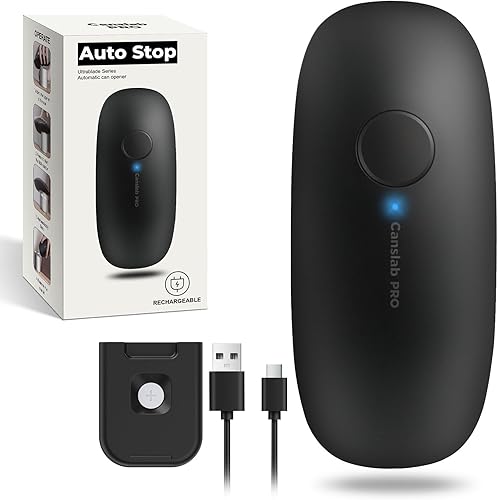
Canslab Ultrablade PRO USB Rechargeable Electric Can Opener
As an Amazon Associate we earn from qualifying purchases. Product prices and availability are accurate as of the date/time indicated.
Frequently Asked Questions
Can I use baking soda instead of vinegar to remove rust from a can opener?
Yes, for light rust. Mix baking soda with a little water into a thick paste, scrub the wheel and gears with a toothbrush, then rinse, wash and dry completely. It works more slowly than a vinegar soak and may need a second round.
Can I put a can opener in the dishwasher?
Only if the manual says it is dishwasher safe. Many manual openers are hand-wash only, because long exposure to heat, steam and water traps moisture in the gears and speeds up rust. When in doubt, wash by hand and dry right away.
Will a stainless steel can opener never rust?
No. Stainless steel resists rust much better than plain steel, but it can still stain or rust if it stays wet or has food residue on it. Lower-grade stainless and the cutting wheel are the most likely spots to show it.
Do electric can openers rust too?
Yes. The cutting wheel and the gear that grips the rim are metal and get wet and dirty like any manual opener. Clean the cutter as the manual directs, unplug the unit first, and dry the parts completely before using it again.
{“@context”: “https://schema.org”, “@type”: “FAQPage”, “mainEntity”: [{“@type”: “Question”, “name”: “Can I use baking soda instead of vinegar to remove rust from a can opener?”, “acceptedAnswer”: {“@type”: “Answer”, “text”: “Yes, for light rust. Mix baking soda with a little water into a thick paste, scrub the wheel and gears with a toothbrush, then rinse, wash and dry completely. It works more slowly than a vinegar soak and may need a second round.”}}, {“@type”: “Question”, “name”: “Can I put a can opener in the dishwasher?”, “acceptedAnswer”: {“@type”: “Answer”, “text”: “Only if the manual says it is dishwasher safe. Many manual openers are hand-wash only, because long exposure to heat, steam and water traps moisture in the gears and speeds up rust. When in doubt, wash by hand and dry right away.”}}, {“@type”: “Question”, “name”: “Will a stainless steel can opener never rust?”, “acceptedAnswer”: {“@type”: “Answer”, “text”: “No. Stainless steel resists rust much better than plain steel, but it can still stain or rust if it stays wet or has food residue on it. Lower-grade stainless and the cutting wheel are the most likely spots to show it.”}}, {“@type”: “Question”, “name”: “Do electric can openers rust too?”, “acceptedAnswer”: {“@type”: “Answer”, “text”: “Yes. The cutting wheel and the gear that grips the rim are metal and get wet and dirty like any manual opener. Clean the cutter as the manual directs, unplug the unit first, and dry the parts completely before using it again.”}}]}