
In the rice cooker vs Instant Pot decision, buy a rice cooker if you eat rice several times a week, and an Instant Pot if rice is a side dish and you also want stews, beans and meats from one appliance. A rice cooker makes steadier rice. An Instant Pot does far more.
Rice cooker vs Instant Pot: which makes better rice?
A dedicated rice cooker makes more consistent rice, especially brown, sushi and jasmine rice, and it needs no attention. An Instant Pot makes good white rice, but it is less forgiving of water ratios, rinsing and release timing.
The reason is design. A rice cooker has one job, so its heating and shutoff are tuned for grain. The pot is wide and shallow, which gives even heat and a fluffy top layer. Many models also have settings for sushi, porridge or a crispy bottom layer. Pressure cooking, by contrast, tends to give a slightly denser, stickier grain, which some people like for sushi-style or Asian short-grain rice and others find gummy.
If texture matters to you, step up in rice cookers rather than switching to a pressure cooker. Fuzzy-logic models adjust heat during the cycle, and induction heating (IH) models heat the whole pot more evenly. Our roundup of Japanese rice cookers covers those upgrades, and the Zojirushi NS-ZCC10 review shows what a fuzzy-logic model offers.
The Instant Pot’s strength is that it still gets close. Plain long-grain white rice and jasmine rice come out well in it once you learn your ratio. Rice is where a rice cooker is hardest to beat, but it is not where an Instant Pot fails.
How each appliance cooks, and why it matters
Rice cooker: The bowl sits on a heating plate. While water is present, the temperature stays near boiling (212°F at sea level). Once the water is absorbed, the temperature rises, a thermostat senses it and the cooker switches to keep-warm. That is why it needs no timer.
Instant Pot (electric pressure cooker): A sealed lid traps steam, raising pressure and temperature above boiling. On high, pressure is roughly 10 to 12 psi, though it varies by model, so check your manual. The cooker needs several minutes to build pressure, holds it for a set time, then releases it.
Two details most comparisons skip:
- The Rice button is not the same as a manual setting. On many Instant Pot models, Rice is an automatic, lower-pressure program meant for white rice. Manual or Pressure Cook on high with a set time gives you control for other grains. Program details vary by model.
- An Instant Pot has many functions. Beyond pressure cooking, models typically offer sauté, slow cook, steam and often yogurt. A rice cooker usually does rice, steaming and sometimes oatmeal or porridge, plus keep-warm.
If you want the multi-cooker route, our Instant Pot Duo Plus review shows a typical feature set.
Side-by-side: time, capacity, space, cleanup
| Factor | Rice cooker | Instant Pot |
|---|---|---|
| Rice quality | Very consistent; best for brown, sushi, jasmine | Good for white rice; needs correct ratio and release |
| Versatility | Rice, steaming, porridge, some cakes | Pressure cooking, sauté, slow cook, steam, often yogurt |
| Hands-off? | Yes: add rice and water, press start | Mostly, but you handle the vent and release |
| Power draw | Often about 300 to 700 W (check spec sheet) | About 1,000 W on a 6-quart Duo (retailer listings) |
| Counter footprint | Usually smaller and lower | Larger and taller; measure under cabinets |
| Keep-warm | Standard, gentle; designed for rice | Standard on most models |
| Cleanup | Removable bowl, inner lid on some models | Bowl, lid, sealing ring and vent to maintain |
| Noise | Quiet; steam and a beep | Hissing during release; beeps |
Worked timeline for 2 cups of white rice (typical, varies by model):
- Rice cooker: about 25 to 40 minutes start to finish, with zero steps after pressing start.
- Instant Pot: about 5 to 15 minutes to reach pressure, plus roughly 3 to 4 minutes at pressure for plain white rice, plus a 10-minute natural release. That totals roughly 20 to 30 minutes.
So the Instant Pot is not meaningfully faster for rice once preheat and release are counted. It wins on speed for beans, tough cuts of meat and stews, where pressure saves real time.
How much water and how long for each rice type?
Starting points below are general guidance. Always check your model’s manual, because lid seals, rice brands and pot sizes shift the result.
| Rice | Rice cooker | Instant Pot (high pressure, manual) |
|---|---|---|
| White long-grain / jasmine | Fill to the white-rice line, or about 1 to 1.25 parts water per 1 part rice | 1:1 rice to water, about 3 to 4 minutes, 10 minutes natural release |
| Sushi / short-grain | Use the sushi line if marked | About 1:1, similar time; rinse well |
| Brown | Use the brown line; the cycle runs longer, often 45 to 60 minutes | About 1:1 to 1:1.25, roughly 22 to 25 minutes, 10 minutes natural release |
Two tips that fix most problems. First, measure with the included cup. A rice cooker cup is typically 180 mL (about ¾ US cup), so the water lines inside the bowl match that cup, not a standard measuring cup. Second, rinse until the water runs mostly clear. Surface starch causes gumminess and, in a pressure cooker, can foam and clog the vent.
For recipes beyond plain rice, see our Instant Pot rice recipes. If brown rice is your staple, our brown rice cooker picks are worth a look.
Cleanup, safety and fixing a ‘Burn’ message
Cleanup: A rice cooker usually means washing one nonstick bowl, plus wiping the lid or steam cap. Avoid metal utensils, which scratch nonstick coatings. An Instant Pot has a stainless steel bowl that is easy to scrub, but you also need to wash the lid, clean the vent and check the silicone sealing ring. Rings can hold odors, so many owners keep a separate ring for sweet and savory foods.
Pressure safety (Instant Pot):
- Never force a locked lid open. Wait for the pin to drop.
- Use natural or quick release as the recipe says, and keep your hands and face away from the steam vent.
- Check that the sealing ring is seated and the vent is clear before every use.
- Do not fill past the max line. For foods that foam or expand, such as rice and beans, stay at or below the half-full mark.
Rice cooker safety: Place it on a stable, heat-safe surface, and do not open the lid under cabinets, since the steam is hot.
Food safety: Cooked rice can carry Bacillus cereus spores that grow at room temperature. Refrigerate leftovers within about 2 hours, per USDA and CDC food safety guidance, and reheat until steaming hot.
Why does my Instant Pot say ‘Burn’ or make mushy rice?
- Burn: Starch or stuck grains on the bottom. Rinse the rice, use enough water, do not stir, and scrape the bowl bottom clean before starting.
- Mushy: Too much water, too long at pressure, or too long a release. Cut water slightly and time it the next batch.
- Crunchy or uneven: Too little water, or the vent was leaking. Check the ring.
Which should you buy? A simple decision rule
Count how many times a week rice is the main event. Then use this rule.
- Rice 3 or more times a week, or you eat brown, sushi or jasmine rice: Buy a rice cooker. It is quieter, takes up less space and gives repeatable results. If you are on a budget, see our best rice cookers under $100.
- Rice once or twice a week, but you cook stews, beans, soups or roasts: Buy an Instant Pot. It replaces several appliances, and the rice is good enough.
- Small kitchen with room for only one: Choose by your most frequent meal, not your most ambitious one.
- Both are worth owning if: You eat rice most days and you pressure cook weekly. They do not overlap as much as they appear to.
Common mistake: Buying a multi-cooker for its 10-plus functions, then using only one or two. List what you cooked last month. If rice dominates the list, spend on a good rice cooker instead.
Size matters too. Households of four usually do well with a 5.5- to 10-cup rice cooker, as explained in our rice cooker size guide for 4 people. For Instant Pots, a 6-quart is the common middle size, but confirm the rice maximum in your manual.
Our Top Picks
Ready to shop? These are the top-rated options from our hands-on roundup, Best Rice Cooker Under $100 of 2026.
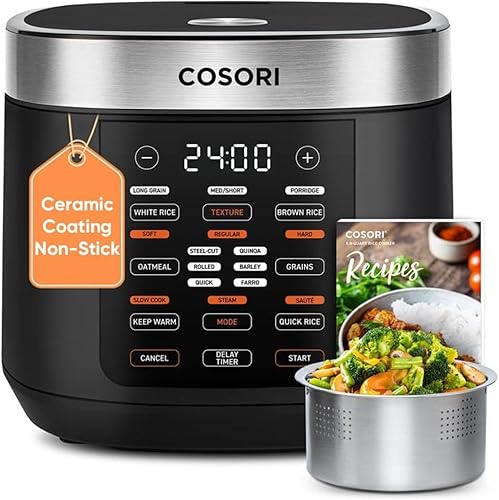
Cosori 10-Cup Rice Cooker with Fuzzy Logic

Zojirushi 6-Cup Rice Cooker NHS-10

Toshiba TRCS02 Mini Rice Cooker, 3-Cup Fuzzy Logic
As an Amazon Associate we earn from qualifying purchases. Product prices and availability are accurate as of the date/time indicated.
Frequently Asked Questions
Can an Instant Pot replace a rice cooker?
Yes for most people who eat rice occasionally. It makes good white rice and handles other grains with the right settings. It is less forgiving than a rice cooker, takes more cleanup and is not faster once preheat and release are counted.
Is an Instant Pot faster than a rice cooker for rice?
Not really. White rice needs only about 3 to 4 minutes at pressure, but the pot must first build pressure and then release it. Total time is often similar to a rice cooker, which varies by model.
Is it worth owning both a rice cooker and an Instant Pot?
It can be if you eat rice most days and also pressure cook weekly. The rice cooker handles rice with no effort, and the Instant Pot handles beans, stews and tough meats. If you cook rice rarely, one appliance is enough.
Can you cook brown rice or sushi rice in an Instant Pot?
Yes. Brown rice usually takes about 22 to 25 minutes at high pressure with a natural release, and sushi rice cooks at a similar ratio to white rice after thorough rinsing. Exact ratios and times vary, so check your manual.
{“@context”: “https://schema.org”, “@type”: “FAQPage”, “mainEntity”: [{“@type”: “Question”, “name”: “Can an Instant Pot replace a rice cooker?”, “acceptedAnswer”: {“@type”: “Answer”, “text”: “Yes for most people who eat rice occasionally. It makes good white rice and handles other grains with the right settings. It is less forgiving than a rice cooker, takes more cleanup and is not faster once preheat and release are counted.”}}, {“@type”: “Question”, “name”: “Is an Instant Pot faster than a rice cooker for rice?”, “acceptedAnswer”: {“@type”: “Answer”, “text”: “Not really. White rice needs only about 3 to 4 minutes at pressure, but the pot must first build pressure and then release it. Total time is often similar to a rice cooker, which varies by model.”}}, {“@type”: “Question”, “name”: “Is it worth owning both a rice cooker and an Instant Pot?”, “acceptedAnswer”: {“@type”: “Answer”, “text”: “It can be if you eat rice most days and also pressure cook weekly. The rice cooker handles rice with no effort, and the Instant Pot handles beans, stews and tough meats. If you cook rice rarely, one appliance is enough.”}}, {“@type”: “Question”, “name”: “Can you cook brown rice or sushi rice in an Instant Pot?”, “acceptedAnswer”: {“@type”: “Answer”, “text”: “Yes. Brown rice usually takes about 22 to 25 minutes at high pressure with a natural release, and sushi rice cooks at a similar ratio to white rice after thorough rinsing. Exact ratios and times vary, so check your manual.”}}]}