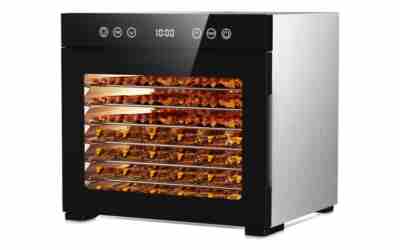
A good food dehydrator has a rear-mounted fan, an adjustable thermostat covering 95–165°F, at least five trays, and a timer with auto-shutoff, and those features matter more than wattage or brand name.
What makes a good food dehydrator?
Five things separate a dependable dehydrator from a frustrating one. Check these before you look at price or brand. Exact ranges and specs vary by model; check the label or manual.
- Adjustable thermostat. A useful range is 95–165°F. Fixed-temperature units are a real limit, because herbs and jerky need very different heat.
- Even airflow. A fan at the back, or a well-designed fan and heater setup, moves air across every tray, so you rotate trays less.
- Enough tray space. Five trays is the common household size. Expandability to 7 or 9 trays helps if you process garden harvests.
- Food-safe trays. Stainless steel or BPA-free plastic, with dishwasher-safe or easy-wipe surfaces.
- Timer and auto-shutoff. Dehydrating often runs 4 to 12 hours or more. A timer means you do not have to watch the clock, and auto-shutoff ends the run when the time is up.
Noise and counter footprint are secondary but real. Noise levels differ widely between units, so compare the decibel rating on the manufacturer spec sheet if the unit will sit in a kitchen where you spend time.
Horizontal or stackable: which dehydrator design is better?
Horizontal (rear fan, pull-out trays) is the better design for most people. Stackable (heater and fan in the base or lid, trays piled on top) is cheaper and more compact but dries less evenly.
| Design | Choose it if | Where it loses |
|---|---|---|
| Horizontal, rear fan | You make jerky or dry mixed foods and want even results without rotating trays | Bigger, heavier, usually costs more |
| Stackable, base or top fan | You dry occasionally, have little storage space, or want the lowest price | Trays closest to the heat dry faster, so you rotate trays every few hours |
Stackable units are not bad. They suit small batches of apple chips or herbs where a little unevenness does not matter. For meat, uneven drying is more than an annoyance, since thin spots turn brittle while thick spots stay moist.
If you are leaning horizontal on a budget, our roundup of affordable dehydrators shows where the price line sits.
What temperature should a dehydrator be set to?
Set it by food: about 95–115°F for herbs, about 125–135°F for vegetables and fruit, and 160°F (poultry 165°F) for jerky. A dehydrator that cannot cover 95–165°F limits what you can make.
| Food | Typical setting | Rule-of-thumb time (varies with slice thickness, humidity and model) |
|---|---|---|
| Herbs | 95–115°F | 1–4 hours |
| Vegetables | about 125°F | 6–12 hours |
| Fruit slices | about 135°F | 6–12 hours |
| Jerky | Heat meat to 160°F (poultry 165°F) first, then dry per your manual | 4–8 hours |
Slice thickness, humidity and tray loading change drying time a lot, so judge doneness by texture, not the clock.
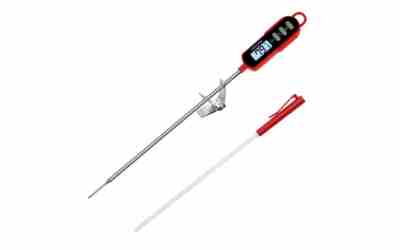
Jerky safety: USDA guidance is to heat meat to 160°F (poultry to 165°F) before drying, because low-temperature drying alone does not reliably kill pathogens on raw meat. Cook the strips in the oven or on the stove until a food thermometer reads 160°F (165°F for poultry), then move them to the dehydrator. Use a food thermometer to check, and confirm that your unit actually reaches the temperature you set.
If jerky is your main goal, see our guide to the best home dehydrator for jerky.
Does dehydrator wattage matter?
Less than airflow design. Wattage tells you how much heat the unit can produce, not how well it spreads that heat. A strong heater with weak airflow gives hot spots, while a lower-wattage unit with a good rear fan can dry more evenly.
What you want is enough heat to reach your target temperature with a full load, plus a fan that moves air across every tray. Wattage varies by model; check the label or manual.
Running cost should not decide your purchase. Dehydrators draw modest power compared with most large appliances, and the price of the unit and the quality of the airflow will matter far more over time.
How many trays and what tray material do you need?
Five trays suits most households. Go to 6 to 9 trays if you dry big batches of jerky or garden produce, and pick a unit that expands if you are unsure.
- Stainless steel trays: Do not warp, resist staining and odors, and clean easily. They usually cost more.
- BPA-free plastic trays: Lighter and cheaper. They can warp or stain over time, especially if you run the unit above its rated temperature. Stay within the manufacturer limit.
Real capacity is lower than the tray count suggests. Food needs space for air to move, so overloaded trays slow drying and leave wet spots. Lay slices in a single layer without overlap.
Good food dehydrator examples by budget
These are commonly sold models, listed as examples of each price tier rather than as ranked picks. Specs below are summarized from manufacturer listings and are unverified for your version; varies by model, so check the label or manual before buying.
| Model | Key specs | Choose it if | Where it loses |
|---|---|---|---|
| Nesco FD-75A Snackmaster Pro | 5 trays, expandable, adjustable temperature | You are a beginner on a budget | Plastic trays, less capacity than a premium unit |
| Hamilton Beach Digital | 5 BPA-free trays, digital timer | You want simple controls at a low price | Fewer high-end features |
| Cosori 6-tray stainless | 6 stainless trays, rear fan; confirm the temperature range in the manual | You want a stainless mid-priced unit | Fixed tray count |
| Magic Mill Pro | Stainless build; maximum temperature varies by version | You want a stainless unit with high heat | Larger footprint |
| Excalibur 3926TB | 9 trays, rear fan, thermostat | You dry large batches often and accept a premium price | Highest price, largest size |
The first four fit most budgets, while the Excalibur is a premium choice for heavy use. For a closer look at an entry-level model, read our NESCO FD-75A Snackmaster Pro review.
Which dehydrator should you buy? A simple decision rule
Pick by what you will dry most, not by the longest feature list.
- Mostly jerky: Choose a horizontal unit that reaches 165°F, with at least five trays.
- Mostly fruit and herbs: Any adjustable unit that goes down to about 95°F works. Stainless trays help with sticky fruit.
- Garden harvests: Buy more trays, or a unit that expands to 9.
- Not sure you will use it: Start with a budget model and upgrade only if you run it monthly.
Common mistakes
- Buying a fixed-temperature unit, then finding it is too hot for herbs.
- Overloading trays, which blocks airflow and slows drying.
- Mixing strong foods like onions and fruit in the same batch, which transfers flavors.
Can an oven or toaster oven replace one?
Sometimes. Some ovens do not go below 170°F, which is too hot for herbs and fruit, so check your oven manual for its lowest setting. Our guide on whether a toaster oven can work as a dehydrator explains the limits.
Whatever you buy, follow the manual for placement: set the unit on a stable, dry surface with clear space around the vents, and do not exceed its rated temperature.
Our Top Picks
Ready to shop? These are the top-rated options from our hands-on roundup, Best Excalibur Food Dehydrator of 2026.

Septree DBC-12C 12-Tray Stainless Steel Food Dehydrator

Magic Mill Dehydrator 15 Trays 800W Digital Control

Excalibur 8-Tray Stainless Steel Dehydrator
As an Amazon Associate we earn from qualifying purchases. Product prices and availability are accurate as of the date/time indicated.
Frequently Asked Questions
How do I know when food is dry enough?
Use texture. Fruit should be pliable and leathery with no moist spots when you tear a piece open. Vegetables and herbs should be brittle or crisp. Jerky should bend and crack without snapping in two. Let a piece cool to room temperature before testing, since warm food feels softer than it is.
Is a food dehydrator worth buying?
It is worth it if you will dry food at least monthly, such as jerky, fruit snacks or garden herbs. It gives you control over ingredients and lets you buy produce in season. If you will only use it once or twice a year, an oven may do.
Can I use an air fryer instead of a dehydrator?
Some air fryers have a dehydrate setting and work for small batches of fruit chips. Tray space is usually limited, so a dedicated dehydrator is more reliable for larger loads or even drying. Check your model’s lowest temperature setting in the manual.
Is a bigger dehydrator always better?
No. More trays only help if you fill them and the airflow reaches each one. A well-designed five-tray unit with a rear fan will serve a small household better than a large unit that sits mostly empty and takes up counter space.
Is a stainless steel dehydrator better than plastic?
Stainless trays resist warping, staining and odors, but the units cost more. BPA-free plastic works fine at normal temperatures and costs less. Choose stainless if you dry sticky fruit or run the unit often.
{“@context”: “https://schema.org”, “@type”: “FAQPage”, “mainEntity”: [{“@type”: “Question”, “name”: “How do I know when food is dry enough?”, “acceptedAnswer”: {“@type”: “Answer”, “text”: “Use texture. Fruit should be pliable and leathery with no moist spots when you tear a piece open. Vegetables and herbs should be brittle or crisp. Jerky should bend and crack without snapping in two. Let a piece cool to room temperature before testing, since warm food feels softer than it is.”}}, {“@type”: “Question”, “name”: “Is a food dehydrator worth buying?”, “acceptedAnswer”: {“@type”: “Answer”, “text”: “It is worth it if you will dry food at least monthly, such as jerky, fruit snacks or garden herbs. It gives you control over ingredients and lets you buy produce in season. If you will only use it once or twice a year, an oven may do.”}}, {“@type”: “Question”, “name”: “Can I use an air fryer instead of a dehydrator?”, “acceptedAnswer”: {“@type”: “Answer”, “text”: “Some air fryers have a dehydrate setting and work for small batches of fruit chips. Tray space is usually limited, so a dedicated dehydrator is more reliable for larger loads or even drying. Check your model’s lowest temperature setting in the manual.”}}, {“@type”: “Question”, “name”: “Is a bigger dehydrator always better?”, “acceptedAnswer”: {“@type”: “Answer”, “text”: “No. More trays only help if you fill them and the airflow reaches each one. A well-designed five-tray unit with a rear fan will serve a small household better than a large unit that sits mostly empty and takes up counter space.”}}, {“@type”: “Question”, “name”: “Is a stainless steel dehydrator better than plastic?”, “acceptedAnswer”: {“@type”: “Answer”, “text”: “Stainless trays resist warping, staining and odors, but the units cost more. BPA-free plastic works fine at normal temperatures and costs less. Choose stainless if you dry sticky fruit or run the unit often.”}}]}