So, how long do mattresses last? Most last about 7 to 10 years, though the range runs from roughly 5 years for budget foam to 12 to 15 for quality latex. Weight, sleep habits, and support matter as much as age, so sagging, pain, and visible wear tell you more than the calendar.
Mattress lifespan by type
The ranges below are typical, not guarantees. Foam density, coil quality, comfort-layer thickness, and the weight the bed carries all shift them, so check the spec sheet for your specific model.
| Mattress type | Typical lifespan | What usually wears out first |
|---|---|---|
| Innerspring | 5 to 8 years | Coils lose tension and thin padding compresses |
| Memory foam | 7 to 10 years | Low-density foam softens and develops body impressions |
| Hybrid | 6 to 10 years | Foam or fiber comfort layers, before the coils |
| Latex | 12 to 15 years | Very slow softening; often outlasts the other types |
| Budget thin-foam bed | 4 to 7 years | Low-density foam breaks down and sags |
If long-term durability is your priority, latex is the usual answer. Our roundup of the best latex mattresses covers the options. Keep in mind that a cheap latex-labeled bed with only a thin latex layer will not behave like a full latex build.
What makes a mattress wear out sooner
Two identical mattresses can age very differently. These are the biggest factors:
- Body weight. Heavier sleepers, or two adults sharing one bed, compress foam and coils faster. Dense foam, sturdy coils, and a firmer build hold up better. See our guide to the best mattresses for heavy people.
- Foam density. Higher-density foam generally resists sagging longer. Many brands list density, and if a brand does not, that is worth asking about.
- Comfort layer thickness. Thin padding over coils or a firm base breaks down sooner than a thick, dense layer.
- The foundation. A worn-out box spring, widely spaced slats, or a queen or king frame without center support can cause sagging that looks like mattress failure. Follow the manufacturer’s slat spacing rule, which is often about 3 inches or less.
- Daily use. A guest room bed can last far longer than the one you sleep on every night. Kids jumping on a bed also damages coils and edges.
- Moisture and heat. Sweat, spills, and humid rooms degrade foam and encourage mildew.
- Sleeping in one spot. If you or your partner always lies in the same place, that area wears first.
Signs your mattress is worn out
Age is only a guide. Replace the bed when it stops doing its job, which is supporting your body in a neutral position.
- Visible sagging or body impressions. Lay a straight board or broom handle across the bed with no one on it. A dip of about 1 inch or more is a common sign of trouble. Make sure the foundation is not the cause first.
- Waking up stiff or sore. If back or hip pain eases within an hour or two of getting up, or you sleep better on a couch or hotel bed, your mattress may be the culprit. Persistent pain deserves a doctor’s visit too. If you are shopping because of pain, see our picks for the best mattresses for bad backs.
- Lumps, soft spots, or uneven feel. Foam that no longer springs back, or padding that has shifted, will not recover.
- Noisy or poking springs. Squeaks, creaks, or coils you can feel through the top mean the support system is failing.
- Edge collapse. If you slide off the side or the perimeter sinks when you sit, the edge support has degraded.
- Worse allergies or a persistent odor. Old mattresses hold dust, skin cells, and moisture. Cleaning can help, but a smell that will not go away is a bad sign.
One or two of these on a 3-year-old bed may be fixable. Several on a 9-year-old bed usually means it is time.
How to make your mattress last longer
You cannot double a mattress’s life, but good habits can help you reach the top of its range.
- Use the right base. Match the foundation to the mattress type. Many foam and hybrid beds need a solid platform or closely spaced slats. Add a center support leg for queen and larger frames.
- Add a mattress protector. A washable, waterproof protector keeps out sweat, spills, and dust. Check that it does not trap heat if you sleep hot.
- Rotate on schedule. Turn the bed 180 degrees every 3 to 6 months unless the maker says not to. Flip it only if it is designed to be two-sided.
- Keep it clean and dry. Spot-clean spills quickly with mild soap and minimal water, then let the area dry fully. Do not soak foam.
- Support the bed evenly. Do not sit on the edge for long periods, and keep kids from jumping on it.
- Let it breathe. Strip the bedding for a few hours now and then, and keep the room ventilated.
- Follow the care tag and warranty terms. Some warranties require a proper foundation and a stain-free mattress.
Warranty length is not the same as lifespan
Many mattresses come with a 10-year warranty, and some go to 20 years or more. That does not mean the bed will stay comfortable that long. Warranties generally cover defects, such as a sag deeper than a stated threshold (commonly somewhere around 0.75 to 1.5 inches, but it varies by brand) or broken coils.
They usually do not cover comfort changes, normal softening, stains, or damage from an unsuitable base. Many are also prorated, meaning you pay part of the cost after the first few years. Read the fine print before assuming you have full coverage.
Trial periods are a separate thing. A 100-night trial helps you test fit and comfort but says nothing about long-term durability. If you want to shop with durability in mind, look at the materials: dense foam, quality coils, and thick, resilient layers. Our guide to the best hybrid mattresses is a good place to compare constructions.
When to replace it, and what to look for next
Start paying attention at around 7 years. If the bed is still supportive and you sleep well, there is no need to replace it just because of its age. If you wake up in pain, see sagging, or feel springs, replace it regardless of age.
When you shop for the next one, consider:
- Your sleep position and body weight. These affect both comfort and how fast materials wear.
- Materials, not marketing. Ask for foam density, coil gauge, and layer thickness.
- Return and warranty terms. Look at sag limits, proration, and base requirements.
- Budget versus cost per year. A mattress that costs more but lasts twice as long can be the cheaper choice over time.
If you prefer contouring support, start with the best memory foam mattresses. For a wider view of the market, see our main best mattresses list.
Finally, dispose of the old mattress properly. Rules differ by state and city, and some areas have mattress recycling programs, so check with your local waste service or retailer about pickup and fees.
Our Top Picks
Ready to shop? These are the top-rated options from our hands-on roundup, Best Reviewed Mattresses of 2026.
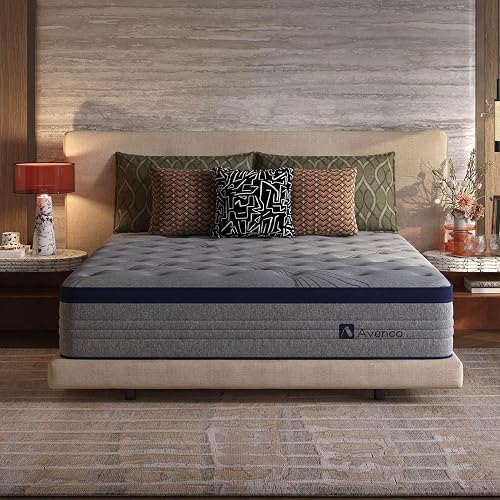
Avenco Queen Mattress 12 Inch Cooling Hybrid Mattress with NanoGEL Memory Foam and SmartS Coil for Motion Isolation and Back Support

Sweetnight CoolNest 14 Inch King Size Cooling Memory Foam Mattress | Medium Feel, CertiPUR-US Certified, Pressure Relief

RRESTA Medium Firm Queen Mattress 14 Inch - Hybrid with 7-Zone Support, Fiberglass-Free, CertiPUR-US Certified, 365-Night Trial
As an Amazon Associate we earn from qualifying purchases. Product prices and availability are accurate as of the date/time indicated.
Frequently Asked Questions
Is 10 years too long to keep a mattress?
Ten years is at the upper end for most mattresses. Latex and high-quality foam can still be fine, but many innerspring, hybrid, and budget foam beds are worn by then. If you see sagging, wake up sore, or sleep better elsewhere, replace it.
Does a more expensive mattress last longer?
Often, but not always. Price tends to track material quality, such as dense foam, latex, and sturdier coils, which helps durability. A high price can also reflect branding or extras. Check foam density, layer thickness, and warranty terms rather than relying on price alone.
Should I flip or rotate my mattress?
Rotate most mattresses 180 degrees every 3 to 6 months to spread out wear. Only flip a mattress if it is designed to be two-sided. Flipping a one-sided foam or hybrid bed can damage it and may void the warranty, so check the care tag.
Can a new mattress topper extend an old mattress’s life?
A topper can improve comfort for a while, but it will not fix a sagging or unsupportive mattress. If the core has dipped or the coils are failing, a topper only masks the problem. It works best on a mattress that is still structurally sound.