In the pressure cooker vs slow cooker choice, a pressure cooker wins if you need dinner in about an hour, and a slow cooker wins if you want to load it in the morning and walk away for 6 to 10 hours. Neither is better for everyone. This guide compares time, texture, energy use, safety and who should buy which.
How do a pressure cooker and a slow cooker cook differently?
A pressure cooker seals the pot so steam builds pressure. Electric models typically cook around 240°F, well above the 212°F boiling point of open pots. That heat is why tough cuts and dried beans soften in a fraction of the usual time. Stovetop models usually run at a higher pressure (about 15 psi versus roughly 10 to 12 psi for many electric ones) and heat up faster, but you have to watch the burner.
A slow cooker never seals. The insert heats gently, usually somewhere around 170 to 210°F depending on the model and setting. Low and High often reach a similar final temperature; High just gets there sooner. Because the food stays in a mild, moist heat for hours, collagen in tough meat breaks down slowly.
The time gap is large. Slow cooker recipes typically run 4 to 10 hours. Many pressure cooker recipes cook in under an hour, though you must add time to come up to pressure and to release it. All times depend on the recipe, the cut size and your model.
Pressure cooker vs slow cooker pros and cons
Pressure cooker
- Pro: Fast. Tough cuts, beans and stock finish in a fraction of the slow cooker time.
- Pro: Most electric models and all stovetop models can brown meat in the same pot, which builds flavor.
- Pro: Good for last-minute dinners, since dried beans don’t need an overnight soak in many recipes.
- Con: Learning curve. You need to understand natural versus quick release and minimum liquid.
- Con: You can’t easily taste and adjust mid-cook, and a few extra minutes can turn food to mush.
- Con: Sealing rings wear out and need replacing; cost varies by brand.
Slow cooker
- Pro: Truly set and forget. Load it, pick a setting and leave.
- Pro: Forgiving for pot roast, pulled pork and chili, and usually the cheaper appliance.
- Pro: Low wattage, and the crock moves easily to a potluck table.
- Con: Slow. You need to plan hours ahead.
- Con: Most can’t brown food, so searing means a separate skillet.
- Con: Temperatures vary by model. Some run hot and finish food hours early, so check a recipe’s time against your unit.
| Factor | Pressure cooker | Slow cooker |
|---|---|---|
| Cook time | Often under an hour, plus pressure build and release | Typically 4 to 10 hours |
| Hands-on effort | Moderate; you’re present for start and release | Low; load and leave |
| Browning | Yes, in the same pot | Usually no |
| Texture | Tender, sometimes softer or stringier if overcooked | Very tender, shreddable, flavors well blended |
| Learning curve | Higher | Very low |
Which is better for soups, stews, tough cuts, beans and rice?
Both handle tough cuts well. The difference is whether you have 1 hour or 8. Use this table for a quick pick; times are rough starting points, not rules.
| Food | Better pick | Why |
|---|---|---|
| Pot roast, pork shoulder, short ribs | Either | Pressure for speed; slow cooker for a hands-off day and shreddable texture |
| Soups and stews | Either | Slow cooker blends flavors gently; pressure cooker is faster and can sauté aromatics first |
| Dried beans | Pressure cooker | Often done in well under an hour without long soaking |
| Rice | Pressure cooker (or a rice cooker) | Slow cooker rice tends to turn gummy |
| Chili, pulled chicken, party dips | Slow cooker | Holds food warm for serving and is forgiving |
| Dairy, pasta, delicate fish | Neither, until the end | Add at the end; long cooking curdles dairy and turns pasta and fish to mush |
Bean trap: the FDA warns that raw red kidney beans contain a toxin that slow cookers may not destroy because they run too cool. Soak them and boil them hard for at least 10 minutes first, or use a pressure cooker.
If you mostly cook for gatherings, our roundup of slow cooker party recipes shows what the appliance does best.
Which uses less electricity: a slow cooker or a pressure cooker?
A pressure cooker usually uses less energy per meal because it runs for a much shorter time. Slow cookers commonly draw about 200 to 300 watts; electric pressure cookers are often rated about 700 to 1,000 watts, though they cycle on and off once at pressure. Check the label on your model.
Worked estimate at an assumed 17 cents per kWh (your rate will differ):
- Slow cooker, 8 hours at up to 250 W: about 2 kWh, or roughly 34 cents at the high end. Cycling usually makes it lower.
- Electric pressure cooker, about 45 minutes including heat-up, averaging maybe 400 W: about 0.3 kWh, or roughly 5 cents.
Either costs pennies compared with a full-size oven. Energy shouldn’t decide this purchase; time and convenience should.
Is it safe to leave a slow cooker or pressure cooker unattended?
A slow cooker is designed for long, low-heat cooking, and the USDA says it’s safe to use while you’re away. A pressure cooker is built for shorter cooking, and you should stay home while it’s running and releasing pressure.
Slow cooker food-safety rules
- Thaw meat first. A large frozen cut can sit too long in the 40 to 140°F range where bacteria multiply.
- Keep cooked food above 140°F. Don’t leave it on Warm for many hours past done.
- Check meat with a thermometer: 165°F for poultry, 160°F for ground meat, 145°F for whole cuts of beef, pork or lamb.
- Don’t fill beyond what your manual allows, commonly between half and two-thirds full.
- Don’t use an insert with cracks or chips.
- If the power goes out while you’re away, throw out the food rather than guessing.
Pressure cooker safety rules
- Use a model with a locking lid and keep the vent and gasket clean.
- Don’t fill past two-thirds, or half for foods that foam or expand, such as beans, rice and pasta.
- Use the minimum liquid your manual lists; many call for about 1 cup, but it varies.
- Release steam away from your face and hands, and never force the lid open while pressure remains.
- Stop using any unit with a damaged gasket or a stuck valve.
Can an electric multicooker replace both?
Mostly, yes. Electric multicookers such as the Instant Pot pressure cook, sauté and slow cook in one pot, which saves counter space. Our Instant Pot Duo Plus 9-in-1 review covers one popular example, and our best slow cooker and pressure cooker combos roundup compares more.
Where they fall short:
- The slow cook mode on many models runs cooler than a true slow cooker. An Instant Pot’s Less setting can be weaker than a standalone cooker’s Low, so recipes written for Low may come out underdone. Use a thermometer and add time.
- Heating from the bottom only can be less even for long cooks.
- A multicooker costs more than a basic slow cooker, and it’s not worth buying if you’d only ever use the slow cook mode.
Which fits your schedule: slow cooker or pressure cooker?
Decision rule: if the meal must be ready within 45 to 60 minutes of walking in the door, buy the pressure cooker. If you leave at 8 a.m. and want dinner waiting at 6 p.m., buy the slow cooker. If your day swings both ways and you have limited space, a multicooker is the sensible single purchase.
- Home all day or a beginner on a budget: a basic slow cooker, such as the model in our Crock-Pot 8-quart programmable review, is the easiest start.
- Small kitchen: one multicooker takes less space than two appliances.
- Cooking for a crowd: a large slow cooker is simpler to serve from.
Converting slow cooker recipes to pressure
Use these as starting points only. Cut size, model and recipe all change the result, so follow a tested pressure cooker recipe when you can.
| Food | Slow cooker (typical) | Pressure cooker (rough range) |
|---|---|---|
| Beef chuck roast, large chunks | 8 to 10 hours Low | 45 to 60 minutes |
| Pork shoulder, large chunks | 8 to 10 hours Low | 60 to 90 minutes |
| Bone-in chicken thighs | 4 to 6 hours Low | 10 to 15 minutes |
| Dried beans, unsoaked | 6 to 8 hours Low | 30 to 45 minutes |
Two things trip people up. First, a pressure cooker needs enough thin liquid to build steam, while slow cookers lose little liquid, so recipes differ. Second, sauces rarely thicken under pressure. Stir in cornstarch slurry or simmer on sauté afterward. For a dedicated stovetop unit, see our best stovetop pressure cookers.
Our Top Picks
Ready to shop? These are the top-rated options from our hands-on roundup, Best Combination Slow Cooker Pressure Cooker of 2026.
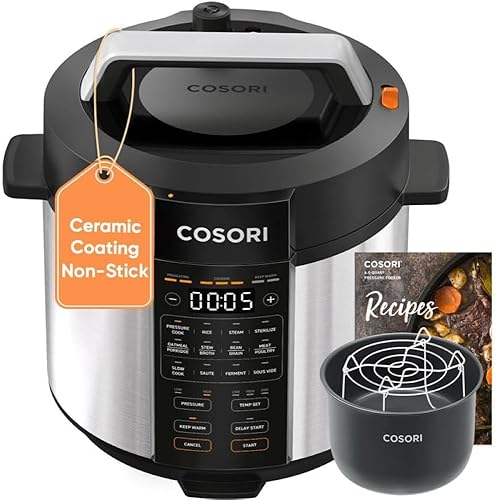
Cosori 6QT 9-in-1 Pressure Cooker, Ceramic Pot

Instant Pot Duo 6 Qt 7-in-1

Instant Pot Duo Plus 6 Qt 9-in-1 Electric Pressure Cooker
As an Amazon Associate we earn from qualifying purchases. Product prices and availability are accurate as of the date/time indicated.
Frequently Asked Questions
Does a pressure cooker keep more nutrients than a slow cooker?
Often a bit more, because cooking time is short and less liquid evaporates, though water-soluble vitamins can leach into the broth in either appliance. Drinking the broth or serving it with the dish recovers most of them. Differences depend on the food and recipe.
Can I put frozen chicken or a frozen roast in a slow cooker?
Avoid it. A large frozen cut warms too slowly and can spend hours in the 40 to 140°F range where bacteria grow. Thaw meat in the refrigerator first. Many pressure cooker manuals allow cooking some frozen meat, but check your model’s instructions.
Is a pressure cooker dangerous?
Modern models with locking lids and pressure-release valves are considered safe when used as directed. Problems usually come from overfilling, blocked vents, worn gaskets or forcing the lid open. Read your manual and release steam away from your face.
Do I need both a pressure cooker and a slow cooker?
Not usually. If you want fast dinners and occasional all-day meals, a multicooker covers both, though its slow cook mode may run cooler than a standalone unit. Buy a separate slow cooker only if you cook for crowds or rely on it daily.
{“@context”: “https://schema.org”, “@type”: “FAQPage”, “mainEntity”: [{“@type”: “Question”, “name”: “Does a pressure cooker keep more nutrients than a slow cooker?”, “acceptedAnswer”: {“@type”: “Answer”, “text”: “Often a bit more, because cooking time is short and less liquid evaporates, though water-soluble vitamins can leach into the broth in either appliance. Drinking the broth or serving it with the dish recovers most of them. Differences depend on the food and recipe.”}}, {“@type”: “Question”, “name”: “Can I put frozen chicken or a frozen roast in a slow cooker?”, “acceptedAnswer”: {“@type”: “Answer”, “text”: “Avoid it. A large frozen cut warms too slowly and can spend hours in the 40 to 140°F range where bacteria grow. Thaw meat in the refrigerator first. Many pressure cooker manuals allow cooking some frozen meat, but check your model’s instructions.”}}, {“@type”: “Question”, “name”: “Is a pressure cooker dangerous?”, “acceptedAnswer”: {“@type”: “Answer”, “text”: “Modern models with locking lids and pressure-release valves are considered safe when used as directed. Problems usually come from overfilling, blocked vents, worn gaskets or forcing the lid open. Read your manual and release steam away from your face.”}}, {“@type”: “Question”, “name”: “Do I need both a pressure cooker and a slow cooker?”, “acceptedAnswer”: {“@type”: “Answer”, “text”: “Not usually. If you want fast dinners and occasional all-day meals, a multicooker covers both, though its slow cook mode may run cooler than a standalone unit. Buy a separate slow cooker only if you cook for crowds or rely on it daily.”}}]}