
Yes, you can use induction cookware on a gas stove, because a flame heats any pan that sits flat on the grate.
Does induction cookware work on a gas stove?
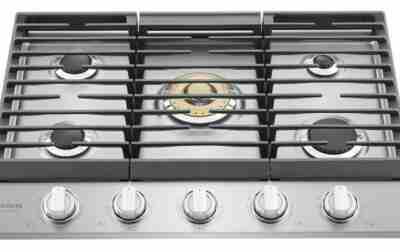
Yes. A gas burner heats a pan with flame, so the pan needs a flat base and the ability to handle the heat. The magnetic layer that makes cookware induction-ready does nothing on gas, and it does no harm either.
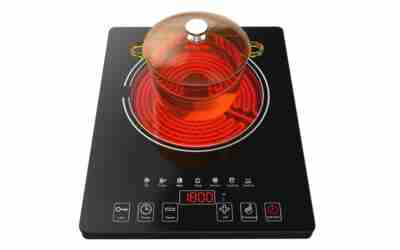
Induction works differently. A coil under the cooktop creates a magnetic field that heats the pan itself, which is why an induction pan needs a magnetic base. On gas, heat travels from flame to metal to food by conduction, so magnetism is irrelevant. An induction pan is judged on the same things as any gas pan: flatness, size and material.
Two caveats depend on your pan and your stove. Follow the manual or label for each:
- Maker limits. Some manufacturers rate a line for induction and electric only, or set a maximum heat or burner type. This matters most for nonstick coatings and enameled pans, so read the care guide for gas use and any warranty wording about gas.
- Grate strength. Induction pans tend to be heavy, particularly cast iron. Your range manual says what the grates are built to carry.
If neither caveat raises a flag, the only real test is whether the pan is flat and fits the burner. The next sections show how to check both.
How to tell if a pan is induction-ready: the 10-second magnet test
You do not need a symbol to know. A magnet tells you whether a pan will work on induction, and a flat counter tells you whether it will behave on gas. Running both checks takes less than a minute per pan and sorts your whole cabinet.
- Hold a refrigerator magnet against the outside of the base, not the side.
- If it grabs firmly across the whole base, the pan is magnetic and will work on induction.
- Look for the coil-shaped induction symbol stamped on the bottom or printed on the box. Many induction-ready pans carry it, but a missing symbol does not rule a pan out if the magnet sticks.
- Set the pan on a flat counter and press down on the rim. If it rocks or spins, the base is warped.
- Lay a ruler across the base. Visible gaps under the ruler mean the base is not flat.
Decision rule: magnet sticks and base sits flat means the pan is good for both gas and induction. A pan that rocks should be retired from gas, because it will also wobble on the grate and heat unevenly.
For more on what makes a pan work on induction, see our guide to cookware needed for induction.
Which cookware materials work on gas, induction, or both
Most pans sold for induction work on gas, but the reverse is not true. Use this table to sort what you own.
| Material | Gas | Induction | Note |
|---|---|---|---|
| Cast iron | Yes | Yes | Heavy; see the grate note above. |
| Enameled cast iron | Yes | Yes | Coated surface; see the maker’s care guide. |
| Carbon steel | Yes | Yes | Common for woks and skillets; may darken with use. |
| Magnetic stainless steel | Yes | Yes | Confirm with a magnet; many clad pans include a magnetic layer. |
| Pure aluminum | Yes | No | Not magnetic. |
| Copper | Yes | Only with a magnetic steel base | Copper alone is not magnetic. |
| Glass or ceramic | Only if labeled stovetop-safe | No | Not magnetic; follow the label for gas. |
Stainless steel is the material most worth testing rather than assuming. Depending on the alloy, one stainless pan can be magnetic and another not, and clad pans may hide the magnetic layer inside the base.
The simple takeaway is that gas accepts nearly any stovetop-rated metal, while induction accepts only magnetic bases. A pan that passes the magnet test is therefore the most flexible all-purpose choice.
Gas stove fit checklist and step-by-step setup
Gas grates are not flat like a cooktop, so fit matters more than the magnet. Check these six things before the first use.
| What to check | Why it matters on gas | What to do |
|---|---|---|
| Pan size vs. burner | A pan much smaller than the burner lets flame run up the sides. A pan too large leaves the edges cooler. | Match the pan to the burner so the flame stays under the base. |
| Warped base | A rocking pan sits unevenly on the grate and makes hot spots. | Do the rim-press test. Retire pans that rock. |
| Handle overhang | A long handle over a neighboring lit burner gets hot and is easy to bump. | Turn the handle inward, away from other burners and the front edge. |
| Flame wrapping the sides | Flame licking up the sides overheats handles and discolors the pan. | Lower the flame until the tips stay under the pan edge. |
| Thin base | A thin base heats fast and unevenly under a flame, so food scorches in the center. | Preheat slowly on medium or lower and stir more often. |
| Handle and knob material | Plastic and silicone can soften in flame heat. | Check the label for the handle’s heat rating. Riveted metal handles are the safer match for open flame. |
Once the pan passes, use it this way the first few times:
- Pick the burner that matches the pan base, and run through the table with the pan empty and cold.
- Center the pan so the base rests across the grate fingers rather than on one edge, which also keeps heavy contents from tipping.
- Start on low to medium and let the pan heat gradually before raising the flame.
- Add oil or food once the pan is warm, and adjust the flame as you cook.
- Run the range hood or a vent, since gas burners release combustion byproducts.
Will a gas flame damage induction pans?
Gas does not harm the magnetic layer, but flame can cause cosmetic and structural wear if you push the heat.
Discoloration and soot
Stainless steel can take on a blue-gold tint from heat, and the base can pick up soot. Both are cosmetic and do not change how the pan cooks. A yellow, sooty flame can point to a dirty burner, and your range manual covers how to clean it.
Warping
Thin bases warp fastest. Heating an empty pan or running a hot pan under cold water makes the metal flex, and over time the base can bulge so the pan rocks. Let a hot pan cool before washing. Thicker bases resist warping better, and a bulged pan fails the flat test described earlier.
Handles, lids and coatings
Plastic or silicone grips and lid knobs can soften when flame wraps around the pan. Nonstick coatings are often the most heat-sensitive part of a pan, and a gas burner reaches high temperature quickly, so low to medium heat is the sensible default for coated pans.
Can regular gas cookware go on an induction cooktop?
Only if a magnet sticks firmly to the base, since aluminum, copper without a steel base, and glass will not heat on induction. Induction-ready pans also work on electric coil and smooth-top stoves when the base is flat.
Our Top Picks
Ready to shop? These are the top-rated options from our hands-on roundup, Best Induction Cookware of 2026.
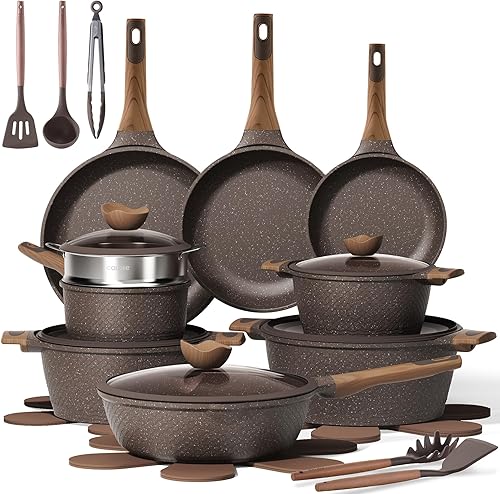
CAROTE 26pc Nonstick Cookware Set, Aluminum
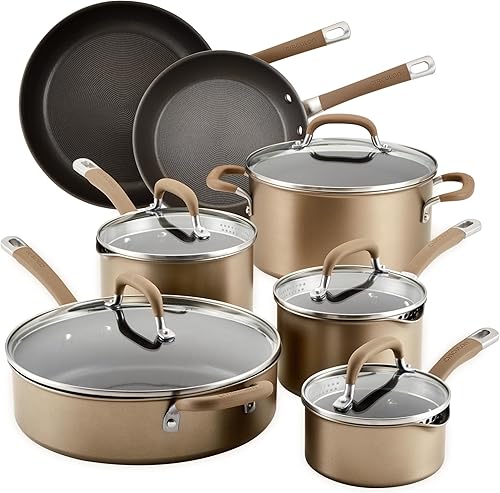
Circulon Premier Professional 12-Piece Cookware Set

OXO Hybrid 10 Piece Cookware Set
As an Amazon Associate we earn from qualifying purchases. Product prices and availability are accurate as of the date/time indicated.
Related reading: The Best Cookware For Rv Gas Stove of 2026 · The Best Non Stick Cookware for Induction Cooktops of 2026
Frequently Asked Questions
Can I use a cast iron induction pan on gas grates?
Yes. Cast iron is made for direct flame and heats evenly once it warms up. Decision rule: if it sits flat on the grate fingers without rocking, use it.
Does induction cookware heat slower on gas?
Not because it is induction cookware. Speed depends on flame size, base thickness and material, and thick clad bases take longer to warm but hold heat well. Decision rule: preheat a few minutes on medium and raise the flame only if you need more.
Is a large induction skillet too big for a small gas burner?
It can be. The center heats first and the edges stay cooler, which is fine for simmering but uneven for searing. Decision rule: if the edges stay cool, move to a larger burner or a smaller pan.
Can I use an induction pan with a wok ring on gas?
A flat-bottom induction pan does not need a ring, and a ring can lift the pan and let flame escape around its sides. Rings are meant for round-bottom woks. Decision rule: flat bottom, no ring.
My magnet sticks weakly. Is the pan still fine?
On gas, yes, because magnetism does not matter there. On induction, a weak pull can mean a thin or partly magnetic layer that heats poorly or buzzes. Decision rule: use it on gas, and only trust a firm pull across the whole base for induction.
{“@context”: “https://schema.org”, “@type”: “FAQPage”, “mainEntity”: [{“@type”: “Question”, “name”: “Can I use a cast iron induction pan on gas grates?”, “acceptedAnswer”: {“@type”: “Answer”, “text”: “Yes. Cast iron is made for direct flame and heats evenly once it warms up. Decision rule: if it sits flat on the grate fingers without rocking, use it.”}}, {“@type”: “Question”, “name”: “Does induction cookware heat slower on gas?”, “acceptedAnswer”: {“@type”: “Answer”, “text”: “Not because it is induction cookware. Speed depends on flame size, base thickness and material, and thick clad bases take longer to warm but hold heat well. Decision rule: preheat a few minutes on medium and raise the flame only if you need more.”}}, {“@type”: “Question”, “name”: “Is a large induction skillet too big for a small gas burner?”, “acceptedAnswer”: {“@type”: “Answer”, “text”: “It can be. The center heats first and the edges stay cooler, which is fine for simmering but uneven for searing. Decision rule: if the edges stay cool, move to a larger burner or a smaller pan.”}}, {“@type”: “Question”, “name”: “Can I use an induction pan with a wok ring on gas?”, “acceptedAnswer”: {“@type”: “Answer”, “text”: “A flat-bottom induction pan does not need a ring, and a ring can lift the pan and let flame escape around its sides. Rings are meant for round-bottom woks. Decision rule: flat bottom, no ring.”}}, {“@type”: “Question”, “name”: “My magnet sticks weakly. Is the pan still fine?”, “acceptedAnswer”: {“@type”: “Answer”, “text”: “On gas, yes, because magnetism does not matter there. On induction, a weak pull can mean a thin or partly magnetic layer that heats poorly or buzzes. Decision rule: use it on gas, and only trust a firm pull across the whole base for induction.”}}]}