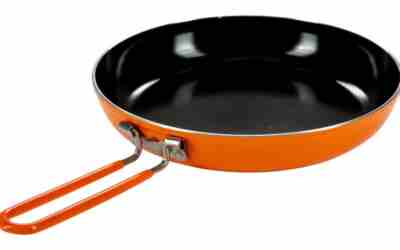
The right cookware for induction has a magnetic base: if a magnet sticks firmly to the bottom of the pan, it will work. Cast iron, carbon steel, and most clad or magnetic stainless steel pass. Pure aluminum, copper, glass, and ceramic do not, unless they have a steel plate bonded to the base.
How to test your pans for induction with a magnet
The 10-second magnet test is the fastest way to sort your cabinet. Manufacturers such as KitchenAid and AEG give the same basic rule: the magnet has to stick to the pan, not just touch it.
- Grab a refrigerator magnet with real pull. Thin novelty magnets can fail on pans that would work fine.
- Press it flat against the outside of the pan bottom, the part that sits on the glass.
- Move it across the base: center, middle, and near the edge. It should grab everywhere. If it sticks only in a small spot, the pan may have a tiny steel disc and will heat only that area.
- Check the sides too. A pan that is magnetic on the sides as well as the bottom tends to heat better than one that is magnetic only underneath.
Firm grab: it works. Slides off or falls: it will not work. Weak, easy to knock off: treat it as marginal (more on that below). The magnet test is a screen, not a guarantee, so your cooktop manual has the final word.
Which cookware materials work on induction?
Induction heats the pan itself by magnetic field, so the pan has to contain ferromagnetic metal. Here is how common materials sort out.
| Material | Works on induction? | Notes |
|---|---|---|
| Cast iron (bare or enameled) | Yes | Enamel is fine because the iron underneath is magnetic. Rough bottoms can scratch glass, so lift rather than slide. |
| Carbon steel | Yes | Heats fast. Flat-bottom woks work if they pass the magnet test. |
| Magnetic stainless (often 400-series) | Yes | Check with a magnet; not all stainless is magnetic. |
| Clad stainless with a magnetic outer layer | Yes | Common multi-ply construction; the outer steel layer is what the cooktop sees. |
| Aluminum core with a steel layer | Yes | Works only if magnetic steel covers the aluminum. |
| Pure aluminum | No | Not magnetic. Works only with a bonded steel base plate. |
| Copper | No | Works only if it has a magnetic steel base layer. |
| Glass, ceramic, clay | No | Not magnetic. Some have an induction disc on the bottom. |
Nonstick pans depend on the base underneath the coating. A nonstick pan with an aluminum body passes only if it has a magnetic plate. Our roundup of the best nonstick cookware for induction cooktops covers options built that way, and our best induction cookware guide covers the broader field.
Is stainless steel cookware induction safe?
Often, but not always. Stainless steel is a family of alloys. Ferritic grades (the 400 series) are magnetic. Many 18/10 (300-series) stainless steels are only weakly magnetic or not magnetic at all, which is why a solid 18/10 pan can fail. Most 18/10 pans sold for induction avoid this by bonding a magnetic steel layer to the outside of the base.
The trap most pages skip: magnet strength varies. A pan that holds a magnet weakly can technically pass yet heat slowly, run at lower power, or buzz. Use this decision rule:
- Magnet holds firmly when you tilt the pan: buy or keep it.
- Magnet holds but pulls off with a light tug: test it. Boil 2 cups of water on your cooktop and compare the time to a cast iron or known-good pan.
- Magnet will not hold: skip it or use it on a gas or radiant burner.
When shopping stainless sets, look for induction compatibility in the product listing, then confirm with a magnet once the pans arrive. If you want a starting point for full sets, see our best cookware set roundup.
Does pan size and flatness matter on induction?
Yes, both. Induction only heats where the pan sits over the coil, and it needs steady contact with the glass. Exact limits vary by model, and the sources we checked give no universal minimum or base thickness, so check your manual for the minimum pan diameter and the largest pan the zone allows.
| Pan base vs. cooking zone | What to expect |
|---|---|
| Under about 2-3 in. across | May not be detected, even if magnetic (manufacturer guidance). |
| Smaller than the ring but above the minimum | Works, but only part of the zone’s power reaches the pan, so efficiency drops. |
| About the same size as the ring | Best match for even heat. |
| Much larger than the ring, or flared wide at the top | May exceed the manual’s size limit or crowd the control panel. A bridge element suits large pans and griddles. |
Quick checklist before you buy or keep a pan:
- Lay a straightedge across the base. Light gaps mean it is warped.
- Set the cold pan on a flat counter and press the rim. Rocking means it will rock on glass too.
- Run a fingertip over the bottom. Rough casting marks or burrs can scratch glass.
- Confirm the base diameter against your zone and your manual’s minimum.
- Keep flat-bottom woks only if they pass the magnet test. Only the flat part heats, and wok rings should not be used.
What does the induction-ready symbol mean?
The induction symbol is usually a small coil or loop printed or stamped on the bottom of the pan or on the box. It means the maker designed the pan for induction. It is not required for a pan to work, and some perfectly good cast iron or carbon steel pans carry no label.
Treat the symbol as a helpful hint, not proof. A label plus a firm magnet grab is a safe buy. A label on a pan that barely holds a magnet is worth a water-boil test. For multi-ply pans, the label usually points to a magnetic outer layer over an aluminum or copper core, which spreads heat evenly while still working with the cooktop.
Why is my induction pan buzzing, and how do I stop it?
Some noise is normal. Buzzing, humming, or clicking usually comes from the pan vibrating in the magnetic field. Layered (sandwich-style) bases can click or squeal as the layers expand unevenly when hot, according to AEG. Try these fixes in order:
- Lower the power level. Noise is often loudest at high settings.
- Center the pan on the ring and make sure it sits flat.
- Swap the pan. A warped, weakly magnetic, or multi-layer pan is the most common source.
- Check the lid and utensils. A loose lid can rattle.
- Move to a different zone if one burner is noisier than the others.
A cooling fan running after cooking is also normal. If the noise is loud on every pan, check the manual or contact the manufacturer, since it may be a cooktop issue.
Do I need to replace all my cookware? A 3-piece plan
Usually not. Test everything with a magnet first and keep what passes. Cast iron and most stainless clad pans often carry over unchanged.
If you have to start over, buy these three first:
- A 10 to 12 inch skillet (clad stainless or cast iron) for searing and everyday cooking.
- A 3 to 4 quart saucepan with a lid for grains, sauces, and reheating.
- An 8 quart stockpot for pasta, soup, and stock.
Add nonstick later. Sizes are typical, so match them to your cooking zones.
Interface disks: a steel plate that sits between a non-magnetic pan and the cooktop can rescue a pan you love. The trade-off is slower, less even heating and lower efficiency. Check that your manual allows them.
Not sure induction is for you? A portable induction cooktop lets you test your pans before you commit, and our best induction stove top guide covers built-in options.
Safety notes:
- Lift pans instead of sliding them. Rough cast iron and aluminum- or copper-bottomed pans can scratch the glass or leave residue.
- Put nothing between the pan and the cooktop: no wok rings, paper, or foil.
- Keep pans within the manual’s size limit and away from the controls.
- Induction heats fast. Do not preheat an empty pan on high and walk away.
- If you have a pacemaker or other implanted device, check the cooktop maker’s guidance.
Our Top Picks
Ready to shop? These are the top-rated options from our hands-on roundup, Best Induction Cookware of 2026.

CAROTE 26pc Nonstick Cookware Set, Aluminum

Circulon Premier Professional 12-Piece Cookware Set

OXO Hybrid 10 Piece Cookware Set
As an Amazon Associate we earn from qualifying purchases. Product prices and availability are accurate as of the date/time indicated.
Frequently Asked Questions
Can I use a non-induction pan with an interface disk?
Often yes, if your manual allows it. A magnetic steel disk sits under the pan and heats up. Expect slower, less even heating and lower efficiency than with a pan built for induction. Follow the disk maker’s and cooktop maker’s instructions.
Do I need special pans for a portable induction burner?
Yes, the same rules apply as on a built-in cooktop. The pan needs a flat, magnetic base that fits the burner’s heating zone. Check the manual for the minimum and maximum pan diameter, since small portable units can be fussy about size.
Can I use a wok on an induction cooktop?
A flat-bottomed carbon steel or magnetic wok works if it passes the magnet test. Only the flat base heats, so it will not behave like a round-bottom wok over gas. Do not use a wok ring between the pan and the glass.
Is induction cooking safe with a pacemaker?
Guidance varies by cooktop and device, so check the cooktop manufacturer’s instructions and ask your doctor. Manufacturers often advise keeping a distance from the cooktop while it runs. Do not rely on a general rule.
{“@context”: “https://schema.org”, “@type”: “FAQPage”, “mainEntity”: [{“@type”: “Question”, “name”: “Can I use a non-induction pan with an interface disk?”, “acceptedAnswer”: {“@type”: “Answer”, “text”: “Often yes, if your manual allows it. A magnetic steel disk sits under the pan and heats up. Expect slower, less even heating and lower efficiency than with a pan built for induction. Follow the disk maker’s and cooktop maker’s instructions.”}}, {“@type”: “Question”, “name”: “Do I need special pans for a portable induction burner?”, “acceptedAnswer”: {“@type”: “Answer”, “text”: “Yes, the same rules apply as on a built-in cooktop. The pan needs a flat, magnetic base that fits the burner’s heating zone. Check the manual for the minimum and maximum pan diameter, since small portable units can be fussy about size.”}}, {“@type”: “Question”, “name”: “Can I use a wok on an induction cooktop?”, “acceptedAnswer”: {“@type”: “Answer”, “text”: “A flat-bottomed carbon steel or magnetic wok works if it passes the magnet test. Only the flat base heats, so it will not behave like a round-bottom wok over gas. Do not use a wok ring between the pan and the glass.”}}, {“@type”: “Question”, “name”: “Is induction cooking safe with a pacemaker?”, “acceptedAnswer”: {“@type”: “Answer”, “text”: “Guidance varies by cooktop and device, so check the cooktop manufacturer’s instructions and ask your doctor. Manufacturers often advise keeping a distance from the cooktop while it runs. Do not rely on a general rule.”}}]}