Your rice cooker not working usually traces to the outlet, a poorly seated inner pot or a dirty heating plate, so check those before suspecting the thermal fuse.
Match your symptom to the likely cause
Find the row that matches what your cooker does, then jump to the section named in the last column.
| Symptom | Likely cause | Go to |
|---|---|---|
| No lights, no sound | No outlet power or a damaged cord | Quick checks |
| Lights on, rice stays raw | Pot not seated, or an open thermal fuse | Quick checks, then thermal fuse |
| Stuck on Warm, never cooks | Cook lever not latching or a stuck sensor | Stuck on Warm |
| Clicks to Warm within minutes | Too little rice or a dirty sensor | Stuck on Warm |
| Mushy, hard, burnt or boiling over | Water, rice type or quantity | Water ratio and rice type |
| Display shows zeros or a light is dead | Backup battery or burnt-out bulb | Stuck on Warm |
Quick checks when a rice cooker is not working
Work through these in order. Each takes under a minute and needs no tools.
- Test the outlet. Plug in a lamp or phone charger. Kitchen outlets are often GFCI protected, so press the RESET button on the outlet, then check the breaker panel for a tripped switch.
- Inspect the cord and plug. Look for fraying, cuts, bent or discolored prongs and any melted plastic. If you find damage, stop using the cooker. Do not tape the cord.
- Reseat the inner pot. Lift it out, set it back and give it a quarter turn. It should sit flush and not rock. Many models will not start heating when the pot is not touching the plate.
- Close the lid fully. Listen for the latch click on models that have one.
- Look at the plate. A stray grain of rice or a water droplet under the pot can stop the sensor from making contact.
If you are unsure how the pot and lid should sit on your model, the basics are laid out in how to use a rice cooker step by step.
Clean the heating plate and sensor safely
Debris on the plate is one of the few causes you can fully fix at home.
- Unplug the cooker and let it cool until the plate is cool to the touch.
- Remove the pot and tip out any crumbs or burnt bits.
- Wipe the plate with a cloth wrung out until barely damp. For stuck-on residue, use a soft toothbrush or a plastic scraper. Skip steel wool, which scratches the plate.
- Find the round, spring-loaded disc in the center. This is the temperature sensor. Press it with a finger. It should drop and spring back smoothly.
- If it sticks, clean around its rim with a damp cotton swab, then dry everything with a dry cloth.
Never pour water into the base or submerge it, and plug the cooker back in only when every surface is dry.
Stuck on Warm or switching to Warm too early
A cooker that goes straight to Warm is telling you it believes the rice is done. Three things can fool it.
- Too little rice. Cooking less than the minimum in your manual can make the cooker flip to Warm early. The minimum is model specific.
- A dirty or sticky sensor. A worn or stuck sensor reads the pot as hot too soon. Cleaning it, as above, is the only safe home fix. A bad sensor itself needs a replacement part.
- A cook lever that will not latch. On basic one-switch models, a broken cook button or weak spring under the lever can leave the cooker on Warm. If the lever pops up the moment you release it, the fix is inside the unit, so contact the manufacturer.
If the cycle ends far sooner than the typical times in this rice cooker timing chart, the cooker is switching early rather than cooking slowly.
Dead lights and zeros
A burnt-out indicator bulb does not always mean the heater is dead, so run a small test batch before giving up. On some models, a display stuck on all zeros points to a dead lithium backup battery, which the manual may cover.
Rule out water ratio and rice type
Mushy, crunchy or burnt rice with a cooker that otherwise runs is usually a measuring problem. Run this test batch before blaming the hardware.
- Measure rice with the cup that came with the cooker, not a kitchen measuring cup. The two are different sizes.
- Rinse white rice until the water runs mostly clear, which also reduces boil-over.
- Fill water to the matching line inside the pot for that rice type and amount. The ratio depends on the rice and the model, and our rice cooker water ratio chart covers the common types.
- Use at least the minimum quantity in your manual, keep the lid closed and do not stir mid-cycle.
- Leave the rice covered for several minutes after the cooker clicks off, then fluff.
If this batch comes out right, the cooker is fine. Brown rice and sushi rice need their own settings or water levels on most models, so do not judge the cooker by a white-rice line used for the wrong grain. If the same test batch still burns or stays raw, a failing sensor or heater is likely.
Thermal fuse and thermostat failure
If the lights come on but the cooker never heats, a blown thermal fuse is a common culprit. It is a one-time safety part that opens permanently when the unit overheats.
How to test it
- Unplug the cooker and wait until it is fully cool.
- Remove the base cover. This usually means a few screws underneath, sometimes security screws, and it may void your warranty.
- Set a multimeter to continuity (the beep symbol) or the lowest ohms range.
- Disconnect one fuse lead if you can, so other wiring does not give a false reading, then touch the probes to both ends.
A good fuse beeps or reads close to 0 ohms. A blown one shows no beep and OL, meaning an open circuit.
Rules that keep it safe
- Never open or probe a plugged-in cooker.
- Never bypass the fuse with wire, foil or a jumper.
- Replace it only with a fuse matching the temperature and current rating printed on the original. A higher rating is a fire risk.
- A fuse usually blows for a reason, such as a stuck thermostat or cooking dry, so a new fuse may blow again.
Fuzzy-logic and induction models add a control board, which is more likely to fail than the fuse. Board faults are not a home repair.
Repair or replace a dead rice cooker
Replace the cooker immediately if you find exposed wiring, scorch or melt marks, a damaged cord, water inside the base, or a breaker that trips when it runs. Do not try to repair these.
For a simple one-switch cooker with a failed fuse or cook lever, repair is reasonable only if the part and shipping cost less than half the price of a comparable new unit. Before opening anything, check your manual and receipt for warranty coverage, since a covered cooker should go back to the maker unopened.
When you do replace it, match capacity to your household using this guide to rice cooker size for 4 people. Also look for a removable inner pot that is easy to clean and a clearly stated warranty.
Our Top Picks
Ready to shop? These are the top-rated options from our related roundup, Best Rice Cooker Under $100 of 2026.
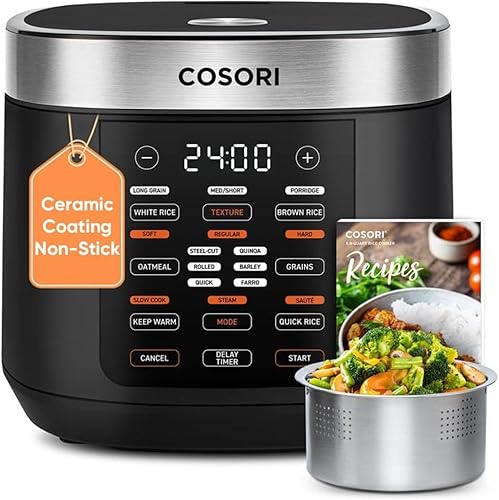
Cosori 10-Cup Rice Cooker with Fuzzy Logic

Zojirushi 6-Cup Rice Cooker NHS-10

Toshiba TRCS02 Mini Rice Cooker, 3-Cup Fuzzy Logic
As an Amazon Associate we earn from qualifying purchases. Product prices and availability are accurate as of the date/time indicated.
Frequently Asked Questions
Can I plug a rice cooker into an extension cord?
Plug it straight into a wall outlet when possible. Rice cookers draw a lot of power for their size, and a thin or worn extension cord can overheat or cause weak heating. If you must use one, follow the manual and match the cord’s rating to the wattage on the cooker’s label.
Can a dented inner pot cause problems?
Yes. A dented or warped pot cannot sit flat on the heating plate, so the sensor reads temperature poorly and the cooker may burn rice or switch to Warm early. Use only the maker’s replacement pot made for your exact model, since pot shape affects sensor contact.
Why does my rice cooker smell like burning?
Spilled rice or water residue on the plate is the usual cause. Unplug it, let it cool and clean the plate and sensor. If the smell continues on a clean cooker, or you see smoke or melted plastic, stop using it and replace it.
Can I cook a second batch right after the first?
Wait until the base and pot have cooled. A hot plate and warm pot can make the sensor think the rice is already done, so the cooker may drop to Warm after a few minutes. Cooling the base for a while avoids this.
{“@context”: “https://schema.org”, “@type”: “FAQPage”, “mainEntity”: [{“@type”: “Question”, “name”: “Can I plug a rice cooker into an extension cord?”, “acceptedAnswer”: {“@type”: “Answer”, “text”: “Plug it straight into a wall outlet when possible. Rice cookers draw a lot of power for their size, and a thin or worn extension cord can overheat or cause weak heating. If you must use one, follow the manual and match the cord’s rating to the wattage on the cooker’s label.”}}, {“@type”: “Question”, “name”: “Can a dented inner pot cause problems?”, “acceptedAnswer”: {“@type”: “Answer”, “text”: “Yes. A dented or warped pot cannot sit flat on the heating plate, so the sensor reads temperature poorly and the cooker may burn rice or switch to Warm early. Use only the maker’s replacement pot made for your exact model, since pot shape affects sensor contact.”}}, {“@type”: “Question”, “name”: “Why does my rice cooker smell like burning?”, “acceptedAnswer”: {“@type”: “Answer”, “text”: “Spilled rice or water residue on the plate is the usual cause. Unplug it, let it cool and clean the plate and sensor. If the smell continues on a clean cooker, or you see smoke or melted plastic, stop using it and replace it.”}}, {“@type”: “Question”, “name”: “Can I cook a second batch right after the first?”, “acceptedAnswer”: {“@type”: “Answer”, “text”: “Wait until the base and pot have cooled. A hot plate and warm pot can make the sensor think the rice is already done, so the cooker may drop to Warm after a few minutes. Cooling the base for a while avoids this.”}}]}