The best coffee machine for home use is a drip brewer for most households, with espresso or bean-to-cup only if you drink milk drinks daily.
Match the machine type to how you drink
Start with what ends up in your mug, not with features. Each type below wins for one kind of drinker and loses for another.
| Type | Best for | Loses for |
|---|---|---|
| Drip brewer | Two or more mugs of black or lightly milked coffee, no learning curve | Lattes, cappuccinos, and anyone who wants a single cup in under a minute |
| Single-serve pod | One person, one mug, heats in seconds, minimal cleanup | Households that drink several cups a day and want lower cost per cup |
| Semi-automatic espresso | Milk drinks made by hand, with control over the shot | Rushed mornings, since you grind, dose, tamp and steam yourself |
| Bean-to-cup (super-automatic) | Daily lattes with one-touch grinding and brewing | Tight budgets and people who dislike regular internal cleaning |
| French press or pour-over | Low cost and full control for one or two cups | Anyone who wants to press a button and walk away |
Large-carafe drip makers can take 10 minutes or more to finish a full pot, while pod machines heat up in seconds. If you do go the espresso route, our guide to home espresso machines covers that category in depth.
What each type costs per cup over three years
The machine price is only part of the bill. Consumables decide the winner if you drink coffee every day.
The example below uses typical values, not quotes: beans at $15 per pound (454 g), 10 g of coffee per 8-oz drip cup, 18 g per double espresso shot, pods at $0.70 each, and 2 drinks a day for 3 years (2,190 drinks). Filters, milk and the machine itself are not included.
| Type | Consumable cost per drink | 3-year consumables |
|---|---|---|
| Drip | $0.33 (45 cups per pound) | $730 |
| Pod | $0.70 | $1,533 |
| Espresso or bean-to-cup | $0.60 (25 doubles per pound) | $1,314 |
Pods cost about twice what drip does at these inputs. Espresso beans cost less than pods, but the machine usually costs more up front. Add a separate grinder if the espresso machine lacks one. How many years you get out of the machine also changes the math, so check how long each type of coffee machine lasts before spreading the price over three years.
How many cups and how much counter space to plan for
Machine “cups” are usually 5 oz, not mug-sized. A 10-cup brewer holds 50 oz, which is four 12-oz mugs. A 12-cup model holds 60 oz, or five.
- One person, one or two mugs: a single-serve machine or a small 4 to 5 cup drip.
- Two people, three to four mugs: a 10-cup drip.
- Gatherings or heavy use: a 12-cup drip with a thermal carafe, so the last mug is still hot.
For counter space, measure the footprint plus the height with the lid or water tank open. Check clearance under wall cabinets, since many machines are filled from the top. Espresso and bean-to-cup machines also need room for a knock box, a grinder or a milk jug. Read the dimensions in the product’s manual rather than guessing from photos.
Features worth paying for and features that are marketing
Worth paying for
- Correct brew temperature on drip machines: the SCA standard targets roughly 195 to 205°F water, and cheap brewers often run too cool and under-extract. SCA-certified home brewers have been tested against it; check the current list at sca.coffee, because retail pages sometimes disagree on specific models.
- Thermal carafe: keeps coffee hot without a heating plate that bakes it.
- Programmable timer: useful only if you want coffee ready when you wake.
- Built-in grinder: convenient and fresh, but it adds a part to clean and a part that can fail.
- Water tank size: match it to your daily volume so you are not refilling every morning.
Mostly marketing
- Pump pressure figures of 15 to 19 bar. Espresso extraction is generally targeted at about 9 bar at the puck.
- Wi-Fi and app control on a machine you still have to fill by hand.
- Long lists of strength settings that change little in the cup.
Common mistakes when buying a home coffee machine
- Buying espresso without a grinder. Pre-ground coffee rarely works well in a semi-automatic machine, so budget for a burr grinder unless the machine has one built in.
- Choosing by looks or pod variety. Pods are convenient but sit at the top of the cost table above.
- Ignoring your effort tolerance. If you will not tamp and wipe a steam wand at 7 a.m., skip semi-automatic espresso.
- Oversizing the carafe. A half-full carafe brews fine, but coffee left on a heating plate turns bitter.
- Skipping the water question. Hard water scales heaters and changes taste, which leads to the next section.
Water quality and descaling keep any machine brewing right
The USGS classes water above 120 mg/L (about 7 grains per gallon) as hard. Hard water builds scale faster, which slows brewing and cools the water. A cheap hardness test strip tells you where you stand.
Follow the manufacturer’s descaling interval and use the descaler it recommends. Our guide on how to descale a coffee maker or espresso machine gives the steps. Always rinse thoroughly afterward.
Safety basics: unplug before cleaning, never run the machine without water, and treat steam wands and hot surfaces with care. Plug high-wattage machines straight into a wall outlet, not an extension cord.
Where to compare drip models once you have chosen
If drip is your pick, narrow the list by three criteria: certified or verified brew temperature, a thermal carafe, and a carafe size that matches your mugs per morning. Our roundup of the best coffee brewers compares models on those points. For espresso, decide on the grinder first, then the machine.
Our Top Picks
Ready to shop? These are the top-rated options from our related roundup, Best Coffee Machine For Small Office of 2026.

Keurig K-Elite Single Serve Coffee Maker, Brushed Slate

Ninja CM371 Hot & Iced XL Coffee Maker with Cold Brew

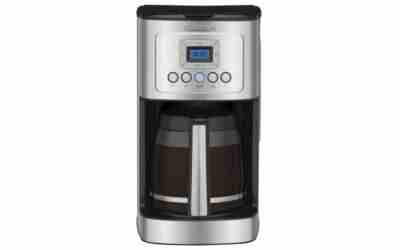
Cuisinart DCC-3200BKSNAS 14-Cup Programmable Coffee Maker
As an Amazon Associate we earn from qualifying purchases. Product prices and availability are accurate as of the date/time indicated.
Frequently Asked Questions
What is the difference between a coffee maker and an espresso machine?
A coffee maker drips hot water through ground coffee using gravity. An espresso machine forces hot water through finely ground, packed coffee under pressure, producing a small, concentrated, crema-topped shot that serves as the base for lattes and cappuccinos.
Are bean-to-cup machines worth it for one person?
Yes, if you drink at least one milk-based drink daily and will clean the machine on schedule. If you mostly drink black coffee, a drip brewer or pour-over makes better coffee for far less money.
Can I use pre-ground coffee in a bean-to-cup machine?
Only if the model has a separate pre-ground chute, which many do. Never pour ground coffee into the bean hopper. Check your manual, and use the chute only for the amount it specifies.
Is a French press a good first coffee machine?
It is a good low-cost start for one or two mugs, with no filters or electricity needed. It takes about four minutes of steeping and some cleanup of grounds, so it suits people who do not mind a manual routine.
{“@context”: “https://schema.org”, “@type”: “FAQPage”, “mainEntity”: [{“@type”: “Question”, “name”: “What is the difference between a coffee maker and an espresso machine?”, “acceptedAnswer”: {“@type”: “Answer”, “text”: “A coffee maker drips hot water through ground coffee using gravity. An espresso machine forces hot water through finely ground, packed coffee under pressure, producing a small, concentrated, crema-topped shot that serves as the base for lattes and cappuccinos.”}}, {“@type”: “Question”, “name”: “Are bean-to-cup machines worth it for one person?”, “acceptedAnswer”: {“@type”: “Answer”, “text”: “Yes, if you drink at least one milk-based drink daily and will clean the machine on schedule. If you mostly drink black coffee, a drip brewer or pour-over makes better coffee for far less money.”}}, {“@type”: “Question”, “name”: “Can I use pre-ground coffee in a bean-to-cup machine?”, “acceptedAnswer”: {“@type”: “Answer”, “text”: “Only if the model has a separate pre-ground chute, which many do. Never pour ground coffee into the bean hopper. Check your manual, and use the chute only for the amount it specifies.”}}, {“@type”: “Question”, “name”: “Is a French press a good first coffee machine?”, “acceptedAnswer”: {“@type”: “Answer”, “text”: “It is a good low-cost start for one or two mugs, with no filters or electricity needed. It takes about four minutes of steeping and some cleanup of grounds, so it suits people who do not mind a manual routine.”}}]}