A coffee maker not brewing is usually a power issue, a misseated part, or a scale or grounds clog. Lights on and no heat means a thermal fuse or element; heat with no flow means a clog.
Start with the quick checks
Do these in order before you open or clean anything. Each one takes under a minute.
- Confirm power. Plug a lamp into the same outlet. Check the GFCI reset button on kitchen outlets and your breaker panel.
- Power-cycle. Unplug the machine for a few minutes, then plug it in again. This clears a stuck control board on programmable models.
- Fill and seat the reservoir. A tank that is empty or not pushed fully down will not feed water. On removable tanks, look for debris around the outlet valve at the bottom.
- Seat the carafe and lid. Many machines have a safety interlock that stops brewing unless the carafe sits fully in place under the basket.
- Check the basket and filter. The filter holder must be locked in position, and the filter must lie flat. A folded filter or the wrong size can block flow or cause overflow.
- Look at the lights. A dead display points to power or an internal fuse. A lit display points to water flow or heating.
Match your symptom to the likely cause
| What you see | Most likely cause | First fix |
|---|---|---|
| No lights, no sound | No outlet power or blown internal thermal fuse | Test another outlet; if still dead, stop DIY |
| Lights on, no water flows | Scale or blockage in the tank outlet or hoses | Descale per the manual |
| Water drips slowly into the basket | Scale in the heating tube, or grounds in the basket valve | Rinse the holder; descale |
| Gurgling or hissing, no coffee | Blocked line or stuck check valve | Clean the valve and lines |
| Water overflows the basket | Clogged filter holder or too many grounds | Empty and rinse the holder |
| Water pools under the machine | Cracked tank, loose hose or overflow | Unplug; inspect the tank first |
How to unclog and descale a coffee maker
Scale is the most common slow-motion cause. Minerals narrow the tank outlet, hoses and heating tube until water stops moving. Descaling is the fix, but the product and mix depend on your model, so use the manufacturer’s descaling instructions. Some makers warn that vinegar can harm seals and metal parts and leave a lingering taste, and household advice on ratios conflicts. Follow your manual’s approved descaler and cycle count rather than guessing.
The general sequence is the same everywhere. Run the descaling solution through a brew cycle with no coffee or filter, then run several cycles of fresh water until no smell or taste remains. Our guide on how to descale a coffee maker and how often covers timing, which is shorter with hard water.
Check the two small valves
- Check (ball) valve. Many drip machines have a small valve at the tank outlet that lets water out but blocks backflow. Remove it if the design allows, rinse it, and test whether it moves freely. Replace it if cleaning does not help.
- Flow-control valve under the filter holder. Grounds can jam it. Open it, rinse the holder under running water, and make sure the filter has not collapsed into it.
If it hums, gurgles or leaks but no coffee comes out
Noise without output means the machine is trying to move water against resistance. That is usually a blockage, not a dead part, so descale and clean the valves first.
Overflow around the basket is a different problem. It means water is arriving faster than it drains. Fine grounds, a packed basket or a doubled filter will do it, and our page on how much ground coffee per cup a drip maker needs shows how to avoid overfilling.
If water leaks from underneath, unplug the machine and let it cool. Check the tank for cracks and check that the carafe was in place. Do not run a machine that is leaking onto the counter near the outlet.
Keurig and other pod machines
Pod machines fail differently. Hardened grounds or mineral deposits can block the needle that pierces the pod, and the machine then runs but dispenses little or nothing.
- Unplug it, remove the pod holder and rinse it.
- Clear the needle openings with a straightened paperclip, following your model’s manual for which needle to clean.
- Reseat the water tank firmly, since an unseated tank can leave the machine with no water draw.
- Run a water-only cycle without a pod to flush loosened debris, then descale per the manual.
Error codes and reset steps differ by brand and model. Look up the code in your manual.
Pump, thermal fuse or heating element: how to tell
Here is the trap. Most basic drip machines have no electric pump. A heating tube pushes water up and over by boiling it. On those, a failed element, open thermostat or blown thermal fuse stops brewing entirely. Pumps appear on pod, espresso and some premium machines.
Decision rule: if a descaled machine still shows lights but never warms up or moves water, suspect a failed heating element, thermostat or thermal fuse. If it warms and hums but water does not move, suspect a pump or blockage you have not cleared.
If water still will not flow after descaling, some models let you remove the bottom plate to inspect hoses. Only do that with the machine unplugged and cool.
- Never test a thermal fuse, thermostat or element on a live machine.
- Do not bypass a blown thermal fuse. It blows to prevent overheating.
- Stop using any machine that smells burnt, sparks, trips the breaker or has a damaged cord.
- Hot water and steam can scald, so let it cool before opening anything.
When to repair and when to replace
Check your warranty first. The period and what it covers are in the manual or on the maker’s site, and many makers repair or replace in-warranty units at no charge.
Replace the machine if any of these apply:
- It trips a breaker or smells burnt.
- The cord or housing is damaged.
- A thermal fuse or element has failed, since the housing is usually not designed for home repair.
- It still will not flow after a proper descale and valve cleaning.
Our Top Picks
Ready to shop? These are the top-rated options from our related roundup, Best Coffee Maker of 2026.
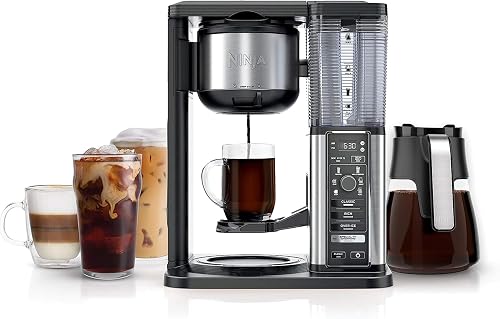
Ninja CM401 Specialty Coffee Maker with 10-Cup Carafe, Fold-Away Frother, 4 Brew Styles, and 6 Brew Sizes

ARTISTOP 50 Cup 8L Stainless Steel Coffee Urn
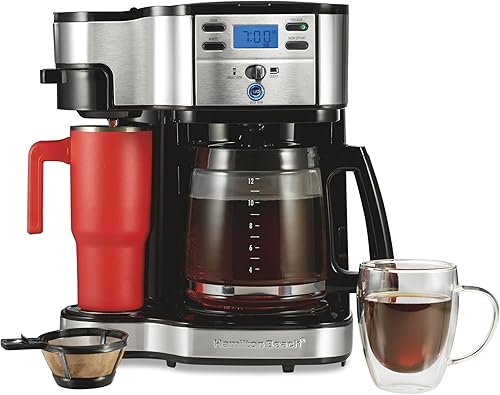
Hamilton Beach 2-Way Programmable Coffee Maker, Single Serve and 12-Cup Carafe, Black/Stainless Steel
As an Amazon Associate we earn from qualifying purchases. Product prices and availability are accurate as of the date/time indicated.
Frequently Asked Questions
Can I use a paper filter twice?
No. A used filter is clogged with grounds and can collapse into the holder, so use a fresh one each brew.
Is it safe to brew with the reservoir lid off?
No. Keep the lid on, because hot water and steam can escape and scald you.
Drip vs pod: which clogs faster?
Pod machines are more prone to sudden clogs because the needle openings are small. Drip machines usually clog gradually from scale.
Can I brew without the carafe if I put a mug under the basket?
No. Many machines have an interlock that blocks brewing without the carafe, and a mug can overflow or let hot coffee reach the warming plate.
{“@context”: “https://schema.org”, “@type”: “FAQPage”, “mainEntity”: [{“@type”: “Question”, “name”: “Can I use a paper filter twice?”, “acceptedAnswer”: {“@type”: “Answer”, “text”: “No. A used filter is clogged with grounds and can collapse into the holder, so use a fresh one each brew.”}}, {“@type”: “Question”, “name”: “Is it safe to brew with the reservoir lid off?”, “acceptedAnswer”: {“@type”: “Answer”, “text”: “No. Keep the lid on, because hot water and steam can escape and scald you.”}}, {“@type”: “Question”, “name”: “Drip vs pod: which clogs faster?”, “acceptedAnswer”: {“@type”: “Answer”, “text”: “Pod machines are more prone to sudden clogs because the needle openings are small. Drip machines usually clog gradually from scale.”}}, {“@type”: “Question”, “name”: “Can I brew without the carafe if I put a mug under the basket?”, “acceptedAnswer”: {“@type”: “Answer”, “text”: “No. Many machines have an interlock that blocks brewing without the carafe, and a mug can overflow or let hot coffee reach the warming plate.”}}]}