The bar didn’t fail. The wall did. Most “pull-up bar ripped out of the wall” videos aren’t a bad bar, they’re a good bar bolted into drywall that was never built to hold a hanging adult, let alone one doing kipping pull-ups. Here’s how to find what’s actually behind the wall, which hardware matches it, and why doorway bars fail on the trim, not the frame.
We independently review everything we recommend. When you buy through our links, we may earn a commission. As an Amazon Associate we earn from qualifying purchases. Learn more.
Drywall Alone Never Holds a Pull-Up Bar
Standard drywall anchors are rated for pounds, not the hundreds of pounds of dynamic force a hanging body generates. A strict pull-up already loads the mounting points with roughly your body weight, and any kip, swing, or drop adds momentum on top of that, sometimes doubling the peak force for a fraction of a second. Drywall anchors, even the “heavy duty” toggle kind sold for shelves and TVs, are rated for static, steady loads like a picture frame or a light fixture, not a repeated jerking pull. The anchor doesn’t need to fail outright to be dangerous; it just needs to work loose a little more with every set until one rep pulls the whole bracket free with your full weight already on it.
This is true for wall-mounted bars and ceiling-mounted bars alike. If the mounting screws don’t reach something solid behind the drywall, the drywall is the only thing holding you up, and drywall was never designed to be a structural anchor point.
Find the Studs (or Joists) Before You Drill Anything
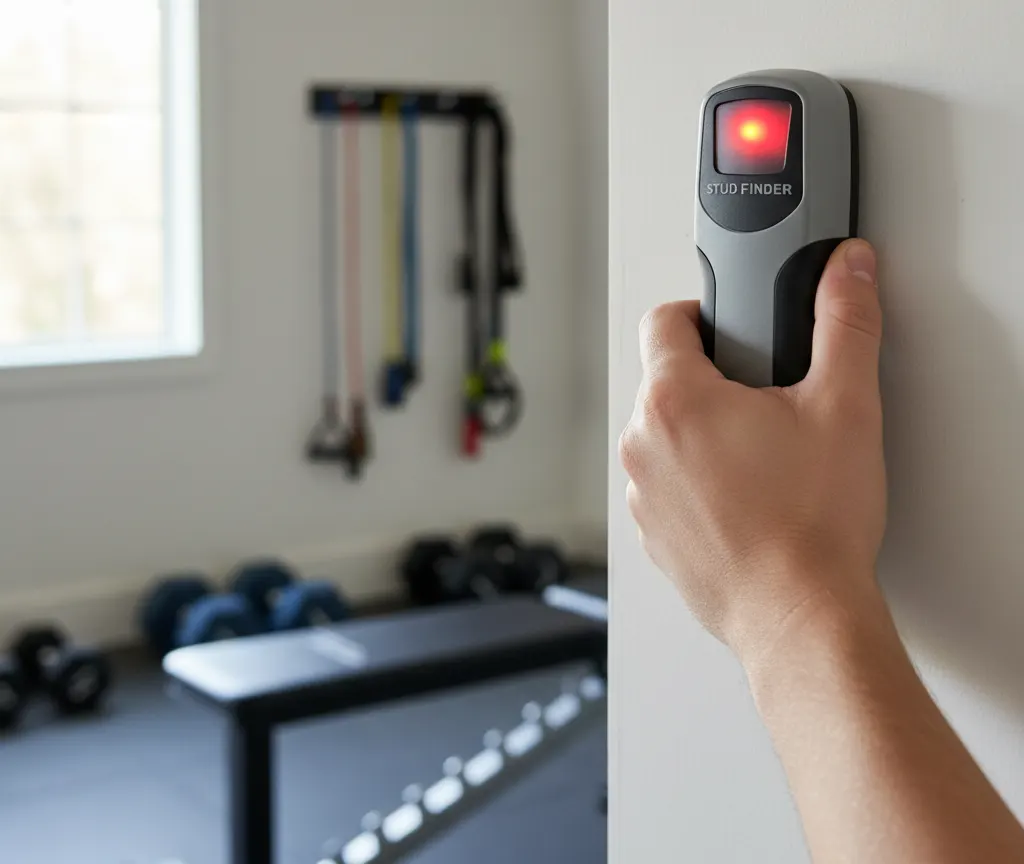
A stud finder is the fastest way to locate framing, but it’s worth confirming with a second method before you commit to drilling: a thin nail or drill bit through a low, hidden spot (inside a closet, behind where the bar will sit) tells you exactly how deep the framing is once the finder gives you a rough location. Wall studs in most North American homes are spaced 16 inches on center, occasionally 24 inches in older builds, so once you find one stud you can usually predict the next two without re-scanning the whole wall.
Ceiling joists follow the same 16-or-24-inch spacing rule, but they’re harder to hit blind because a ceiling-mounted bar needs two or more joists to line up with the bracket’s bolt pattern, not just one. Measure the bracket’s actual hole spacing before you buy, then check that spacing against your joist spacing, because a bracket built for 24-inch joist spacing simply won’t line up with 16-inch framing. Our ceiling-mounted pull-up bar picks lists which models ship with adjustable bolt patterns for exactly this reason.
Use Lag Bolts, Not the Screws in the Box
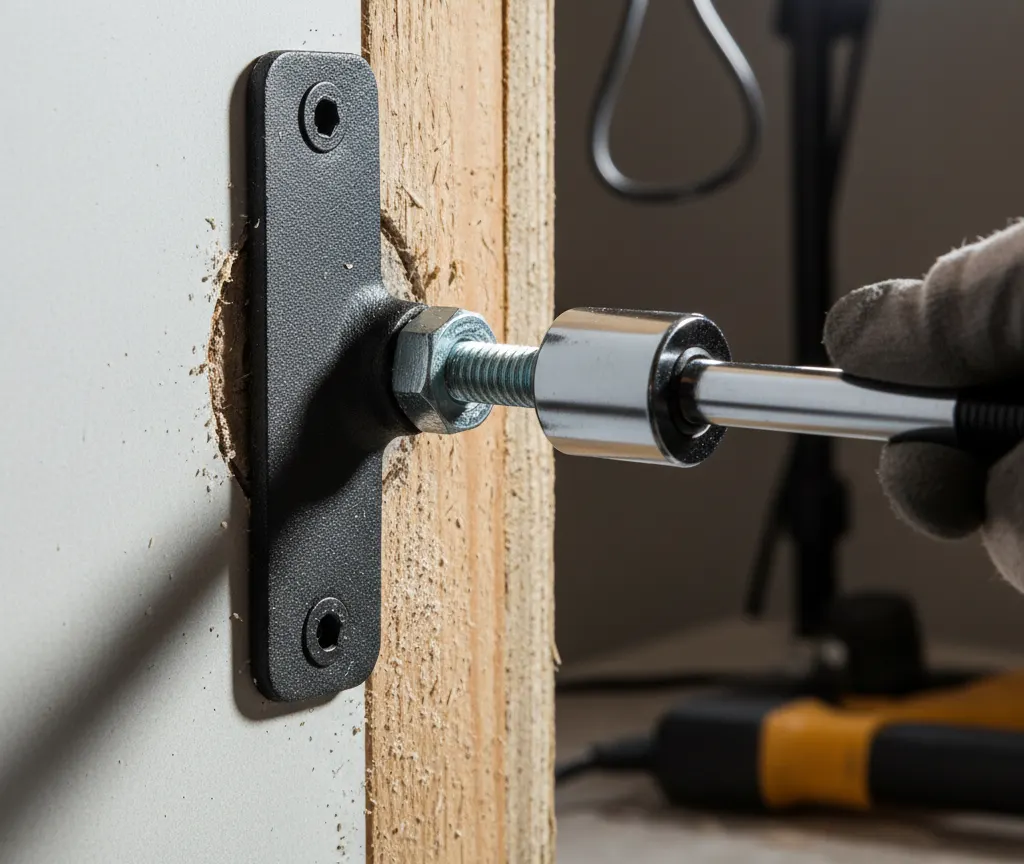
Most wall-mounted pull-up bar kits ship with generic wood screws that are fine for attaching the bracket to a stud in principle, but undersized for the years of repeated stress a home gym actually puts on them. Swap them for lag bolts, at minimum 3/8 inch diameter and long enough to bite at least 2 inches into solid framing after passing through the drywall and the bracket itself. Pre-drill a pilot hole slightly narrower than the bolt shaft first; skipping this step on hardwood-adjacent framing (like older fir studs) risks splitting the wood exactly where you need it strongest.
Every mounting point matters equally: a bracket with six bolt holes that only has bolts through three of them is not “mostly secure,” it’s a bracket that will pivot and work the remaining holes loose under load. Fill every hole the bracket provides, into a stud or joist, every time.
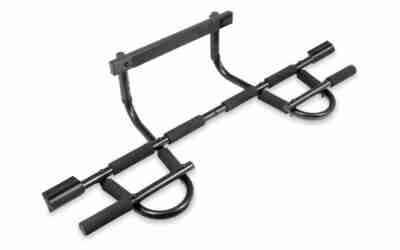
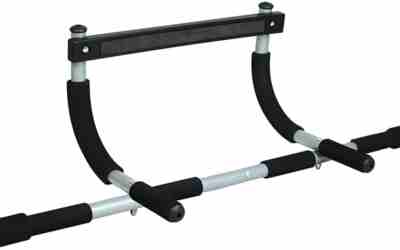
Doorway Bars Fail on the Trim, Not the Frame
Tension-mount doorway bars are the most common pull-up bar sold precisely because they need no drilling, but they fail for a completely different reason than wall or ceiling bars: they’re pressing outward against door trim, not framing. Door trim is thin, often just finish-grade pine or MDF nailed to the jamb, and it was never meant to bear a sideways load. A bar that seems perfectly snug can still crack the trim weeks later as the wood compresses and the tension shifts, especially in older homes where trim has already dried out and gotten brittle.
Two things reduce this risk without changing the bar itself: check the fit weekly and re-tighten, since trim compression is gradual, and always position the bar so it presses against the jamb (the structural door frame) rather than only the thin trim molding around it, if the doorway allows for that adjustment. If a doorway bar has ever felt like it’s slipping or the trim has visibly bowed, retire it. It won’t get safer with more reps.
When a Full Wall Unit Is the Safer Bet
If your wall framing is inconsistent, made of something other than standard wood studs, or you just don’t want to gamble on a two-point bracket, a full wall-mounted stall bar (a Swedish ladder style unit) spreads the load across many more anchor points along a tall frame instead of concentrating it on one small bracket. It costs more and takes up more wall space, but the extra mounting points make it far more forgiving of imperfect stud-finding, since one slightly-missed hole doesn’t compromise the whole structure the way it can on a two-bolt bar bracket.
The Cofiyard Swedish ladder wall gym is a good example: it bolts across a wide vertical span with a full ladder of mounting points, includes a pull-up bar, dip bars, and exercise strap anchors in one frame, and the spread-out load is inherently more tolerant of imperfect framing than a compact two-bolt bracket.
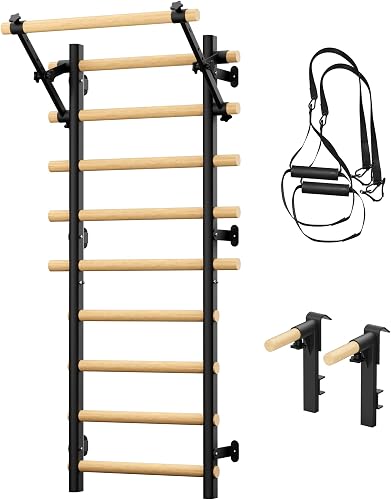
Cofiyard Swedish Ladder Wall Gym


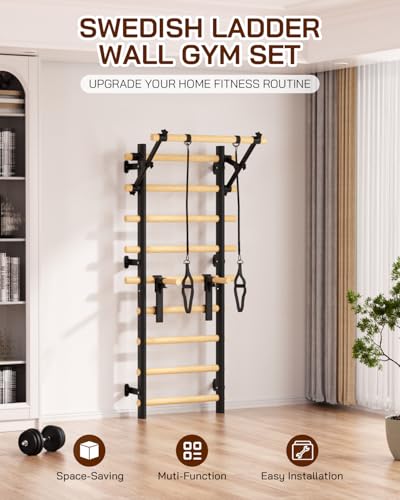
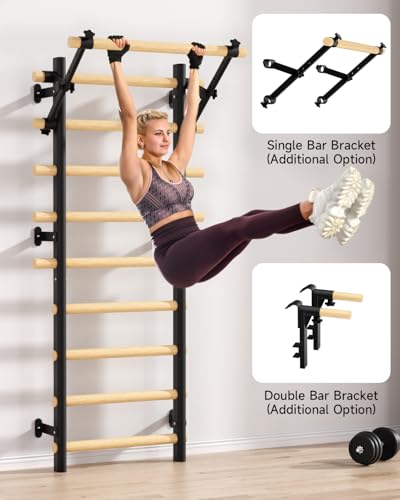
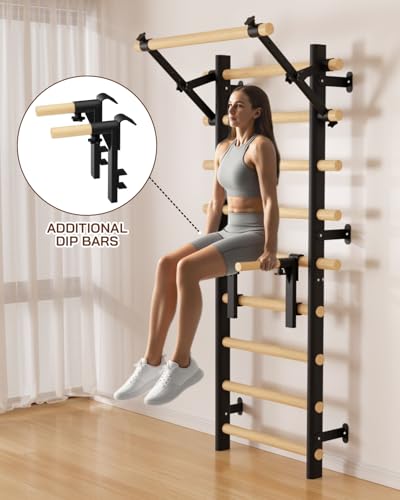
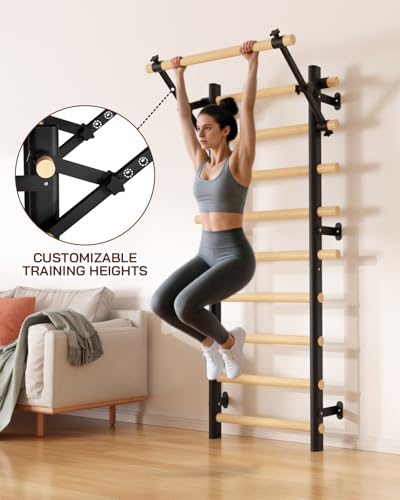
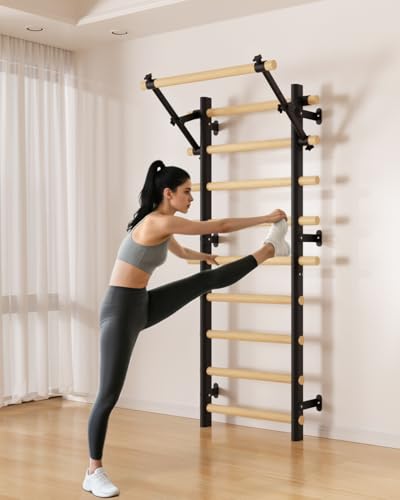
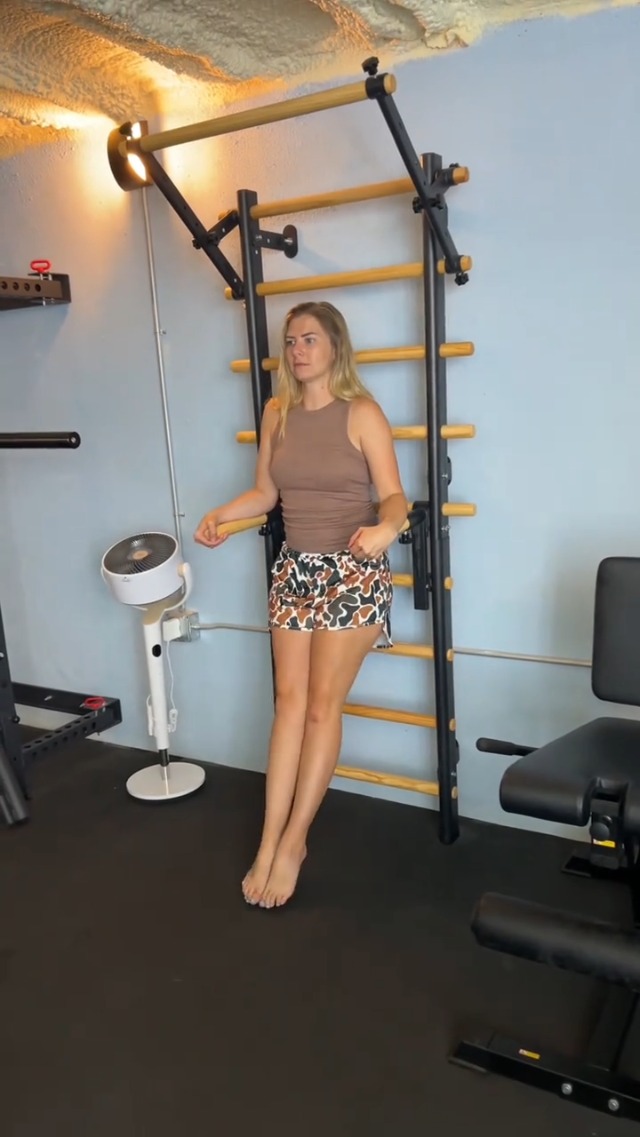
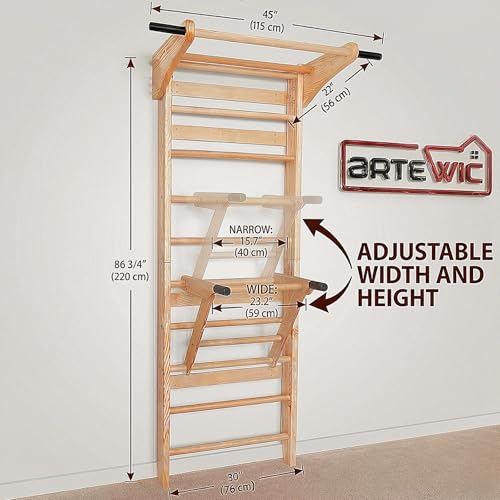
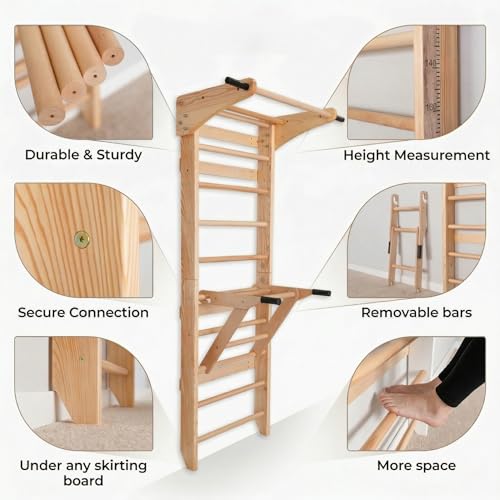
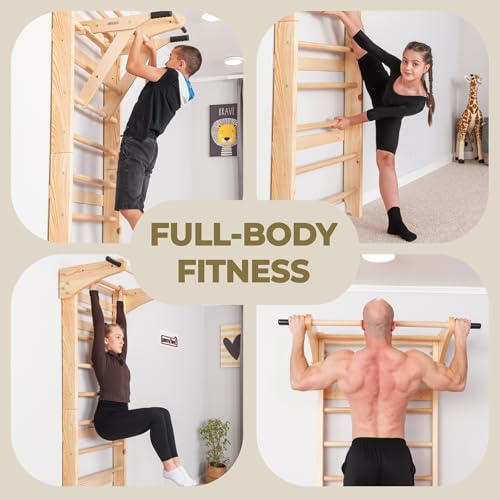
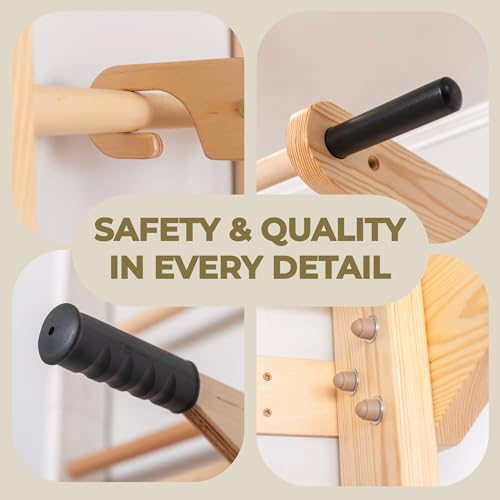
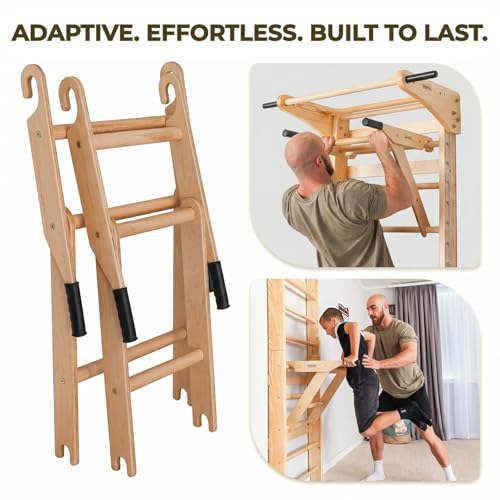
A similar option, the wooden stall bar with an integrated pull-up bar and dip station, works the same way for households that want strength-training and stretching stations built into the same wall-mounted frame rather than buying separate equipment.

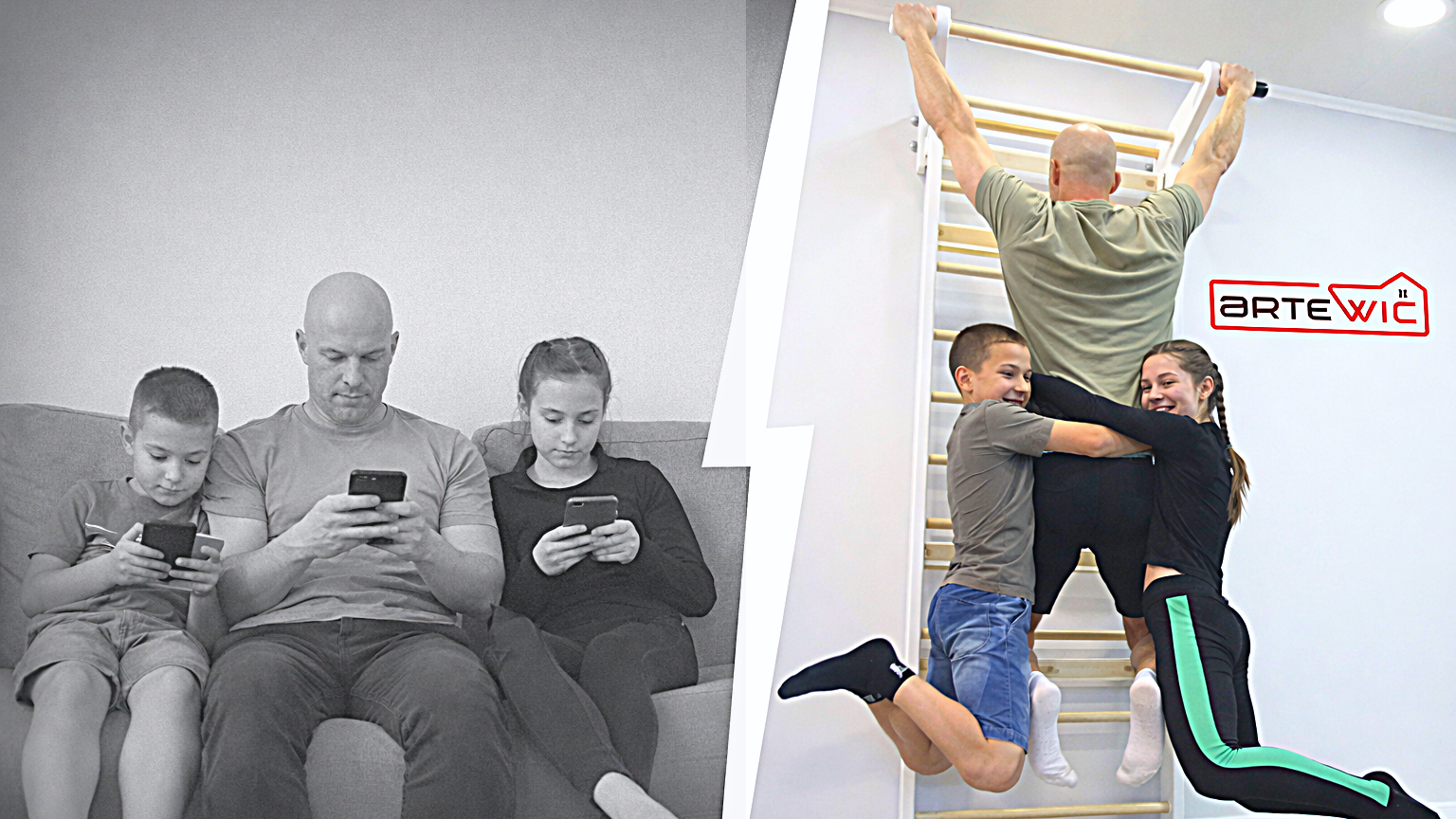
ARTEWIC Swedish Ladder Wall Bars LUX-2


Frequently Asked Questions
Can I mount a pull-up bar without hitting a stud? Not safely for a hanging load. Drywall anchors are rated for static weight, not the repeated dynamic force of pull-ups, so every mounting point needs to reach solid framing.
Are doorway pull-up bars actually dangerous? They’re safe when properly fitted against the door jamb and checked regularly, but they fail more often than drilled bars because they rely on trim compression rather than a bolted connection, and that grip loosens gradually over time.
How do I know if my ceiling can hold a pull-up bar? Confirm the bracket’s bolt spacing lines up with your actual joist spacing (usually 16 or 24 inches on center) and that bolts reach at least 2 inches into solid joist material, not just the drywall or plaster ceiling surface.
What size lag bolts should I use for a pull-up bar? At minimum 3/8 inch diameter, long enough to penetrate at least 2 inches into the stud or joist past the drywall and bracket thickness, with a pre-drilled pilot hole to avoid splitting the wood.
Quick Decision Guide
- Wall has standard wood studs 16 inches apart: a two-bolt wall-mounted bar with lag bolts into studs is fine.
- Not confident about stud location or spacing: a full wall-mounted stall bar spreads the load and is more forgiving of an imperfect fit.
- Renting or can’t drill: a doorway bar works, but re-check the fit weekly and mount it against the jamb, not just the trim.
- Mounting to a ceiling: measure the bracket’s bolt pattern against your actual joist spacing before buying, not after.
See our wall-mounted pull-up bar picks or our ceiling-mounted pull-up bar picks for models with mounting hardware already matched to standard framing.