A rice cooker is worth it if you eat rice twice a week or more; otherwise, a stovetop pot with a lid does the job.
Rice cooker vs stovetop: what actually changes
Both methods make good white rice. The difference is how much attention each one needs and how forgiving it is when you get distracted.
| Factor | Rice cooker | Stovetop pot |
|---|---|---|
| Heat control | Thermostat shuts off heat when the water is absorbed | You lower the flame and judge timing yourself |
| Attention needed | Add rice and water, press a button | Stay close for the boil, then the simmer |
| Keep-warm | Switches on automatically after cooking | None; rice cools in the pot |
| Scorched bottom | Less likely, since the heat cuts off | Likely if the burner stays too high or the lid leaks |
| Cleanup | Removable inner pot, plus wiping the lid and exterior | One pot and one lid |
| Counter space | Takes a permanent spot, or cabinet space | Uses a pot you already own |
A cooker is not automatically better. A practiced cook with a heavy, tight-lidded pot gets excellent rice. What the cooker removes is the practice and the babysitting. If you wonder how the timing compares, the rice cooker timing chart shows cook times by rice type.
How often do you need to eat rice to make it worth it?
Twice a week or more is the line. Below that, a cooker spends most of its life in a cabinet, and a pot is fine. Above it, the repeatable results and hands-off cooking start to pay off.
A worked example
Say a household eats rice four times a week and a cooker saves about 5 minutes of stovetop attention per batch (a typical figure; it depends on your stove and habits).
- 4 batches a week x 52 weeks = 208 batches a year
- 208 batches x 5 minutes = 1,040 minutes, or about 17 hours
Cut that to one batch a week and you save about 4 hours a year, which rarely justifies a new appliance.
Rice type matters too
Plain white rice is the easiest to do on a stove. Brown rice, sushi rice and sticky rice are less forgiving, so cookers help more if those are your staples. Group size matters as well: cooking for a family of four or more means larger batches that are harder to manage in a pot.
Where a rice cooker loses
The downsides are real, and for some kitchens they decide the question.
- Space: even a small model needs a counter spot and an outlet, which is a problem in dorms and tiny kitchens.
- Single purpose: it does one main job, so it only earns its place if you use it often.
- Cleanup: you wash the inner pot, wipe the lid and steam vent, and clean the exterior. Rice that sticks can leave the inner coating needing gentle care.
- Small batches: a large cooker can make a tiny amount of rice poorly. Match capacity to your household; the rice cooker size guide for four people walks through it.
Capacity is rated in uncooked cups, and the included cup is often smaller than a US measuring cup. Use the supplied cup with the water lines inside the pot, and do not fill past the max line, since boil-over can reach the electronics.
Can an Instant Pot or multicooker replace a rice cooker?
Yes, for most people. Instant Pots and many multicookers have a rice setting and cook white rice acceptably. If you already own one and use it weekly, buying a dedicated cooker adds little.
What you give up is specialization. A multicooker is bulkier, its sealed lid and pressure cycle make rice texture depend more on the model, and the pot is heavier to wash. A dedicated cooker is simpler for the one task. The rice cooker vs Instant Pot comparison covers the trade-offs in detail.
The rule: if a multicooker is already on your counter, skip the rice cooker. If you do not own either, a rice-only cooker is the simpler, smaller purchase.
Cheap or expensive: which type of rice cooker is enough
Models fall into three broad tiers, and the gap is about control, not whether the rice cooks.
- Basic: one switch, a single cook cycle and keep-warm. Fine for plain white rice and the right choice for most households.
- Computerized (micom or fuzzy logic): adjusts temperature and time through the cycle. This is useful for brown rice, sushi rice and avoiding a crunchy or scorched bottom.
- High-end (induction or pressure): finer heat control and more settings, aimed at people who eat rice daily and care about texture.
For plain white rice, a basic model is enough. Step up only when you regularly cook fussier grains. Exact features vary by model, so check the manual for the settings you will use.
What else a rice cooker can make
It is more than a rice machine, which helps if counter space is tight. Many cookers handle:
- Oatmeal and other porridge-style grains such as quinoa or barley
- Congee, on models with a porridge setting or by using extra water
- Steamed vegetables, fish or dumplings, if the model has a steam tray (see how to steam vegetables in a rice cooker)
- Simple one-pot soups and stews on models with a general cook function
Basic one-switch models are more limited and do best with rice and similar grains. Treat these extras as a bonus rather than the reason to buy.
Our Top Picks
Ready to shop? These are the top-rated options from our related roundup, Best Cheap Rice Cooker Amazon of 2026.
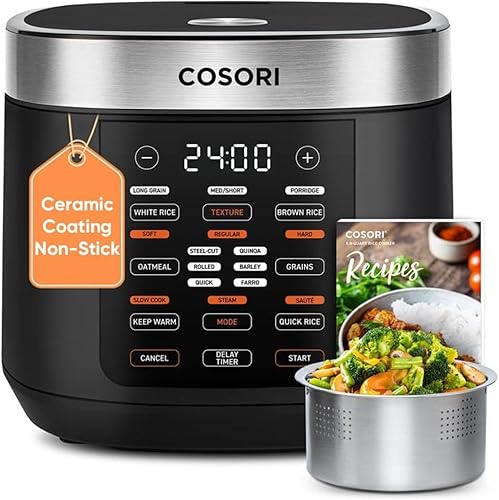
Cosori 10-Cup Rice Cooker with Fuzzy Logic

Aroma ARC-5204SB 8-Cup Digital Rice Cooker

AROMA CoreCoat 8-Cup Digital Rice Cooker
As an Amazon Associate we earn from qualifying purchases. Product prices and availability are accurate as of the date/time indicated.
Frequently Asked Questions
Is it safe to leave rice on keep-warm overnight?
Follow your manual’s keep-warm limit, which is typically several hours, not a full night. Cooked rice can carry Bacillus cereus spores, so refrigerate leftovers promptly in shallow containers rather than leaving them in the pot.
Does a rice cooker make better brown rice than a pot?
Usually more consistent, because brown rice needs longer, steadier heat. A basic cooker works, but a model with a brown rice setting gives softer, more even grains than the standard white cycle.
Is a rice cooker worth it for one person?
Only if you eat rice regularly and find a small 3-cup model fits your counter. For occasional single servings, a small pot or microwave rice bowl is simpler and needs no storage.
Can I cook other things at the same time as the rice?
On models with a steam tray, yes. Place vegetables or fish above the rice and both finish together. Without a tray, cook only the rice, since loose food in the pot changes the water balance.
{“@context”: “https://schema.org”, “@type”: “FAQPage”, “mainEntity”: [{“@type”: “Question”, “name”: “Is it safe to leave rice on keep-warm overnight?”, “acceptedAnswer”: {“@type”: “Answer”, “text”: “Follow your manual’s keep-warm limit, which is typically several hours, not a full night. Cooked rice can carry Bacillus cereus spores, so refrigerate leftovers promptly in shallow containers rather than leaving them in the pot.”}}, {“@type”: “Question”, “name”: “Does a rice cooker make better brown rice than a pot?”, “acceptedAnswer”: {“@type”: “Answer”, “text”: “Usually more consistent, because brown rice needs longer, steadier heat. A basic cooker works, but a model with a brown rice setting gives softer, more even grains than the standard white cycle.”}}, {“@type”: “Question”, “name”: “Is a rice cooker worth it for one person?”, “acceptedAnswer”: {“@type”: “Answer”, “text”: “Only if you eat rice regularly and find a small 3-cup model fits your counter. For occasional single servings, a small pot or microwave rice bowl is simpler and needs no storage.”}}, {“@type”: “Question”, “name”: “Can I cook other things at the same time as the rice?”, “acceptedAnswer”: {“@type”: “Answer”, “text”: “On models with a steam tray, yes. Place vegetables or fish above the rice and both finish together. Without a tray, cook only the rice, since loose food in the pot changes the water balance.”}}]}