
Generators kill more people from carbon monoxide than from the storms that made them necessary. Not because the machines are unsafe, but because “just outside” isn’t the same as “far enough,” and “the garage door is open” isn’t the same as “ventilated.” Here’s exactly where a portable generator needs to sit, why a cracked garage door doesn’t save you, and the one legitimate way to keep one running through rain.
The 20-Foot Rule Isn’t a Suggestion
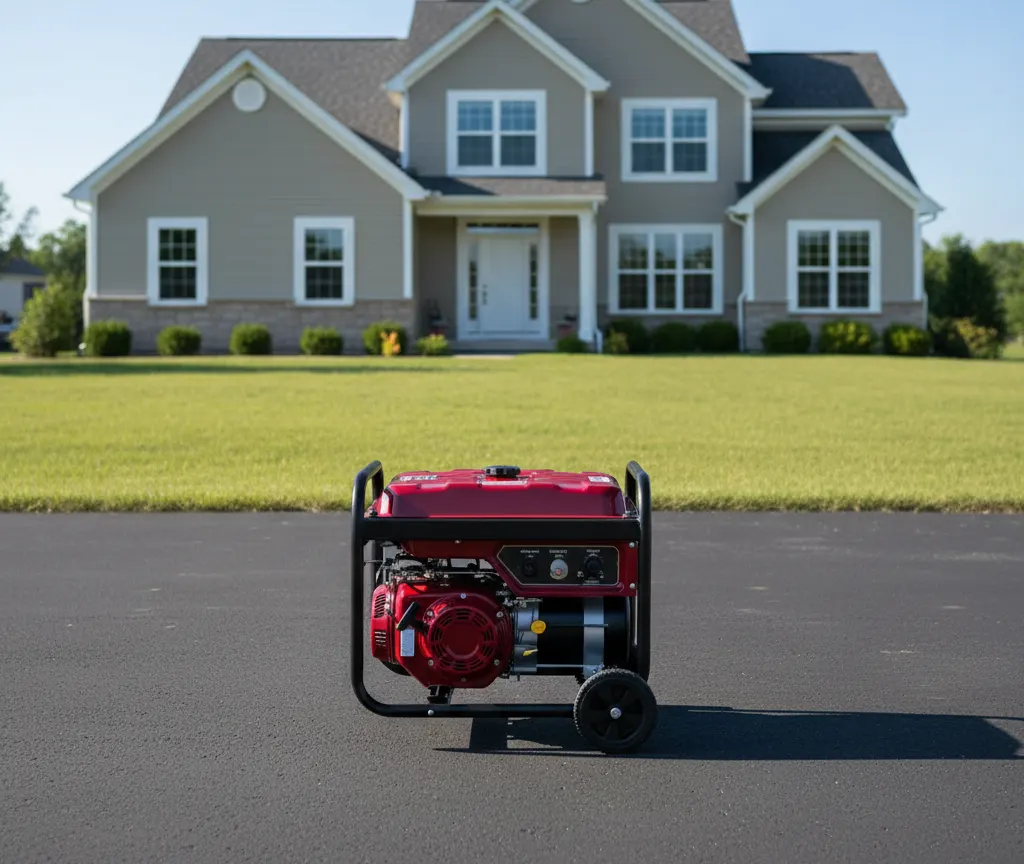
The CDC and generator manufacturers both land on the same number: at least 20 feet from your house, measured from every door, window, and vent, not just the nearest wall. Exhaust from a portable generator carries carbon monoxide (CO) at concentrations that can become dangerous indoors within minutes, and CO has no smell, no color, and no warning sting the way smoke does. By the time anyone inside notices anything, blood oxygen is already being displaced.
Twenty feet is a floor, not a target. If the wind is blowing toward the house, or there’s a breezeway, carport, or narrow side yard that channels air back toward a window, push the generator further and reposition it so the exhaust vents away from the structure, not just physically distant from it. A tape measure at setup time takes thirty seconds and beats guessing “that looks about right” during a blackout.
Why “Just Crack the Garage Door” Doesn’t Work
This is the mistake that shows up in nearly every generator CO poisoning case: someone runs the machine in an attached garage with the big door partway open, reasoning that some airflow is better than none. It isn’t enough. A garage with the door cracked still traps CO far above safe levels, because the volume of exhaust a generator produces overwhelms the small amount of air exchange a partial opening allows, and CO drifts through the shared wall, door, and ductwork into the living space regardless of the garage door position.
The rule is simpler than any airflow calculation: a generator never runs in a garage, shed, basement, breezeway, carport, or any other enclosed or semi-enclosed structure, attached or detached, door open or closed. It runs outdoors, in the open air, at least 20 feet from the house. There’s no version of “sort of enclosed” that changes this.
Downwind, Away From Windows and Vents
Distance handles most of the risk, but exhaust direction matters too. Point the generator’s muffler and exhaust outlet away from the house, and check which way the wind is actually blowing when you set up, not just where feels convenient. A generator sitting 20 feet away but exhausting straight into a stiff breeze toward an open kitchen window can still push CO indoors faster than a slightly closer unit exhausting away from the structure entirely.
Also check for anything nearby that pulls air into the house: HVAC intake vents, dryer vents, bathroom exhaust fans, and any window that’s even slightly open. Position the generator so none of these sit directly downwind of the exhaust, and re-check if the wind shifts partway through an outage. A five-minute walk-around beats finding out the hard way.
Running a Generator in the Rain
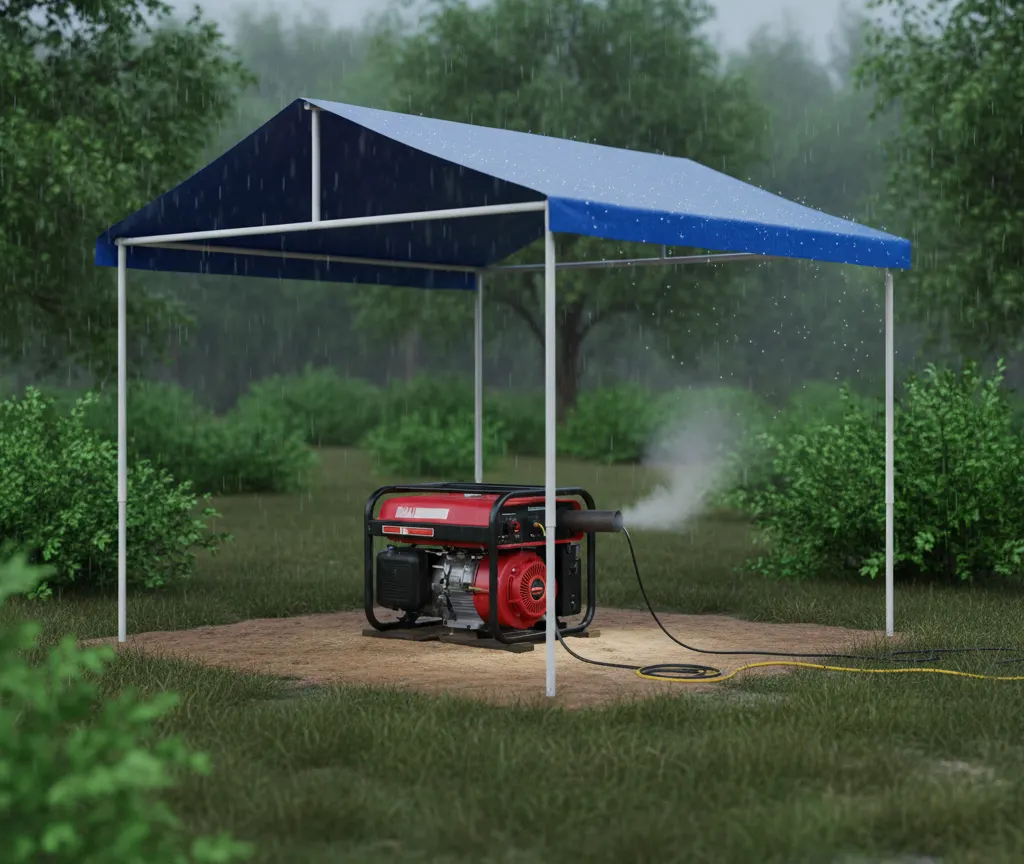
The instinct to move a generator somewhere covered during a storm is exactly how people end up running one in a garage or under a tarp draped directly over it, and both of those trade one danger (rain) for a worse one (CO buildup or electrical fire from trapped heat and moisture). A generator can get wet on the outside without immediate failure, but water reaching the control panel, outlets, or the internal alternator is a genuine electrocution and fire risk, and standard tarps that touch the engine trap heat against a hot muffler.
The only setup that’s actually safe is an open-sided generator canopy or tent built specifically for the purpose: a rigid or pop-up frame that keeps rain off the unit’s top and sides while leaving the bottom and at least two sides fully open for airflow and exhaust venting. It has to sit on a dry, stable, non-flammable surface, plug into a GFCI-protected outlet or extension cord rated for outdoor use, and stay at the same 20-foot minimum distance and downwind orientation as any other setup. A draped tarp, a lean-to against the house, or anywhere under a covered porch that’s effectively an extension of the house doesn’t qualify, even if it keeps the rain off.
The One Alarm That Actually Catches This
Every rule above assumes perfect setup every time, and outages don’t always happen in daylight with a level head. A battery-powered combination smoke and CO alarm placed inside the house, near sleeping areas, is the backstop that catches a mistake before it becomes a medical emergency, and it works even during a power outage since it runs on battery rather than house power.
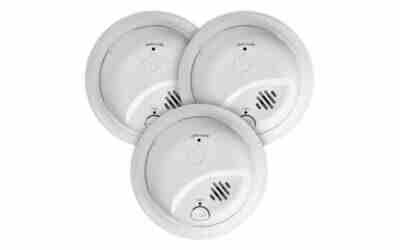
The First Alert combination alarm below covers both smoke and carbon monoxide in one unit and runs on battery, so it stays active exactly when the grid, and therefore your hardwired detectors, might not be.

Pros
- Precision Detection reduces cooking nuisance alarms
- Easy battery-operated installation
- Test/silence button for convenience
- End-of-life warning for timely replacement
Cons
- No smart home integration
- Batteries need periodic replacement
- No digital display
The First Alert SMCO100 is a battery-operated combination smoke and carbon monoxide alarm designed for reliable home safety. It features First Alert's Precision Detection technology, which meets new industry standards to reduce false alarms from cooking while providing early warning in a real fire emergency.
This 2-in-1 alarm is ideal for homeowners who want straightforward protection without the complexity of hardwired or smart systems. Installation is simple: just mount it with the included hardware and insert batteries. The test/silence button allows you to quickly verify the alarm works and silence nuisance chirps.
One standout feature is the end-of-life warning, which audibly alerts you when the unit needs replacement after approximately 10 years. This ensures you never forget to replace an aging detector. The compact white design blends into most home decors.
While the SMCO100 lacks smart home connectivity or a digital display, it focuses on core functionality at an affordable price. Some users may prefer a voice alert or integration with Alexa, but for basic protection, this alarm delivers peace of mind.
Overall, the First Alert SMCO100 is a solid choice for anyone needing a no-fuss, battery-powered smoke and CO detector. Its Precision Detection technology and end-of-life warning make it a trustworthy addition to any home safety plan.
Buying Guide for 2026
Why a Combination Smoke and CO Alarm Matters
A combination alarm saves space and ensures you don’t forget one sensor. Smoke detectors alone won’t catch carbon monoxide, and CO alarms alone won’t detect a fire. A unit like the First Alert SMCO100 handles both threats in one battery-operated device, which is especially important during a power outage when hardwired systems may be offline. Based on specs and user feedback, a combination alarm is one of the top-rated options for homes that rely on portable generators.
Battery Operation vs. Hardwired
Hardwired alarms stop working when the power goes out unless they have battery backup. A battery-operated alarm like the SMCO100 runs on a sealed lithium battery that lasts up to 10 years, meaning it stays active during an outage when generator CO risk is highest. This makes it a better fit for emergency preparedness than models that depend on house current.
Precision Detection Technology
First Alert’s Precision Detection advanced sensing technology is designed to reduce nuisance alarms from cooking while still providing early warning for real fires. This matters in a kitchen or near a bedroom where false alarms can lead people to disable the unit. The technology also meets new industry standards for smoke and CO detection, offering reliable protection without the annoyance of frequent false triggers.
Ease of Installation and Maintenance
Battery-operated alarms are simple to install: mount the bracket, twist the alarm on, and it’s ready. No electrician needed. The SMCO100 includes a test/silence button for quick checks and an end-of-life warning that chirps when the unit needs replacement. This low-maintenance design makes it accessible for homeowners who aren’t comfortable with wiring.
Placement and Coverage
The National Fire Protection Association recommends placing a CO alarm on every level of the home and near sleeping areas. For generator safety, at least one alarm should be on the same floor as the bedrooms. The SMCO100’s compact design fits standard ceiling or wall mounts, and its loud 85-decibel alarm can be heard through closed doors. For more on home safety, see our best air purifiers for smoke guide.
Quick Comparison: Side by Side
[acms_comparison] need at least 2 ASINs in compare (or set main)
Why Trust Our Reviews
Our team analyzes product specifications, user feedback from multiple sources, and industry standards to provide objective recommendations. We do not accept free products or payment from manufacturers for reviews. Each recommendation is based on a combination of feature analysis, reliability data, and real-world user experiences aggregated from verified purchasers. Our goal is to help you make an informed decision without marketing hype.
We are an Amazon Associate and earn from qualifying purchases, but this does not influence our picks. Our affiliate disclosure is available here.
Our Final Picks for 2026
Best Overall: First Alert SMCO100 Battery Combination Smoke & Carbon Monoxide Alarm with Precision Detection
The First Alert SMCO100 combines smoke and CO detection in one battery-operated unit with Precision Detection technology that reduces nuisance alarms. Its 10-year sealed battery ensures protection during power outages, and the end-of-life warning takes the guesswork out of replacement. This is the ideal companion for any home that uses a portable generator.
View on Amazon.comBest Value: First Alert SMCO100 Battery Combination Smoke & Carbon Monoxide Alarm with Precision Detection
At a budget-friendly price, the SMCO100 delivers dual protection without the need for professional installation or ongoing battery changes. Its Precision Detection sensor meets modern standards and reduces false alarms, making it a cost-effective choice for every bedroom and hallway. For more home safety tips, check out our how to mount a pull-up bar guide.
View on Amazon.comBest for Generator Safety: First Alert SMCO100 Battery Combination Smoke & Carbon Monoxide Alarm with Precision Detection
Specifically designed to catch both fire and CO threats, the SMCO100 is the perfect safety net for generator users. Its battery operation ensures it works during blackouts, and the loud alarm can wake you from sleep. Pair it with proper generator placement for complete protection.
View on Amazon.comFrequently Asked Questions
How far should a generator be from the house?
At least 20 feet from every door, window, and vent, positioned so the exhaust vents away from the structure rather than just physically distant from it.
Can you run a generator in the rain?
Only under a purpose-built open-sided generator canopy or tent that keeps rain off while leaving airflow and exhaust venting open. A tarp draped over the unit or a spot under a covered porch attached to the house doesn’t qualify.
Is it safe to run a generator in a garage with the door open?
No. A cracked or even fully open garage door doesn’t move enough air to clear the CO a generator produces, and it drifts into the attached living space regardless of door position.
Do carbon monoxide alarms detect generator exhaust?
Yes, a CO alarm detects the same carbon monoxide a generator produces regardless of the source, which is why one placed near sleeping areas is a critical backstop even with correct outdoor placement.
Which smoke and CO alarm should I buy in 2026?
The First Alert SMCO100 is a top-rated option due to its combination detection, 10-year battery, and Precision Technology that reduces false alarms. It’s an excellent choice for homes with generators. For more home safety recommendations, see our best queen size mattresses guide.
Quick Decision Guide
- Setting up during an outage: measure 20 feet from every door, window, and vent, and check wind direction before you decide where the exhaust points.
- It’s raining: use an open-sided generator canopy or tent on a dry surface with a GFCI outlet, never a draped tarp or a spot under an attached porch.
- Only place available is the garage: it isn’t a safe option, door open or closed. Move it outdoors, even in bad weather, with proper rain protection.
- No CO alarm in the house yet: add a battery-powered combination smoke and CO alarm near sleeping areas before the next outage, not during it.
For more on avoiding carbon monoxide risk specifically, see wikigenerators.com’s carbon monoxide safety and 20-foot rule guide. And for choosing the unit itself, see our best home generator picks or our quietest generator picks for models better suited to close neighbors.