
Induction cooktop pans don’t have to be special, but they do have to be magnetic. If a magnet sticks firmly to the bottom of a pan, it will usually work. Cast iron, enameled steel and magnetic stainless steel pass, while copper, glass, ceramic and plain aluminum don’t. Here is how to test yours and what to buy.
Do induction cooktops require special pans?
Yes, with one catch: the pan must have a magnetic metal base. An induction cooktop doesn’t heat the glass. A coil under the surface creates a changing magnetic field, and that field heats the metal of the pan directly. If the base has no magnetic metal, nothing heats.
So you don’t need a certain brand or an expensive set. Plenty of everyday pans qualify, including cast iron skillets and many stainless steel pots. What fails is anything the field can’t grab: plain aluminum, copper, glass and ceramic.
Two other things matter almost as much as the metal: the size of the pan’s flat base compared with the cooking zone, and how flat that base is. Both are covered below.
If you are still choosing a cooktop, our roundup of the best induction stove tops covers the units themselves. This guide is about what goes on them.
How to do the 10-second magnet test
- Grab a magnet. A fridge magnet works, but a stronger one gives a clearer result.
- Hold it against the outside of the bottom of the pan, not the side or the handle.
- Press it flat. A firm grab means the pan will generally work.
- Slide it across the whole base. It should stick everywhere, not only in the center.
- Lay a ruler across the bottom. If you see a gap or the pan rocks on a flat counter, it is warped.
- Look for a coil-shaped induction symbol or the word "induction" on the base or packaging.
What the magnet test misses
- Weak pull. Some stainless pans attract a magnet only slightly. They may heat slowly or not be detected at all. Treat a faint tug as a maybe.
- Partial magnetic base. Some pans have a magnetic disc smaller than the base. The cooktop may heat only that disc, so food cooks unevenly.
- Magnet sticks, performance is poor. A thin magnetic layer can pass the test and still heat unevenly. The real proof is boiling a little water in the pan on your cooktop.
- The label. "Induction ready" means the maker intends it to work, not that it will perform well on your model. Check your cooktop manual for its pan guidance.
Induction cooktop pans: which materials work and which don’t
| Material | Works on induction? | Notes |
|---|---|---|
| Cast iron (bare or enameled) | Yes | Heavy and holds heat well. Rough bottoms can scratch glass. |
| Carbon steel | Yes | Magnetic and heats fast. |
| Enameled steel | Yes | Common in stockpots and canning pots. |
| Magnetic stainless steel | Yes | Includes many 18/0 and multi-ply pans with a magnetic outer layer. |
| 18/10 stainless alone | Usually no | Nickel makes it non-magnetic. It works only if a magnetic layer is added. |
| Aluminum | No | Works only with a magnetic base layer or plate. |
| Copper | No | Works only with a magnetic base layer. |
| Glass, ceramic, stoneware | No | Not magnetic. Some glass-ceramic pots add a magnetic base. |
Why stainless steel is the confusing one
The numbers in 18/10 and 18/0 are the percentages of chromium and nickel. Nickel (the 10) makes the steel non-magnetic. Steel with no nickel (the 0) is magnetic. Many good pans use an 18/10 cooking surface but bond a magnetic steel layer to the outside of the base, so they work anyway. Sources and makers differ on grades, so don’t assume. Run the magnet test.
Copper pans work only if they have a magnetic base. If you love copper, see our best copper pots and pans set and check each product’s induction details first.
Does pan size and flat base matter?
Yes. Both affect whether the cooktop turns on, how evenly food cooks and how much noise you hear.
Size: match the flat base to the zone
Most manuals say the base should be about the same diameter as the cooking zone. A pan that is too small may not be detected, so the zone won’t start. If a pan isn’t detected, try the zone with the next smallest diameter. Minimum sizes vary by model, so check your manual.
Worked example: your zone is marked 8 inches. A skillet sold as "10-inch" is measured across the rim, and its flat base may be only 7.5 to 8 inches. That is a good match. A 6-inch milk pan on that same zone may not register. Put it on your smallest zone instead.
A pan much larger than the zone also works, but the edges get less heat. Food in a big skillet may sear in the middle and stay pale at the sides.
Flat base: why warped pans fail
Induction depends on close contact with the glass. A bowed bottom heats unevenly, spins on oil and can go undetected. Pans used for years on gas often warp slightly. If a pan rocks on the counter, retire it from the induction cooktop.
Why pans buzz
A light hum or buzz is common, especially at high power and with layered pans. Lowering the heat, centering the pan on the zone, or switching pans often quiets it. A loud rattle or a pan that clicks on and off usually points to a warped or poorly matched base.
Cast iron, nonstick and adapter discs on induction
Can you use cast iron without scratching the glass?
Yes, if you lift it. Don’t slide a skillet across the surface. Before first use, run your hand over the bottom. Raised casting marks, grit or chipped enamel can scratch glass. Wipe the pan base and the glass before each use, because stuck-on grit does the damage. A heavy Dutch oven is a lifting and drop risk, so use two hands and lower it straight down.
Do nonstick pans work?
Only if the body is magnetic. Typical aluminum nonstick pans are not. Look for a nonstick pan labeled induction-compatible, which has a magnetic layer in the base. We cover options in our guide to the best nonstick cookware for induction cooktops. Never preheat a nonstick pan empty, since induction heats very quickly.
Do induction adapter discs work?
They do, but they are a stopgap. The disc is a steel plate that heats up and passes heat to the pan on top. You lose the fast response and efficiency that make induction worth having. Discs also get very hot, so move them only with tools once cool. Check whether your cooktop maker allows them.
Keep-or-replace checklist and what to buy
Keep a pan if
- A magnet sticks firmly across the whole base.
- The base is flat and doesn’t rock.
- The flat base is close to the size of one of your zones.
- It heats evenly when you boil a little water.
Replace or retire it if
- The magnet pulls weakly or only in the center.
- The bottom is warped, rough or chipped.
- It is glass, ceramic, copper or plain aluminum. Keep these for the oven or another stove.
What to look for in new cookware
- The induction coil symbol, plus a magnet that sticks firmly.
- A thick, flat base. Some sources suggest roughly 3 to 4 mm of base metal, but that is only a loose guideline.
- Base diameters that fit your zones. Measure your zones first.
- Handles that stay cool and are oven-safe if you roast or braise.
You rarely need to replace everything. Start with the two or three pieces you use daily, such as a 10 to 12 inch skillet, a saucepan and a stockpot. Our best induction cookware roundup is a good place to compare. To test pans before you commit to a built-in cooktop, a portable induction cooktop lets you try them on a countertop unit.
Safety notes
- Don’t leave an empty pan heating. It overheats very fast.
- The glass stays hot after cooking because the pan heats it, so it can still burn you.
- If you have a pacemaker or other implanted device, check the cooktop manufacturer’s guidance and your doctor’s advice about distance.
Our Top Picks
Ready to shop? These are the top-rated options from our hands-on roundup, Best Non Stick Cookware for Induction Cooktops of 2026.
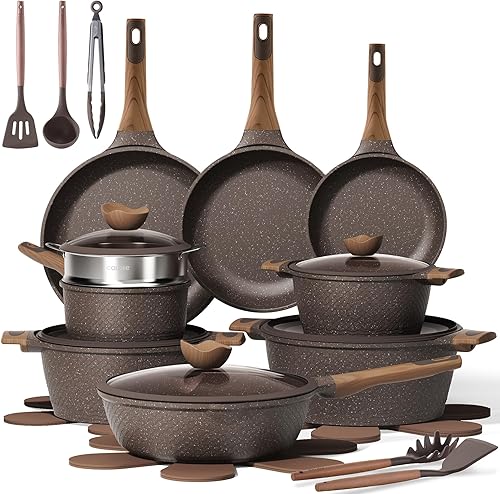
CAROTE 26pc Nonstick Cookware Set, Aluminum
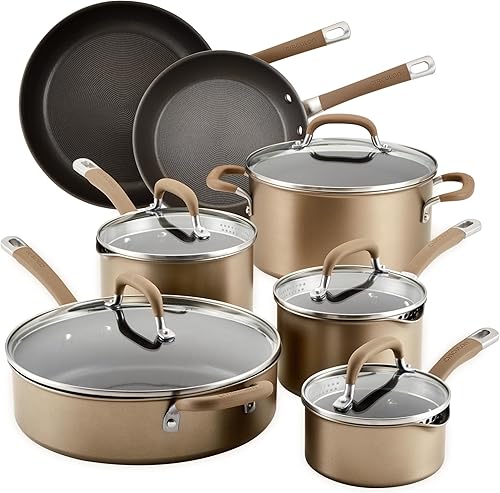
Circulon Premier Professional 12-Piece Cookware Set

Circulon A1 Series 9-Piece Cookware Set, Graphite
As an Amazon Associate we earn from qualifying purchases. Product prices and availability are accurate as of the date/time indicated.
Frequently Asked Questions
Does stainless steel work on induction?
Only if it is magnetic. Many stainless pans work, especially those with a magnetic outer layer. Pure 18/10 stainless is non-magnetic and fails on its own. Test the base with a magnet: a firm grab means it will generally work.
What happens if my pan is too small for the burner?
The cooktop may not detect it, so the zone won’t turn on or will keep shutting off. Move the pan to a smaller zone if you have one, or use a pan whose flat base is closer to the zone size listed in your manual.
Can I use my induction pans on gas or electric stoves?
Yes. Induction-compatible pans work on gas, radiant electric and ceramic stoves too. Just make sure the base is flat on electric glass tops, and avoid sliding heavy cast iron across any glass surface.
Are induction adapter discs worth buying?
Only as a short-term fix for one or two favorite pans. They heat slowly compared with a magnetic pan, waste energy and get very hot. If you use the pan daily, replacing it with an induction-compatible one is usually better.
{“@context”: “https://schema.org”, “@type”: “FAQPage”, “mainEntity”: [{“@type”: “Question”, “name”: “Does stainless steel work on induction?”, “acceptedAnswer”: {“@type”: “Answer”, “text”: “Only if it is magnetic. Many stainless pans work, especially those with a magnetic outer layer. Pure 18/10 stainless is non-magnetic and fails on its own. Test the base with a magnet: a firm grab means it will generally work.”}}, {“@type”: “Question”, “name”: “What happens if my pan is too small for the burner?”, “acceptedAnswer”: {“@type”: “Answer”, “text”: “The cooktop may not detect it, so the zone won’t turn on or will keep shutting off. Move the pan to a smaller zone if you have one, or use a pan whose flat base is closer to the zone size listed in your manual.”}}, {“@type”: “Question”, “name”: “Can I use my induction pans on gas or electric stoves?”, “acceptedAnswer”: {“@type”: “Answer”, “text”: “Yes. Induction-compatible pans work on gas, radiant electric and ceramic stoves too. Just make sure the base is flat on electric glass tops, and avoid sliding heavy cast iron across any glass surface.”}}, {“@type”: “Question”, “name”: “Are induction adapter discs worth buying?”, “acceptedAnswer”: {“@type”: “Answer”, “text”: “Only as a short-term fix for one or two favorite pans. They heat slowly compared with a magnetic pan, waste energy and get very hot. If you use the pan daily, replacing it with an induction-compatible one is usually better.”}}]}