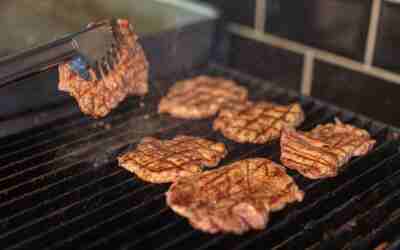
What size griddle to get depends on how many people you feed at once: 17 inches for 1-2, 22 inches for 3-4, 28 inches for 5-6, and 36 inches for 7-9. Count 2.5 burger spaces per person (2 burgers plus room for buns, onions and sides), match that to the batch column below, then confirm the griddle fits your space.
What size griddle to get by number of people
Griddle sizes are named for the cooking width in inches. The surface areas below are the spec-sheet figures for Blackstone’s 17, 22, 28 and 36 inch models; surface area and burner count vary by model, so check the label or manual for the one you buy.
| Size | Approx. surface | Typical burners | Burgers per batch (estimate) | Burger spaces needed | Best for |
|---|---|---|---|---|---|
| 17 inch | 260 sq in | 1 | 8 | 5 (2 people) | 1-2 people, camping, small balcony |
| 22 inch | 361 sq in | 2 | 11 | 8-10 (3-4 people) | 3-4 people, small patio |
| 28 inch | 524 sq in | 2 | 16 | 13-15 (5-6 people) | 5-6 people, regular weekend cooking |
| 36 inch | 769 sq in | 4 | 24 | 18-23 (7-9 people) | 7-9 people, frequent hosting |
Estimate method: 80% of the surface is usable and each patty with spacing takes about 25 sq in, so the batch is the usable area divided by 25, rounded down. Your patty size will change the numbers.
Quick decision rule
Rule of thumb: burger spaces = people x 2 burgers x 1.25, rounded up. The 1.25 is a buffer for buns, onions and sides. Pick the size whose batch number covers it.
- Cooking for 1-2: 17 inch (up to 5 spaces needed, 8 available).
- Cooking for 3-4: 22 inch (8-10 spaces needed, 11 available).
- Cooking for 5-6: 28 inch (13-15 spaces needed, 16 available).
- Cooking for 7-9: 36 inch (18-23 spaces needed, 24 available).
Three people need 8 spaces, which is the 17-inch limit with nothing spare. If you cook for three regularly, the 22-inch is the more comfortable choice.
How much food fits: cooking surface in square inches
Width alone is misleading. Depth, burner layout and shelves change the real surface, so compare square inches. A 36-inch model has about 769 sq in and a 28-inch about 524 sq in. That makes the 28-inch roughly 32% smaller, or the 36-inch about 47% larger.
That gap matters more than the 8-inch difference suggests. The extra surface is what lets you cook protein and vegetables at the same time.
| Size | Burgers per batch | 4-inch pancakes per batch |
|---|---|---|
| 17 inch | 8 | 10 |
| 22 inch | 11 | 14 |
| 28 inch | 16 | 20 |
| 36 inch | 24 | 30 |
Estimate method: pancake figures use the same 80% usable surface and about 20 sq in per pancake with spacing, rounded down.
Worked example 1: family of four, burgers
Four people at 2 burgers each is 8 burgers. Add the 1.25 buffer for buns and onions: 8 x 1.25 = 10 spaces. A 17-inch holds 8, so it falls short. A 22-inch holds 11, so everything cooks in one batch with one space spare. A 28-inch holds 16, which suits a family that often has guests.
Worked example 2: six people, burgers with sides
Six people at 2 burgers each is 12 burgers. With the buffer: 12 x 1.25 = 15 spaces. A 22-inch (11) is too small for one batch. A 28-inch holds 16, so it covers 15 spaces with one spare.
Worked example 3: pancake breakfast for four
Four people at 3 pancakes each is 12 pancakes. A 22-inch holds about 14, so all 12 fit in one batch with 2 spots left. Cook bacon in a second round or on the cooler side of the griddle.
Do you need 2 burners or 4?
Burners create heat zones. A 17-inch usually has one, so the whole top runs at one temperature. A 22-inch adds a second burner and zone, and 28-inch models are usually 2-burner units. The 36-inch typically has 4 independently controlled burners; Blackstone’s 36-inch is about 60,000 BTU total. Burner count and BTU ratings vary by model; check the label or manual.
More zones let you sear burgers on high, keep onions at medium and toast buns on low in the same session. With only one or two zones you cook in stages instead.
- Choose 2 burners if you mostly cook one main item at a time and feed up to about 6.
- Choose 4 burners if you cook full breakfasts or fajita spreads, or host often. It costs more in weight and gas use.
On multi-burner models you can light only the burners under the area you need. The unlit side stays cooler, which is useful for holding food, but heat fades near the edge of the lit zone.
Will it fit? Measure your space before you buy
The listed size is the cooking width, not the footprint. Side shelves, handles, a grease cup and the cart add to the overall width and depth, so use the manufacturer’s overall dimensions.
- Measure the spot where it will sit, plus the path through gates and doors.
- Compare against the overall width and depth on the spec sheet, not the cooking width.
- Check the manual for the required clearance from walls, railings, fences and overhangs.
- Confirm the surface is level, firm and non-combustible, or follow the manual’s rules for the surface.
- Leave room to stand and move while cooking, and room for a cover.
Safety: use gas and propane griddles outdoors only, in a well-ventilated area. Never use one in a garage, tent or other enclosed space, because carbon monoxide can build up. Keep it away from combustibles and do not cook under a low overhang or covered porch ceiling unless the manual allows it.
For a stovetop griddle, the edges should not overhang the grates by much. Unsupported overhang stays cold and cooks unevenly, and a heavy overhanging plate can tip. Match the griddle to the burners it covers and follow your range manual.
Propane, natural gas, electric or stovetop
Fuel and type limit your size choices as much as family size does.
- Propane: the most common choice. Smaller portable models often use 1-lb cylinders, while larger carts typically use a 20-lb tank. Fuel setup varies by model; check the label or manual.
- Natural gas: same sizes, but you need a gas line and often a conversion kit. Have a licensed professional run the line to local code.
- Electric: works for apartments and patios where open flame is restricted, though many are small. Use only outdoor-rated models outside and check building rules.
- Stovetop or insert: a good fit for a kitchen with limited outdoor space. Our Lodge LDP3 reversible cast iron grill/griddle review covers one that spans two burners.
Before every cookout, check hoses and connections for leaks by brushing on soapy water and looking for bubbles. Turn the gas off at the tank when you finish.
When to size up, and common mistakes
If you host more than a few times a year, move up one size from the table. Sizing up is usually cheaper than cooking in three rounds. The biggest model is not always the better buy, though.
What you pay for a bigger griddle
- More weight and bulk: harder to move, store and cover.
- Longer preheat and more gas: a large top takes longer to come up to temperature, and more burners on means more fuel.
- More cleanup: more steel to scrape, oil and season.
- Higher price: cost climbs with size, and also depends on brand and features.
Mistakes to avoid
- Sizing for the biggest party of the year. Size for your usual meal, then cook that one party in batches.
- Ignoring the footprint. The shelves and cart decide whether it fits, not the cooking width.
- Buying 17 inches for regular family dinners. It works for camping and couples, but a family of four needs 10 spaces and the 17-inch holds 8.
- Leaving grease unmanaged. Empty the grease cup before it fills to reduce flare-ups, and let the griddle cool before covering it.
- Leaving a hot griddle unattended. Spilled oil and grease can flare up quickly, and a hot steel top can burn children or pets who walk up to it.
Final check: count your usual servings, multiply by 2.5 burger spaces per person, round up, match that to the batch column in the first table, then confirm the overall dimensions fit your space.
Related reading: Should I Get a Used Coffee Maker? What to Check First · What Size Generator Do You Need to Run Your House?
Frequently Asked Questions
Is a 17-inch griddle enough for camping with four people?
Not in one batch. Four people need about 10 burger spaces by the 2.5-per-person rule of thumb, and a 17-inch holds an estimated 8. For camping you can cook two rounds of four burgers each, or choose a 22-inch to cook everything at once.
How many people does a 28-inch griddle feed?
A 28-inch feeds 5-6 people in one batch. It holds an estimated 16 burgers, and six people need 15 spaces (6 x 2 burgers x 1.25). Beyond six people, cook in two rounds or step up to a 36-inch.
Is 36 inches too big for a patio?
It can be, because the overall width and depth are larger than the 36-inch cooking width once shelves and the cart are included. Measure your patio against the manufacturer’s overall dimensions and the manual’s clearance rules. If it does not fit with room to stand, a 28-inch is the next step down.
What size propane tank do I need for a griddle?
Large cart models typically use a 20-lb tank, while small portable models often use 1-lb cylinders; varies by model, so check the label or manual. As an estimate, a 20-lb tank holds about 430,000 BTU (20 lb x roughly 21,500 BTU per pound), so a 60,000 BTU griddle on full heat would run about 7 hours.
Can I put a griddle top on my gas grill?
Only if the grill and griddle maker both allow it. Plates made for specific grill grates exist, but covering the grates can trap heat and grease. Check your grill manual and follow its limits before buying.
{“@context”: “https://schema.org”, “@type”: “FAQPage”, “mainEntity”: [{“@type”: “Question”, “name”: “Is a 17-inch griddle enough for camping with four people?”, “acceptedAnswer”: {“@type”: “Answer”, “text”: “Not in one batch. Four people need about 10 burger spaces by the 2.5-per-person rule of thumb, and a 17-inch holds an estimated 8. For camping you can cook two rounds of four burgers each, or choose a 22-inch to cook everything at once.”}}, {“@type”: “Question”, “name”: “How many people does a 28-inch griddle feed?”, “acceptedAnswer”: {“@type”: “Answer”, “text”: “A 28-inch feeds 5-6 people in one batch. It holds an estimated 16 burgers, and six people need 15 spaces (6 x 2 burgers x 1.25). Beyond six people, cook in two rounds or step up to a 36-inch.”}}, {“@type”: “Question”, “name”: “Is 36 inches too big for a patio?”, “acceptedAnswer”: {“@type”: “Answer”, “text”: “It can be, because the overall width and depth are larger than the 36-inch cooking width once shelves and the cart are included. Measure your patio against the manufacturer’s overall dimensions and the manual’s clearance rules. If it does not fit with room to stand, a 28-inch is the next step down.”}}, {“@type”: “Question”, “name”: “What size propane tank do I need for a griddle?”, “acceptedAnswer”: {“@type”: “Answer”, “text”: “Large cart models typically use a 20-lb tank, while small portable models often use 1-lb cylinders; varies by model, so check the label or manual. As an estimate, a 20-lb tank holds about 430,000 BTU (20 lb x roughly 21,500 BTU per pound), so a 60,000 BTU griddle on full heat would run about 7 hours.”}}, {“@type”: “Question”, “name”: “Can I put a griddle top on my gas grill?”, “acceptedAnswer”: {“@type”: “Answer”, “text”: “Only if the grill and griddle maker both allow it. Plates made for specific grill grates exist, but covering the grates can trap heat and grease. Check your grill manual and follow its limits before buying.”}}]}