
Fill the inner pot to the water line that matches the number of rice cups you added, because that line is calibrated for your cooker. With no lines, a rice cooker water ratio of about 1 cup white rice to 1¼ cups water is a safe start. Brown rice needs roughly 1¾ to 2 cups, and sushi rice about 1 to 1¼.
Rice cooker water ratio by rice type
No single ratio fits every rice. Grain type, how much the rice was milled, and your cooker all move the number. These are starting points by volume, using the same cup for rice and water. Sources vary, so treat your first batch as a test and adjust.
| Rice type | Rice : water (same cup) | Notes |
|---|---|---|
| Long-grain white | 1 : 1¼ to 1½ | Rinse first. Start at 1¼ for firmer grains. |
| Jasmine | 1 : 1¼ | Softer and a bit sticky. Don’t go above 1½. |
| Basmati | 1 : 1¼ to 1½ | Rinse well. A 15-30 minute soak helps the grains stay long. |
| Short-grain / sushi | 1 : 1 to 1¼ | Less water gives a firmer, stickier result. |
| Sweet / sticky (glutinous) | About 1 : 1 or less | Often soaked first. Use the sweet-rice line if the cooker has one. |
| Brown | 1 : 1¾ to 2 | Check the bag and the cooker’s brown line. |
| Parboiled | Follow the package, often near 1 : 2 | Grains are pre-treated and absorb more water. |
| Wild rice blends | Follow the package | Blends vary by brand. |
For fluffy, separate grains, go to the low end of a range. For soft, clingy rice, go to the high end.
For cookers suited to these grains, see our roundup of the best brown rice cookers.
Cooker cup vs. US cup: why the water lines matter
The plastic cup that comes with most rice cookers is not a US measuring cup. It is usually about 180 mL (roughly ¾ US cup), based on the Japanese go. A US cup is 240 mL. Check your manual, since size varies by brand and model.
This causes the most common mix-up. Scoop rice with the cooker cup, then add water by a US cup ratio, and the water ends up off by about a quarter. That is enough to make rice mushy or hard.
The pot’s lines are written for the cooker’s cup. To use them:
- Level off each scoop of rice with the cooker cup.
- Rinse and drain the rice, then put it in the inner pot.
- Level the rice flat by hand.
- Add water to the line that matches the number of scoops. Use the brown, sushi or sweet line when the pot has one for your rice.
If the lines are worn off, or you measure rice in a US cup, use the ratio table above and measure the water in the same cup.
How much water for 1, 2, 3 and 4 cups of rice
For long-grain white or jasmine, use one ratio, 1:1.25, at every batch size. Water scales in a straight line with the rice. You may find a large batch likes a spoonful less or more in your cooker, but the pot’s lines already account for its shape, so adjust by taste rather than by formula.
| Uncooked rice (US cups) | Water (US cups) | Approx. mL |
|---|---|---|
| 1 | 1¼ | 300 |
| 2 | 2½ | 600 |
| 3 | 3¾ | 900 |
| 4 | 5 | 1,200 |
Worked example: you scoop 2 cooker cups of jasmine. That is about 360 mL of rice, or 1½ US cups. At 1:1.25 it needs about 450 mL of water, just under 2 US cups. The pot’s 2 line should land near that volume, which is why lines beat converting by hand.
Now the mix-up. Take 2 cooker cups of rice and add 2½ US cups of water, borrowed from the 1 cup : 1¼ cups rule. That is about 600 mL, roughly 150 mL (about ⅔ US cup) more than the 450 mL needed. Expect soft, porridge-like rice.
Brown rice at the same 2 cooker cups (about 360 mL) needs roughly 630 to 720 mL of water at 1:1¾ to 2. Then adjust using the cooker’s brown line. Keep rice below the max fill line, and see our guide to what size rice cooker suits four people if your batches hit that limit.
Should you rinse rice, and does it change the water?
Yes, rinse most rice. Rinsing removes loose surface starch, which cuts gumminess and clumping. Swirl the rice in cold water, pour off the cloudy water, and repeat until it looks mostly clear, usually 2 to 4 rinses.
The rule for water is simple:
- Rinsing does not change the line or ratio. Cooker lines assume rinsed rice. Skipping the rinse gives stickier rice, not a different water level.
- Drain well. Let the rice sit in a fine strainer for a minute so extra rinse water doesn’t end up in the pot.
- Soaking does not change the line either. Drain soaked rice and use the normal line or ratio. If the result is soft, cut 1 to 2 tablespoons of water per cup of rice next time.
Soaking is optional for white rice. Basmati and sticky rice benefit from 15 to 30 minutes, and brown rice from longer.
Mushy or crunchy rice: how to fix this batch and the next
Change one thing at a time and write down what you did. A small change goes a long way: about 1 to 2 tablespoons of water per cup of rice.
If the rice is mushy or wet
- This batch: open the lid, fluff gently, and let steam escape for 5 to 10 minutes. You can also spread it on a sheet pan to dry.
- Next batch: use 1 to 2 tablespoons less water per cup, and check that you didn’t mix a US cup with a cooker cup.
- Make sure the rice was drained after rinsing and the pot sits level.
If the rice is hard or crunchy
- This batch: add 1 to 2 tablespoons of hot water per cup of rice, stir once, close the lid, and run the cook or reheat cycle briefly, or let it steam on warm for about 10 minutes.
- Next batch: add 1 to 2 tablespoons more water per cup, or soak the rice 20-30 minutes first.
- Check that the lid seals and nothing blocks the steam vent.
If the bottom is burnt or the top is wet
This usually means uneven heat, a wobbly inner pot, or unleveled rice. Wipe the pot’s outside and the heating plate dry, seat the pot fully, and level the rice before cooking.
Once the cooker beeps, let the rice rest about 10 minutes with the lid closed, then fluff with a paddle. Moisture evens out, which cures many slightly wet batches.
Do fuzzy-logic and small cookers change the ratio?
Mostly no, but they change how forgiving the cooker is. A basic one-switch cooker heats until the water is gone, so the ratio has to be right. Micom or fuzzy-logic models, like the one in our Zojirushi NS-ZCC10 review, adjust heat and time by sensing temperature, so they tolerate small water errors better. They still use lines made for their own cup, so follow them.
Modes can shift the water, too. Many cookers have separate lines for white, brown, sushi, sweet and quick cook. Porridge or congee modes use much more water. Use the line marked for the mode you chose.
With a small cooker (3 cups or less), use the lines even for tiny batches, since very small batches can run a little wet or dry because of the pot’s shape. A budget model works fine if you follow its lines; our roundup of the best rice cookers under $100 shows what to expect.
If you want finer control over texture, compare the best Japanese rice cookers.
No lines? Try the knuckle method
Level the rinsed rice, rest a fingertip lightly on top, and add water until it reaches your first knuckle. This is a rough backup. It suits white rice in a pot of ordinary width and is less reliable for brown rice, very small batches or wide pots, so taste the result and adjust.
Safety and rice-handling notes
- Don’t pass the max line. Foaming starch can boil over and spit hot water, especially with brown or unrinsed rice.
- Open the lid away from your face. Steam from the vent and lid is hot.
- Never cook without the inner pot, and keep the pot’s outside and the heating plate dry.
- Don’t leave cooked rice on warm for many hours. Cooked rice can grow Bacillus cereus, a bacterium that can cause food poisoning. Refrigerate leftovers within about 1 to 2 hours, in shallow containers.
If you only cook rice occasionally, a saucepan works. Our picks for the best rice pot for the stove use the same rinse-and-rest rules, but stovetop pots can lose more steam, so ratios may run a bit higher.
Our Top Picks
Ready to shop? These are the top-rated options from our hands-on roundup, Best Rice Cooker Under $100 of 2026.
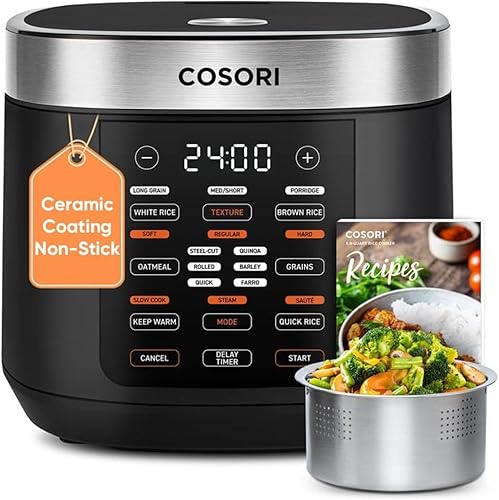
Cosori 10-Cup Rice Cooker with Fuzzy Logic

Zojirushi 6-Cup Rice Cooker NHS-10

Toshiba TRCS02 Mini Rice Cooker, 3-Cup Fuzzy Logic
As an Amazon Associate we earn from qualifying purchases. Product prices and availability are accurate as of the date/time indicated.
Frequently Asked Questions
Can I cook rice in a rice cooker without rinsing?
Yes. Unrinsed rice cooks fine and uses the same water line or ratio. It is usually stickier or gummier, and brown or unrinsed rice can foam more, so stay below the max line.
How much water for a 3-cup rice cooker?
A 3-cup rating usually means 3 cooker cups of uncooked rice, about 540 mL or 2¼ US cups. Add water to the 3 line. By ratio at 1:1.25, that is about 675 mL, just under 2¾ US cups. Check your manual for the capacity.
Can I use broth instead of water?
Generally yes. Use the same amount of broth as water, up to the same line. Choose low-sodium broth so the rice doesn’t turn out too salty, and avoid thick or sugary liquids, which can scorch. Check your manual first.
How much water for brown rice in a rice cooker?
Start with about 1¾ to 2 cups of water per cup of brown rice, or use the cooker’s brown line if it has one. Check the bag, since brands differ. Soaking beforehand can soften the grains.
{“@context”: “https://schema.org”, “@type”: “FAQPage”, “mainEntity”: [{“@type”: “Question”, “name”: “Can I cook rice in a rice cooker without rinsing?”, “acceptedAnswer”: {“@type”: “Answer”, “text”: “Yes. Unrinsed rice cooks fine and uses the same water line or ratio. It is usually stickier or gummier, and brown or unrinsed rice can foam more, so stay below the max line.”}}, {“@type”: “Question”, “name”: “How much water for a 3-cup rice cooker?”, “acceptedAnswer”: {“@type”: “Answer”, “text”: “A 3-cup rating usually means 3 cooker cups of uncooked rice, about 540 mL or 2¼ US cups. Add water to the 3 line. By ratio at 1:1.25, that is about 675 mL, just under 2¾ US cups. Check your manual for the capacity.”}}, {“@type”: “Question”, “name”: “Can I use broth instead of water?”, “acceptedAnswer”: {“@type”: “Answer”, “text”: “Generally yes. Use the same amount of broth as water, up to the same line. Choose low-sodium broth so the rice doesn’t turn out too salty, and avoid thick or sugary liquids, which can scorch. Check your manual first.”}}, {“@type”: “Question”, “name”: “How much water for brown rice in a rice cooker?”, “acceptedAnswer”: {“@type”: “Answer”, “text”: “Start with about 1¾ to 2 cups of water per cup of brown rice, or use the cooker’s brown line if it has one. Check the bag, since brands differ. Soaking beforehand can soften the grains.”}}]}