Blenders vs smoothie makers comes down to this: buy a full-size blender for family batches and soups, or a smoothie maker for one-cup daily drinks and quick cleanup.
What is the difference between a blender and a smoothie maker?
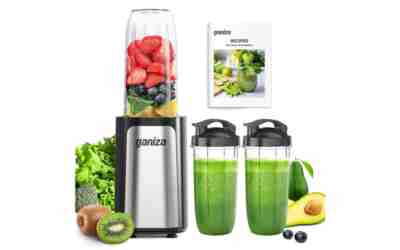
A full-size blender has a large pitcher, usually 48 to 72 oz, that sits on a base with a motor. You pour in food, blend, then pour out. A smoothie maker is usually a personal or single-serve blender. You fill a 16 to 32 oz cup, screw the blade assembly on, flip it over onto the base, blend, then drink from the same cup.
There is no industry standard for the term, so specs vary by model. Some brands sell “smoothie makers” with only two speeds plus a pulse button. Others sell personal cups on motors as strong as many full-size machines. Treat the label as a hint and read the manufacturer’s specs for motor power, cup size and any run-time limit.
The practical difference comes down to three things: batch size, how many jobs the machine handles, and how much work cleanup is.
Blenders vs smoothie makers side by side
These are rule-of-thumb ranges, not specs for any one model. Individual products can fall outside them.
| Feature | Full-size blender | Smoothie maker (personal) |
|---|---|---|
| Motor power | About 500 to 1,500+ W | About 300 to 700 W; some go up to 1,000 W |
| Container | 48 to 72 oz pitcher | 16 to 32 oz cup |
| 16 oz servings per batch (estimate) | 2 to 3 | 1 (the smallest cups hold under 16 oz usable) |
| Controls | Variable speed, pulse, often presets | One-touch, or two speeds plus pulse |
| Beyond smoothies | Soups, sauces, nut butters, crushed ice, dips | Mostly smoothies, shakes, small sauces |
| Cleanup | Pitcher, lid and blade; many are dishwasher safe | Cup and blade ring; faster for one serving |
| Storage and travel | Tall and heavy; stays on the counter | Compact; cup often doubles as a travel bottle |
Estimate method: servings = capacity × 0.75 usable fill ÷ 16 oz, rounded down. For example, a 48 oz pitcher gives 36 oz usable, or 2 servings, and a 72 oz pitcher gives 54 oz, or 3 servings. Your manual’s max line overrides this.
Wattage alone does not predict results. Blade shape, blade speed and the jar’s shape change how well food circulates and how smooth it ends up. A well-designed 600 W cup can beat a poorly designed 1,000 W one on a soft-fruit smoothie.
Which makes better smoothies with ice, frozen fruit and greens?
A strong full-size blender is the safer bet for hard ingredients. Its larger motor and wider pitcher keep a vortex going, so frozen fruit and ice get pulled back into the blades. Fibrous greens like kale also break down more fully, with less grit.
Smoothie makers do fine with soft fruit, yogurt, juice and baby spinach. As a rule of thumb, not a guarantee, models under roughly 300 W often struggle with ice and stringy greens, while models above about 600 W tend to blend faster and smoother.
Tips that help either type:
- Load in order: liquid first, then soft items and greens, then frozen fruit and ice on top.
- Use less liquid in a small cup, but never fill past the max line.
- Blend greens with the liquid first for 20 to 30 seconds before adding frozen items.
- Pause and shake or stir if the blades spin without pulling food down.
If frozen drinks and green smoothies are your main use, our best blenders for smoothies guide covers the full-size options.
Which is easier to clean and store every day?
For one serving, the smoothie maker wins. You blend in the cup you drink from, so there is nothing to pour and nothing extra to wash. Rinse the cup and blade ring right after use, before the smoothie dries, and cleanup takes about a minute. Many cups and blade rings are dishwasher safe, but check your manual, because some blade gaskets and lids are top-rack only or hand-wash only.
A full-size blender is more work per use. You have a tall pitcher, lid and blade to wash, and the pitcher is awkward in a small sink. A quick fix is to add warm water and a drop of dish soap, run it for 30 seconds, then rinse. That works well for light daily use.
Storage favors the personal unit too. It is short, light and easy to tuck in a cabinet. A full-size blender is tall and heavy, so most people leave it on the counter, which is fine if you use it often.
Always unplug the base before taking apart or cleaning a blade assembly. Blades are sharp even when they look clean.
Choose a blender if… choose a smoothie maker if…
Choose a full-size blender if
- You make smoothies for two or more people at once.
- You also want soup, sauces, dips, nut butter or crushed ice.
- Your smoothies include lots of ice, frozen fruit or raw kale.
- You want variable speed and a tamper or presets.
Where it loses: it is bulkier, costs more in most cases, takes longer to clean and can be louder. It is overkill if you only blend one cup a day.
Choose a smoothie maker if
- You blend one smoothie or shake per day.
- You want to drink straight from the cup and take it with you.
- Counter and cabinet space is tight.
- Your recipes are mostly soft fruit, yogurt, protein powder and milk.
Where it loses: the cup is small, most models are limited to smoothie-style jobs, and the motor can overheat if you overfill it or run it past the maker’s run-time limit. Replacement cups and blade rings are model specific, so check availability before you buy.
To see how a compact personal blender is specified in practice, read our Nutribullet NBR-0601WM review of a compact personal blender.
How much do they cost?
Prices change with sales and model years, so treat these as approximate rules of thumb rather than quotes:
- Personal blenders: often about $30 to $100, with higher-power cups at the top of that range.
- Full-size blenders: basic models often start around $50 to $100, midrange models run roughly $100 to $250, and high-power machines can pass $400.
The payoff is simple. If you only make one cup a day, a personal blender usually costs less and gets used more because cleanup is quick. If you also want soups, sauces or heavy ice crushing, a midrange full-size blender replaces two or three gadgets and is usually the better value. To compare full-size options across budgets, see our best blenders roundup.
A simple rule for daily use (with a worked example)
Count the ounces you blend in one sitting, then match the container.
Assumption (estimate): you fill to about 75% of the stated capacity, so usable volume = capacity × 0.75. Always follow the max line in your manual instead if it differs.
Example: a family of four drinks 16 oz each, which is 64 oz.
- A 24 oz personal cup has 18 oz usable: 64 ÷ 18 = 3.56, so 4 batches.
- A 72 oz pitcher has 54 oz usable: 64 ÷ 54 = 1.19, so 2 batches.
- A 64 oz pitcher has 48 oz usable: 64 ÷ 48 = 1.33, so 2 batches.
- One person drinking 16 oz fits in a single 24 oz cup (18 oz usable), and cleanup is faster.
Decision rule:
- Blending for one person, soft ingredients: smoothie maker.
- Blending for two or more, or you need soups and sauces: full-size blender.
- Heavy on ice and raw greens: full-size blender, or a personal model with a high-power motor and a strong warranty.
Common mistakes:
- Overfilling a personal cup past the max line.
- Running the motor longer than the manual allows. Follow the manual or label; many small units are rated for short runs, such as 30 to 60 seconds.
- Blending hot liquid in a sealed personal cup. Steam pressure can force the lid off and cause burns, so follow the manual, let food cool first, or use a pitcher with a vented lid if the manual describes it.
Frequently Asked Questions
Are smoothie makers worth it if I already have a blender?
Only if you blend a single cup most days and the full-size pitcher feels like a chore to wash. A personal cup gives faster cleanup and a grab-and-go bottle. If you blend a few times a week or already enjoy your pitcher, skip it, or look for a personal cup add-on that fits your current base.
Can I blend ice in a personal blender cup?
It depends on the model, so follow the manual. Some list ice crushing as supported and others do not. If yours allows it, add liquid first, use small cubes, stay under the max line, and blend in short bursts within the stated run-time limit.
Can I make a single smoothie in a regular blender?
Yes. Many full-size blenders handle small batches, but very small amounts can spin without reaching the blades. Make at least 12 to 16 oz, add liquid first, and use a tamper if one is included. Some brands sell a personal cup add-on for single servings.
Can a smoothie maker make soup or nut butter?
Usually not well. Hot soup is a burn risk in a sealed personal cup, and nut butter needs a strong motor and a tamper to avoid overheating. Check the manual. Full-size blenders, especially high-power ones, are better suited to both jobs.
Is a smoothie maker the same as a personal blender?
Often, yes. Most products sold as smoothie makers are personal or single-serve blenders with a blend-and-go cup. Some brands use the name for small pitcher-style machines with two speeds. Always check the cup size, motor power and controls on the product page.
{“@context”: “https://schema.org”, “@type”: “FAQPage”, “mainEntity”: [{“@type”: “Question”, “name”: “Are smoothie makers worth it if I already have a blender?”, “acceptedAnswer”: {“@type”: “Answer”, “text”: “Only if you blend a single cup most days and the full-size pitcher feels like a chore to wash. A personal cup gives faster cleanup and a grab-and-go bottle. If you blend a few times a week or already enjoy your pitcher, skip it, or look for a personal cup add-on that fits your current base.”}}, {“@type”: “Question”, “name”: “Can I blend ice in a personal blender cup?”, “acceptedAnswer”: {“@type”: “Answer”, “text”: “It depends on the model, so follow the manual. Some list ice crushing as supported and others do not. If yours allows it, add liquid first, use small cubes, stay under the max line, and blend in short bursts within the stated run-time limit.”}}, {“@type”: “Question”, “name”: “Can I make a single smoothie in a regular blender?”, “acceptedAnswer”: {“@type”: “Answer”, “text”: “Yes. Many full-size blenders handle small batches, but very small amounts can spin without reaching the blades. Make at least 12 to 16 oz, add liquid first, and use a tamper if one is included. Some brands sell a personal cup add-on for single servings.”}}, {“@type”: “Question”, “name”: “Can a smoothie maker make soup or nut butter?”, “acceptedAnswer”: {“@type”: “Answer”, “text”: “Usually not well. Hot soup is a burn risk in a sealed personal cup, and nut butter needs a strong motor and a tamper to avoid overheating. Check the manual. Full-size blenders, especially high-power ones, are better suited to both jobs.”}}, {“@type”: “Question”, “name”: “Is a smoothie maker the same as a personal blender?”, “acceptedAnswer”: {“@type”: “Answer”, “text”: “Often, yes. Most products sold as smoothie makers are personal or single-serve blenders with a blend-and-go cup. Some brands use the name for small pitcher-style machines with two speeds. Always check the cup size, motor power and controls on the product page.”}}]}