
The answer to when to replace cookware: when the coating flakes, the base warps, a handle stays loose or the metal has deep pitting.
Signs it is time to replace cookware
Most pans warn you before they fail. Lifespan depends on the brand, the price and how hard you use the pan, so no single year count fits every pan. As a rule of thumb, a nonstick pan used daily lasts about 3 to 5 years, while stainless steel and cast iron can last decades. Your manufacturer’s care guide gives its own figure. Replace the pan if you see any of these:
- Flaking or peeling coating on nonstick or ceramic pans.
- Scratches that reach bare metal across the cooking surface.
- A warped base that rocks on a flat surface or spins on a burner.
- A loose or cracked handle that wiggles even after you tighten the screw.
- Deep pitting, cracks or an exposed core on stainless steel, aluminum or enamel.
- Food that sticks even after a deep clean, with oil and medium heat.
A pan that is only stained, rusty or sticky is often fixable, and the table below shows how. Check the coating and the structure separately: coating problems are surface wear, while warping, cracks and loose rivets are structural and do not repair well at home.
Decision rule: if a pan wobbles, flakes or has a loose handle, replace it. If it is only stained, rusty or sticky, clean it first.
Replace, repair or keep: signs by pan material
| Material | Replace now if | Try to fix first | Fine to keep |
|---|---|---|---|
| Nonstick (PTFE) | Coating flakes or peels, scratches reach bare metal, base is warped, eggs stick after a deep clean | Sticky brown film is often baked-on oil, not worn coating: scrub gently with baking soda paste and a soft sponge, then retest | Light surface scuffs with no flaking and good food release |
| Ceramic nonstick | Coating is chipped or cracked, release is gone, base is warped | Oil buildup: baking soda paste and a soft sponge | Faint staining |
| Stainless steel | Base is warped, layers separate at the rim, deep pitting, loose rivets, cracks | Stains, rainbow heat tint and burnt-on food: rub with a paste of baking soda or a Bar Keepers Friend-style cleaner and water, then rinse | Scratches and a dull finish |
| Bare cast iron | Cracks, or pitting that stays rough after scrubbing and re-seasoning | Rust or flaking seasoning: scrub with steel wool until the rust is gone, wash, dry fully, rub on a thin coat of oil and bake it upside down as the oil label or pan maker directs | Uneven dark color and light rust that cleans off |
| Enameled cast iron | Chips that expose bare iron on the cooking surface, cracked enamel inside | Stains: soak and scrub with baking soda | Small chips on the outer rim that do not touch food |
| Aluminum (bare or hard-anodized) | Deep pitting, dents that rock the pan, anodized surface worn through to gray metal | Dark discoloration on bare aluminum: simmer water with cream of tartar | Gray oxidation that wipes off |
| Copper | Lining worn through to bare copper, loose rivets, warped base | Tarnish: lemon and salt. A worn tin lining can be re-tinned by a specialist | Tarnish and dents on the outside |
Warping cannot be fixed reliably at home. To avoid it, let a hot pan cool before it touches water and do not heat an empty pan on high. To slow coating wear, use wood or silicone utensils, cook on medium heat and wash with a soft sponge.
How to test for warping, sticking and loose handles
Do these four checks before you decide.
- Ruler test. Lay a straight ruler across the inside of the cold pan. Light under the ruler or a rocking pan on a flat counter means the base has warped. A warped pan also loses contact with induction and glass-top burners, so see our guide to what type of cookware you need for induction if you cook on one.
- Water test. Put a thin layer of water in the pan on a level burner over medium heat. If the water pools to one side or bubbles in only one spot, the pan heats unevenly.
- Egg test. Clean the nonstick pan well, add a little butter or oil, and fry an egg over medium-low heat. If it sticks, the coating is finished.
- Handle test. Hold the pan by the handle and twist. Tighten any screw. If it still moves, or the rivets are loose, replace the pan rather than repairing it yourself.
Worked example: a $40 nonstick pan replaced every 3 years costs about $13.33 per year ($40 ÷ 3). A $120 stainless pan kept 15 years costs $8 per year ($120 ÷ 15). Cost per year is the number to compare, and the long-lived pan comes out about $5 cheaper each year.
Is a scratched or discolored pan unsafe?
Not automatically. A faint scratch on nonstick is mostly cosmetic. Deep scratches that expose metal let food stick and make the pan harder to clean, and any flaking coating means the pan is done.
Discoloration on stainless steel, such as brown stains or a rainbow tint from heat, is harmless and usually cleans off. Pitted aluminum traps food in the pits and is hard to clean, so retire it once the pitting is deep.
Overheated nonstick is the real hazard. Manufacturers say PTFE-coated pans are safe at normal cooking temperatures. As a general figure, the coating can begin to break down above about 500°F, releasing fumes that cause flu-like symptoms in people and can be fatal to pet birds, even in another room. An empty pan on high heat can get there quickly. If you keep birds, avoid PTFE pans or never preheat them empty, and follow the manual or label for your pan’s maximum temperature.
What to do with old pots and pans
Rules vary by town, so check your local recycling or public works website before you put pans in the bin. Most curbside programs do not take cookware, but scrap metal recyclers and some drop-off centers do. Remove plastic or wood handles first if you can.
Donate only pans that are still sound, with no flaking, wobble or loose handles. A pan that fails the tests above is not a kind gift, so recycle it instead.
Our Top Picks
Ready to shop? These are the top-rated options from our hands-on roundup, Best Stackable Cookware of 2026.
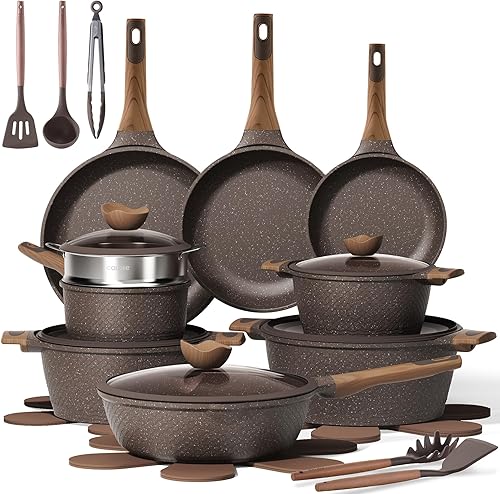
CAROTE 26pc Nonstick Cookware Set, Aluminum

CAROTE 27pcs Ceramic Cookware Set with Detachable Handle
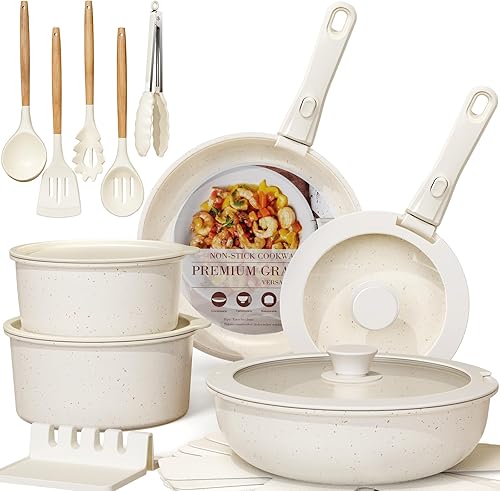
Astercook 21 Pcs Ceramic Non-Stick Cookware Set
As an Amazon Associate we earn from qualifying purchases. Product prices and availability are accurate as of the date/time indicated.
Related reading: Can a Blender Replace a Food Processor? What It Can't Do · The Best Non Stick Cookware for Induction Cooktops of 2026
Frequently Asked Questions
Can I keep using a slightly warped pan on a gas stove?
A slight warp can work on gas for boiling liquids, but oil will pool to one side and food will brown unevenly. On glass-top electric or induction, replace it, because poor contact with the surface wastes heat and can leave the pan spinning.
Does the dishwasher shorten nonstick pan life?
It can. Harsh detergent and heat may dull coatings faster than a soft sponge and mild soap. Some pans are rated dishwasher safe, so follow your manual. If it recommends hand washing, hand wash it.
Can I re-coat a worn nonstick pan?
Home re-coating is generally not practical or recommended. Spray-on products are not a substitute for the factory coating, and professional re-coating is rarely worth the cost on consumer pans. Replace the pan instead.
Is a dented pan too damaged to keep?
Not if it still sits flat. Dents on the sides or outside of a pan do not affect cooking. A dent in the base that makes the pan rock is a warp, so replace it.
Is stainless steel or nonstick the better pan to keep longer?
Stainless steel, because it has no coating to wear out and most stains clean off. A nonstick pan is worth keeping only while its surface is intact and the egg test passes.
{“@context”: “https://schema.org”, “@type”: “FAQPage”, “mainEntity”: [{“@type”: “Question”, “name”: “Can I keep using a slightly warped pan on a gas stove?”, “acceptedAnswer”: {“@type”: “Answer”, “text”: “A slight warp can work on gas for boiling liquids, but oil will pool to one side and food will brown unevenly. On glass-top electric or induction, replace it, because poor contact with the surface wastes heat and can leave the pan spinning.”}}, {“@type”: “Question”, “name”: “Does the dishwasher shorten nonstick pan life?”, “acceptedAnswer”: {“@type”: “Answer”, “text”: “It can. Harsh detergent and heat may dull coatings faster than a soft sponge and mild soap. Some pans are rated dishwasher safe, so follow your manual. If it recommends hand washing, hand wash it.”}}, {“@type”: “Question”, “name”: “Can I re-coat a worn nonstick pan?”, “acceptedAnswer”: {“@type”: “Answer”, “text”: “Home re-coating is generally not practical or recommended. Spray-on products are not a substitute for the factory coating, and professional re-coating is rarely worth the cost on consumer pans. Replace the pan instead.”}}, {“@type”: “Question”, “name”: “Is a dented pan too damaged to keep?”, “acceptedAnswer”: {“@type”: “Answer”, “text”: “Not if it still sits flat. Dents on the sides or outside of a pan do not affect cooking. A dent in the base that makes the pan rock is a warp, so replace it.”}}, {“@type”: “Question”, “name”: “Is stainless steel or nonstick the better pan to keep longer?”, “acceptedAnswer”: {“@type”: “Answer”, “text”: “Stainless steel, because it has no coating to wear out and most stains clean off. A nonstick pan is worth keeping only while its surface is intact and the egg test passes.”}}]}