In the griddle vs hot plate choice, a griddle is a flat surface you cook on and a hot plate is a burner that heats cookware.
What a griddle and a hot plate actually are
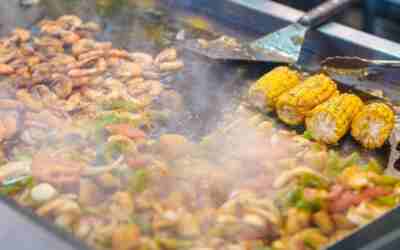
A griddle is a flat, usually rectangular cooking plate with its own heating element underneath and a low rim or splash guard. Food goes straight onto the surface. A hot plate is a portable burner, typically round, with no cooking surface of its own. It heats whatever pot or pan you set on it.
The terms overlap in shops. “Flat top” and “plancha” both describe griddle-style surfaces, and some sellers label a tabletop griddle a hot plate. Gas griddles and hot plates rated in BTU are restaurant equipment, so this comparison covers plug-in home units.
“Hot plate” is also not one type. Coil, ceramic (radiant glass) and induction burners behave differently, and the cookware section below explains how.
Griddle vs hot plate side by side
| Factor | Electric griddle | Hot plate |
|---|---|---|
| Cooking surface | One large flat plate, usually rectangular | One or two round burners; your pan sets the surface |
| Cookware needed | None; food goes on the plate | Pots and pans; induction needs magnetic ones |
| Best at | Pancakes, eggs, bacon, grilled sandwiches, smash burgers | Boiling, simmering, soups, sauces, sautéing |
| Heat zones | One zone across the whole plate | One zone per burner |
| Cleanup | Scrape and wipe the plate, empty the grease tray | Wash the pans, wipe spills off the burner |
| Counter footprint | Wide and flat | Compact, and it stores smaller |
Which is better for pancakes, eggs, soups and sauces
A griddle wins for anything that cooks flat in a single layer. Six pancakes, a row of bacon, or four grilled cheese sandwiches fit on one plate at once, with no pan edges in the way.
A hot plate wins for anything with liquid. A griddle’s rim is a splash guard, not a pot wall, so it cannot boil pasta, simmer soup or reduce a sauce. A hot plate holds a stockpot or saucepan without trouble.
A hot plate can still make breakfast. A skillet on one burner turns out a couple of pancakes or eggs at a time, just more slowly than a full griddle plate.
Cookware rules for each type of hot plate
Cookware is where “hot plate” splits into three different appliances:
- Coil: works with most pans, but the base must be flat. A warped pan rocks and heats unevenly.
- Ceramic (radiant glass): needs smooth, flat-bottomed pans. Dragging rough cast iron can scratch the glass.
- Induction: needs magnetic cookware. Hold a magnet to the pan bottom; if it sticks firmly, the pan works. Plain aluminum, copper and glass do not.
A griddle needs no cookware at all. Follow the manual on utensils, since nonstick plates usually call for wood, silicone or nylon tools. Setting a separate griddle plate on top of a burner is a different setup, covered in can a griddle be used on an electric stove.
Power draw and running cost
Plug-in griddles and hot plates are both single-appliance loads, and the label lists the exact wattage. Many home models sit in the 1,200 to 1,800 W range, but check yours.
Worked example using typical values: a unit labeled 1,500 W on a 120 V outlet draws 1,500 ÷ 120 = 12.5 A. A 15 A circuit supports 15 × 120 = 1,800 W. Add a 1,000 W toaster on the same circuit and the total is 2,500 W, or 2,500 ÷ 120 = 20.8 A, which trips the breaker.
Cost for a 20-minute cook: 1.5 kW × (20 ÷ 60) h = 0.5 kWh. At an assumed $0.17 per kWh, that is about 9 cents. Same wattage means the same hourly cost, so the cheaper option is whichever finishes your meal faster.
Cleanup, stability and heat safety
A griddle cleans in one motion: let it cool, scrape off residue, wipe the plate and empty the grease tray. Rust and stuck-on residue are the usual problems, and how to clean a griddle after use walks through the steps. Do not immerse the unit unless the manual says the plate detaches.
A hot plate stays cleaner until something boils over. Spills burn onto a coil or glass top and are easiest to remove once the burner is cool.
On stability, a small hot plate with a tall full pot is the tipping risk, while a griddle’s large surface stays hot across a wide area. Plug either directly into the wall, keep controls dry, and keep cords away from the hot surface.
Which to choose for a dorm, small kitchen or extra burner
Decision rule: if most of your meals are flat foods like eggs, pancakes and sandwiches, get a griddle. If you boil or simmer, get a hot plate. If you can only have one device, a hot plate with a skillet and one pot covers more dishes.
Before buying, check:
- Your dorm or lease rules, since some housing bans exposed-coil units.
- A temperature dial rather than simple on/off.
- A cord long enough to reach the outlet without an extension cord.
- For induction, that your cookware passes the magnet test.
If a griddle is your pick, what size griddle to get helps match plate area to your household.
Our Top Picks
Ready to shop? These are the top-rated options from our related roundup, Best Hot Plate of 2026.

ChangBERT CIB-80 Plus Induction Cooktop 1800W

Duxtop 9600LS Portable Induction Cooktop 1800W

ChangBERT CIB-80 1800W Induction Cooktop
As an Amazon Associate we earn from qualifying purchases. Product prices and availability are accurate as of the date/time indicated.
Frequently Asked Questions
Can I boil water on an electric griddle?
Not practically. A griddle’s rim is shallow, so water spills or splashes, and the plate heats food rather than liquid. Use a hot plate with a pot or kettle for boiling, and keep the griddle for dry cooking.
Do electric griddles get as hot as gas griddles?
Generally no. Electric griddles heat evenly but respond more slowly, while gas reaches higher heat faster and suits hard searing. Home electric models handle pancakes, eggs and burgers well, and their maximum temperature is printed in the manual.
Can a hot plate replace a stove in a dorm or RV?
It can cover basic cooking. One or two burners handle pasta, soup and eggs, but you lose oven space and a large cooking area. Confirm dorm or campground rules first, since some ban certain heating types.
Can I make pancakes on a hot plate?
Yes. Put a flat-bottomed nonstick skillet on the burner, and on induction make sure the pan is magnetic. You will cook fewer pancakes at a time than on a griddle, so batches take longer.
{“@context”: “https://schema.org”, “@type”: “FAQPage”, “mainEntity”: [{“@type”: “Question”, “name”: “Can I boil water on an electric griddle?”, “acceptedAnswer”: {“@type”: “Answer”, “text”: “Not practically. A griddle’s rim is shallow, so water spills or splashes, and the plate heats food rather than liquid. Use a hot plate with a pot or kettle for boiling, and keep the griddle for dry cooking.”}}, {“@type”: “Question”, “name”: “Do electric griddles get as hot as gas griddles?”, “acceptedAnswer”: {“@type”: “Answer”, “text”: “Generally no. Electric griddles heat evenly but respond more slowly, while gas reaches higher heat faster and suits hard searing. Home electric models handle pancakes, eggs and burgers well, and their maximum temperature is printed in the manual.”}}, {“@type”: “Question”, “name”: “Can a hot plate replace a stove in a dorm or RV?”, “acceptedAnswer”: {“@type”: “Answer”, “text”: “It can cover basic cooking. One or two burners handle pasta, soup and eggs, but you lose oven space and a large cooking area. Confirm dorm or campground rules first, since some ban certain heating types.”}}, {“@type”: “Question”, “name”: “Can I make pancakes on a hot plate?”, “acceptedAnswer”: {“@type”: “Answer”, “text”: “Yes. Put a flat-bottomed nonstick skillet on the burner, and on induction make sure the pan is magnetic. You will cook fewer pancakes at a time than on a griddle, so batches take longer.”}}]}