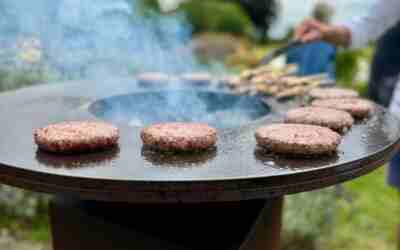
To clean a griddle after use, let it cool until it is warm but not blistering hot, scrape the food and grease into the trap, steam off leftover residue with a little hot water, wipe it completely dry, and rub on a thin coat of oil. The routine takes about 5 minutes of hands-on work and prevents rust and sticky buildup.
How to clean a griddle after use: the 5-minute routine
This works for a Blackstone-style flat top, a rolled-steel outdoor griddle and a carbon steel stovetop griddle. Details vary by model, so check your manual for anything that conflicts.
- Turn off the heat. On a gas griddle, also shut the burner knobs and close the propane valve.
- Let it cool to a safe working temperature. Aim for a surface of roughly 200 to 250°F. After medium-heat cooking that is often about 10 to 15 minutes, and longer after high heat. See the next section for how to check.
- Scrape. Push food bits and grease toward the grease trap or cup with a flat scraper, using long strokes and light pressure.
- Steam-clean. Squirt a few tablespoons of hot water onto the surface. It will sizzle and lift stuck bits. Scrape again.
- Wipe. Use paper towels held with tongs, or a heat-safe cloth, to wipe the surface until no gray or brown film comes up.
- Dry completely. Any water left behind is what causes rust. On a stovetop griddle, set it on low heat for about 1 minute to drive off moisture.
- Oil lightly. Rub on a very thin coat of cooking oil (amounts are below) and wipe off the excess so the surface looks barely glossy.
- Empty the grease trap. Do this every time, not just when it looks full.
Most nights, that is all you need. Save aggressive scrubbing for the problems covered further down.
Should you clean a griddle hot or cold?
Clean it while it is still warm. Food and grease release much more easily from a warm surface than from a cold one, where grease hardens into a paste. But warm does not mean fresh off high heat.
A good target is a surface of about 200 to 250°F. An infrared thermometer is the easiest way to check. Without one, wait roughly 10 to 15 minutes after medium or low cooking, and longer after high heat, then hold your hand a few inches above the surface rather than touching it. Use tongs or a scraper for any contact. Scraping a bit earlier is fine, but add water only once the surface is at or below that range.
Safety when water meets hot steel
- Water temperature: use hot tap water, not cold. Cold water on a hot griddle can cause rapid temperature change that may warp thin steel.
- Steam burns: water on hot steel flashes to steam instantly and can scald your hands and face. Stand back, keep your face away, and use a squeeze bottle instead of pouring from a pot.
- Use long-handled tools and heat-safe gloves.
- Inspect any wire-bristle brush before each use. Loose bristles can stick in the cooking surface and end up in food.
If the griddle has fully cooled and the grease has set, turn it on low for a few minutes to soften things, then continue with the routine.
Can you use soap on a griddle?
It depends on the surface and how much seasoning it has. Sources disagree because they are talking about different cookware. Made In advises against soap on a seasoned carbon steel surface and says never to soak it, while other flat-top guides allow a little mild dish soap for an occasional deep clean.
| Surface | Soap after each use? | Rule of thumb |
|---|---|---|
| Seasoned carbon steel stovetop griddle | No | Hot water, scrape, dry, oil. Never soak. |
| Rolled-steel outdoor flat top | Not needed | A little mild soap is fine for an occasional deep clean if seasoning is solid. Rinse, dry and re-oil right away. |
| Seasoned cast iron griddle | Rarely | Dry and oil immediately after washing. |
| Nonstick electric griddle | Yes, if the manual allows | Unplug, cool, then wipe with a soft sponge. No metal tools. |
| Stainless steel flat top | Yes | No seasoning to protect. Dry to avoid water spots. |
The decision rule: if the surface is dark, smooth and slightly glossy from seasoning, skip soap on routine nights. If it is bare, new, or being stripped anyway, soap is fine as long as you dry and oil it right after.
Scraper material
A flat metal scraper suits a heavy rolled-steel flat top. For a thinner stovetop pan or any nonstick coating, use silicone, wood or plastic to avoid scratches.
What oil should you use after cleaning, and how much?
Use a thin coat of a high smoke point oil. Grapeseed, canola, vegetable, avocado and refined peanut oil all work. Butter and extra virgin olive oil burn at lower temperatures and tend to leave a sticky film.
Quantity matters more than brand. Too much oil is a top cause of a tacky or blotchy surface. The amounts below are approximate, so adjust to your griddle’s size.
- Stovetop griddle: roughly a quarter-sized pour, rubbed across the whole surface, then wiped nearly dry. Made In recommends drying, heating on low for about 1 minute, then rubbing in oil.
- Large outdoor flat top: approximately a teaspoon to a tablespoon, spread with a folded paper towel held in tongs. Larger surfaces may need a bit more.
You do not need to reseason fully after every cleaning. The thin coat of oil after each use is enough maintenance. Full reseasoning is for stripped, rusty or flaking surfaces.
Fire note: rags and paper towels soaked in cooking oil can heat up and ignite as the oil oxidizes. Don’t leave a wad of oily towels in a pile. Lay them flat outdoors to dry or put them in a metal container of water before trashing them.
Fixing sticky spots, burnt-on food and orange rust
Here is what to do when the basic routine does not cut it.
| Problem | Likely cause | Fix |
|---|---|---|
| Sticky or tacky surface | Too much oil, or oil not heated enough | Heat on medium-high until the oil smokes (the time and setting vary by model, so check your manual), let it cool, and wipe with a dry towel. Use less oil next time. |
| Burnt-on food | Cleaned too late or heat too high | Warm the griddle, add hot water once the surface is under about 250°F, let it steam 1 to 2 minutes, then scrape at a low angle. |
| Stubborn stains | Built-up residue | Baking soda and water paste, left a few minutes, then scrubbed and wiped. |
| Light stuck-on grime on a stovetop griddle | Dried residue | Lightly heat it, add 1 to 2 tablespoons of kosher salt and scrub with a paper towel, per Made In. Wipe out the salt. |
| Orange spots | Surface rust from moisture | See rust steps below. |
| Flaking black bits | Seasoning lifting, often from thick layers | Scrape loose flakes and reseason in thin layers. |
If you do not have a scraper, a stiff spatula, a griddle stone or a folded sheet of heavy-duty foil held with tongs can work in a pinch. Avoid steel wool on a seasoned surface unless you plan to reseason.
How to remove rust and reseason a griddle
Light rust is fixable in about an hour of mostly waiting. Heavy, pitted rust may need a more aggressive scrub, and it is your call whether the griddle is worth saving.
- Turn off gas and disconnect any electric plug before working on it.
- Make a paste of baking soda and water, spread it over the rust, and leave it roughly 10 minutes.
- Scrub with a non-wire pad or stone, then rinse and wipe.
- Dry completely. Warm the surface briefly to drive off moisture.
- Apply a thin coat of high smoke point oil.
- Heat until the oil smokes, then let it cool. Many guides suggest high heat for around 15 minutes, but this is model-dependent, so use the temperature and time your manufacturer recommends. Repeat the oil-and-heat cycle two or three times.
For a stovetop carbon steel pan, Made In suggests roughly a quarter-sized amount of oil such as grapeseed, heated until smoking and held about 2 minutes before cooling.
Do this outdoors or with good ventilation. Smoking oil can set off alarms and irritate lungs. Keep propane tanks upright, outdoors and away from heat sources.
Storing a griddle so it doesn’t rust
Moisture is the enemy, and outdoor griddles get plenty. Rain, humidity and morning dew all raise rust risk, especially if the seasoning is thin.
- Use a fitted cover or hard lid once the surface is cool, and keep it on between uses.
- Store indoors or in a garage for long periods, such as winter, if you can.
- Add a slightly heavier oil coat before storage, then wipe off any pooling.
- Check after storage. Look for orange spots, wipe with a lightly oiled towel, and heat the griddle briefly before cooking.
- Keep the grease trap clean. Charred grease buildup is a fire risk, and water in an uncovered cup can overflow in rain.
Before any deep clean, turn off the gas and unplug electric models. Keep nonstick electric griddle plates out of standing water unless the manual says they are submersible.
If you cook on cast iron, the same dry-and-oil habit keeps the seasoning intact. Our Lodge LDP3 reversible cast iron grill/griddle review shows how a seasoned cast iron surface holds up to everyday cooking and cleanup.
Related reading: Blenders vs Smoothie Makers: Pick by Batch Size and Use · How Many Watts Does an Air Purifier Use? Monthly Cost
Frequently Asked Questions
Can I use a lemon or vinegar on a griddle?
Use them sparingly. Acids can help loosen light rust, but they also break down seasoning, so they are not good routine cleaners. If you do use one, rinse well, dry completely, and re-oil the surface right away. Reseason if the surface looks dull or bare.
How often should I deep clean a griddle?
There is no fixed schedule. Do the quick scrape, wipe and oil routine after every use, then deep clean when you see built-up residue, sticky patches or flaking. For frequent cooks that is often every few weeks, and less often for occasional use. Always dry and re-oil afterward.
Why is my griddle turning orange?
Orange spots are usually surface rust from moisture, caused by water left on the surface, thin seasoning, or storing it uncovered in humid weather. Light rust can be scrubbed off with a baking soda paste, then dried, oiled and reseasoned. Keep it covered and dry to prevent a repeat.
What can I use if I don’t have a griddle scraper?
A stiff metal spatula works on a sturdy flat top. For a stovetop or nonstick griddle, use a silicone or wooden spatula. Folded heavy-duty foil held in tongs can also push residue into the trap, as long as the surface is safe.
Is it okay to leave grease on the griddle overnight?
It is better not to. Old grease can turn rancid, attract pests and harden into a sticky layer. Scrape and wipe after cooking, empty the grease trap, and leave only a very thin coat of oil.
{“@context”: “https://schema.org”, “@type”: “FAQPage”, “mainEntity”: [{“@type”: “Question”, “name”: “Can I use a lemon or vinegar on a griddle?”, “acceptedAnswer”: {“@type”: “Answer”, “text”: “Use them sparingly. Acids can help loosen light rust, but they also break down seasoning, so they are not good routine cleaners. If you do use one, rinse well, dry completely, and re-oil the surface right away. Reseason if the surface looks dull or bare.”}}, {“@type”: “Question”, “name”: “How often should I deep clean a griddle?”, “acceptedAnswer”: {“@type”: “Answer”, “text”: “There is no fixed schedule. Do the quick scrape, wipe and oil routine after every use, then deep clean when you see built-up residue, sticky patches or flaking. For frequent cooks that is often every few weeks, and less often for occasional use. Always dry and re-oil afterward.”}}, {“@type”: “Question”, “name”: “Why is my griddle turning orange?”, “acceptedAnswer”: {“@type”: “Answer”, “text”: “Orange spots are usually surface rust from moisture, caused by water left on the surface, thin seasoning, or storing it uncovered in humid weather. Light rust can be scrubbed off with a baking soda paste, then dried, oiled and reseasoned. Keep it covered and dry to prevent a repeat.”}}, {“@type”: “Question”, “name”: “What can I use if I don’t have a griddle scraper?”, “acceptedAnswer”: {“@type”: “Answer”, “text”: “A stiff metal spatula works on a sturdy flat top. For a stovetop or nonstick griddle, use a silicone or wooden spatula. Folded heavy-duty foil held in tongs can also push residue into the trap, as long as the surface is safe.”}}, {“@type”: “Question”, “name”: “Is it okay to leave grease on the griddle overnight?”, “acceptedAnswer”: {“@type”: “Answer”, “text”: “It is better not to. Old grease can turn rancid, attract pests and harden into a sticky layer. Scrape and wipe after cooking, empty the grease trap, and leave only a very thin coat of oil.”}}]}