For the coffee maker vs French press choice, pick a drip machine for hands-off batches of 10-12 cups and a French press for a fuller-bodied cup in 2-4 mugs. The press gives you control and a heavier, oilier cup; the machine gives you volume, a timer and the same result every morning.
Coffee maker vs French press: the short answer
Choose a drip coffee maker if you regularly brew more than 4 mugs, want to program a pot before you are awake, or need identical coffee every day. Choose a French press if you drink 1 to 4 mugs, like a heavier, oilier cup, and don’t mind a kettle and a few minutes of attention.
| Feature | Drip coffee maker | French press |
|---|---|---|
| How it brews | Hot water passes through the grounds and a paper filter | Grounds steep in the water, then a metal mesh plunger separates them |
| Body and flavor | Cleaner, lighter body | Fuller, oilier body with some sediment |
| Typical batch | 10-12 cups | 2-4 mugs |
| Total time | 5-10 minutes, unattended | 5-8 minutes, including a 4-minute steep |
| Effort | Add water and grounds, press a button | Heat water, time the steep, plunge |
| Extra gear | None for most models | Kettle and grinder; a thermometer is optional |
| Cleanup | Toss the filter, wash basket and carafe | Scoop out wet grounds, rinse and disassemble the plunger |
| Consistency | Repeatable every brew | Depends on your timing and grind |
Many machines rate a “cup” at about 5 oz, so a 12-cup carafe pours roughly 5 mugs of 12 oz each. Check your manual for the exact cup size.
How the taste and body differ
The difference comes mostly from the filter and the brewing method, not from the beans.
- Paper filter (drip): traps most of the coffee oils and fine particles, so the cup tastes cleaner and brighter, with a lighter feel.
- Metal mesh (French press): lets oils and some fine particles through, so the cup tastes rounder, heavier and sometimes slightly gritty at the bottom.
- Immersion vs. pass-through: in a press, all the grounds sit in the water for the full steep. In a drip machine, water flows over the grounds once, so contact time is set by the machine.
Which one tastes better is personal. People who like a bold, full mouthfeel tend to prefer a press; people who like a crisp, tea-like clarity tend to prefer paper-filtered drip. Neither is objectively stronger, since strength depends on how much coffee you use per cup of water.
How to make French press coffee: ratio, grind and time
This is the part drip users don’t have to think about. Use a kitchen scale if you have one.
- Ratio: 1 part coffee to 15 parts water by weight is a good starting point. Go to 1:14 for stronger, or 1:16 for lighter.
- Grind: coarse, close to coarse sea salt. Fine grounds slip through the mesh and turn bitter.
- Water: the National Coffee Association recommends 195-205°F. Without a thermometer, let boiled water sit about 30 seconds.
- Steep: 4 minutes.
Worked example for two 12 oz mugs: 24 oz of water is about 710 g. Divide by 15 and you need about 47 g of coffee.
- Add 47 g of coarse grounds to the empty press.
- Pour in about 710 g (24 oz) of hot water and stir gently once.
- Set the lid on with the plunger up and start a 4-minute timer.
- Press down slowly and steadily. Stop if you feel strong resistance and lift slightly.
- Pour all the coffee out right away. Coffee left on the grounds keeps extracting and turns bitter.
If you don’t own a grinder, see whether a food processor can grind coffee beans well enough for a coarse press grind. Safety: pour hot water carefully, set a glass press on a stable surface, and don’t plunge hard, because glass can crack and scald.
Cleanup, cost and durability
Cleanup. A drip machine is quicker day to day: lift out the filter and grounds, then rinse the basket and carafe. A press is messier because wet grounds cling to the beaker, so scoop them into the trash, not the drain, where they can clog pipes. Take the plunger apart for a proper wash now and then so old oils don’t turn rancid.
Maintenance. Drip machines build up mineral scale inside and need periodic cleaning; follow our guide on how to descale a coffee maker and your manual’s schedule. A press has nothing to descale.
Cost over time.
- French press: no heating element, no electronics and no paper filters to buy. You do need a kettle and a grinder if you don’t already own them.
- Drip machine: uses electricity and, in most models, paper filters. Some come with a reusable mesh filter instead. Lifespan depends on the model, and the heating element or pump is usually what fails.
- Durability: a glass press can shatter if dropped, but replacement beakers and mesh screens are sold for many models. Stainless steel presses avoid the breakage risk.
Which is better for one person, a couple, a family or an office
- One person: a French press makes 1 to 2 mugs without leaving half a pot to go stale. If your mornings are rushed, a machine with a timer wins.
- A couple: either works. A press covers two mugs in one go, while a drip machine suits you if each of you wants a refill.
- A family of four or more: drip. A single press batch tops out around 4 mugs, so serving everyone means repeating the process.
- An office or gatherings: drip. A 10-12 cup batch serves a group, and a press can’t hold coffee well, since it keeps extracting on the grounds.
- A busy morning: drip with a programmable timer, so coffee is ready when you walk in.
If a machine fits your household, our roundup of the best drip coffee makers compares models by capacity and features.
Where each one loses
Drip machines lose on control. Water temperature is usually not adjustable, and some machines may not reach the 195-205°F range. You also can’t change steep time, only the amount of coffee and water. Many carafes sit on a hot plate that can leave coffee tasting scorched if it stays there.
French presses lose on convenience. You must watch the clock, and a slow or fast plunge changes the result. Sediment ends up in the last sip, and the batch is small. Glass presses also lose heat quickly, so a second mug often comes out lukewarm.
Our Top Picks
Ready to shop? These are the top-rated options from our hands-on roundup, Best Coffee Maker of 2026.
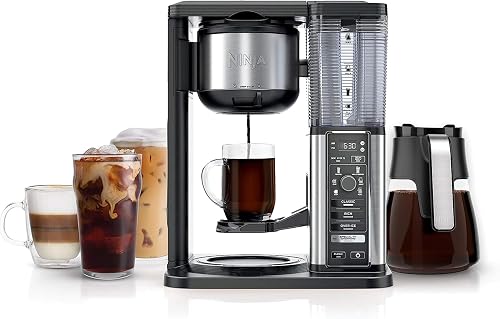
Ninja CM401 Specialty Coffee Maker with 10-Cup Carafe, Fold-Away Frother, 4 Brew Styles, and 6 Brew Sizes

ARTISTOP 50 Cup 8L Stainless Steel Coffee Urn

Hamilton Beach Programmable 12-Cup Dispensing Coffee Maker
As an Amazon Associate we earn from qualifying purchases. Product prices and availability are accurate as of the date/time indicated.
Frequently Asked Questions
Is French press coffee stronger than drip coffee?
Not by method alone. Strength depends mainly on how much coffee you use per ounce of water. A press tastes heavier because the mesh lets oils and fine particles through, but the same ratio gives similar caffeine in either brewer.
Is French press coffee less healthy than drip?
Unfiltered coffee contains more cafestol, a compound that can raise LDL cholesterol, while paper filters trap most of it. If you have high cholesterol, ask your doctor, and consider paper-filtered drip.
Can I use a paper filter with a French press?
Not in the standard design, since the mesh plunger is the filter. You can pour pressed coffee through a paper filter to remove sediment, but you will also lose the oils that give a press its body.
Can I make cold brew in a French press?
Yes. Add coarse grounds and cold water, refrigerate for roughly 12 to 24 hours, then press and pour. Cold brew is usually mixed stronger than hot coffee, so dilute it with water or milk to taste.
{“@context”: “https://schema.org”, “@type”: “FAQPage”, “mainEntity”: [{“@type”: “Question”, “name”: “Is French press coffee stronger than drip coffee?”, “acceptedAnswer”: {“@type”: “Answer”, “text”: “Not by method alone. Strength depends mainly on how much coffee you use per ounce of water. A press tastes heavier because the mesh lets oils and fine particles through, but the same ratio gives similar caffeine in either brewer.”}}, {“@type”: “Question”, “name”: “Is French press coffee less healthy than drip?”, “acceptedAnswer”: {“@type”: “Answer”, “text”: “Unfiltered coffee contains more cafestol, a compound that can raise LDL cholesterol, while paper filters trap most of it. If you have high cholesterol, ask your doctor, and consider paper-filtered drip.”}}, {“@type”: “Question”, “name”: “Can I use a paper filter with a French press?”, “acceptedAnswer”: {“@type”: “Answer”, “text”: “Not in the standard design, since the mesh plunger is the filter. You can pour pressed coffee through a paper filter to remove sediment, but you will also lose the oils that give a press its body.”}}, {“@type”: “Question”, “name”: “Can I make cold brew in a French press?”, “acceptedAnswer”: {“@type”: “Answer”, “text”: “Yes. Add coarse grounds and cold water, refrigerate for roughly 12 to 24 hours, then press and pour. Cold brew is usually mixed stronger than hot coffee, so dilute it with water or milk to taste.”}}]}