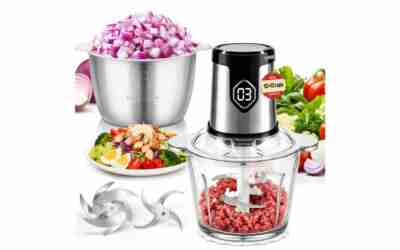

In the meat grinder vs food processor choice, a processor works for occasional small batches of burger meat, but a grinder wins for sausage, bulk and tough cuts.
How a grinder and a processor cut meat differently
A meat grinder pushes meat with a rotating auger into a spinning knife and through a metal plate. The holes in that plate set the final size, so every piece leaves as a distinct strand. Common plates run from roughly 1/8-inch holes (fine) to 3/8-inch holes (coarse), but check the plates that come with your model.
A food processor does something else entirely. Its S-blade spins at the bottom of the bowl and chops whatever it hits. Pieces near the blade get hit again and again, while pieces on top may barely move. The result is a mix of coarse chunks and over-processed paste.
Why fat smears
Smearing is fat melting and coating the meat instead of staying in separate flecks. It happens when meat is warm, when a blade is dull, or when the machine runs too long. A grinder pushes meat through quickly in one pass, so fat has less time to warm. A processor keeps recutting the same pieces, so heat and friction build up fast. Smeared meat cooks up dense, greasy and mushy instead of tender and crumbly.
A processor will not match a grinder’s texture, even when you do everything right. It can get close enough for a burger, but not identical.
Meat grinder vs food processor side by side
| Factor | Meat grinder | Food processor |
|---|---|---|
| Cutting action | Auger pushes meat through a knife and plate | Spinning S-blade chops in the bowl |
| Texture | Distinct, even strands | Uneven mix of chunks and paste |
| Grind size control | Change the plate (fine to coarse) | Change the number of pulses |
| Fat smearing risk | Low when meat and parts are cold | High, because pieces are recut repeatedly |
| Batch handling | Continuous feed; refill the hopper as you go | One bowl at a time; work in small batches |
| Best other uses | Sausage, bulk grinding, tough cuts | Vegetables, nuts, sauces, dough |
| Parts to wash after raw meat | Hopper, auger, knife, plate, collar | Bowl, lid, blade |
How to grind meat in a food processor
This method gives the best result a processor can deliver.
- Trim away tough silver skin and gristle, then cut the meat into about 1-inch cubes.
- Spread the cubes on a tray and freeze them for about 30 minutes, until firm on the outside but not frozen solid.
- Put the empty bowl and blade in the freezer for the same time.
- Fill the bowl no more than about one-third with cubes, roughly 1 pound at a time. Check your manual for the maximum load.
- Pulse in one-second bursts, about 10 times per batch, and stop as soon as the pieces look like ground meat.
- Move the first batch to a cold bowl and repeat. Do not run the motor continuously.
Worked example: 2 pounds of chuck for burgers
Cube 2 pounds of chuck and chill it for 30 minutes. Split it into two 1-pound batches. Pulse each batch about 10 times, scraping the bowl once halfway through. That is roughly 20 pulses in total, which is a few minutes of hands-on work after the chill. These counts are typical values, so adjust them to your blade and bowl.
Look for visible flecks of white fat. If the meat looks sticky or forms a smooth paste, stop, because the fat has started to smear.
Food safety for home-ground meat
Grinding spreads surface bacteria through the whole batch, so a burger is not safe at a rare center the way a steak can be. Cook ground beef and pork to 160°F, and ground chicken or turkey to 165°F, measured with an instant-read thermometer.
- Keep meat, bowl, blade and any grinder parts cold throughout, and return the meat to the fridge between batches.
- Use ground meat right away, or refrigerate it and use it within a day or two. Freeze anything you will not use by then.
- Wash blades, bowls, plates and the cutting board in hot soapy water right after use, then sanitize them.
- Unplug the machine before assembling or cleaning, and use the food pusher instead of your fingers.
Grinder parts such as plates and knives can hold meat residue in small holes, so scrub them with a brush before sanitizing.
When a food processor is enough and when to buy a grinder
Decision rule: if you grind meat a few times a year in small batches for burgers or meatballs, use the processor you own. If you grind often, make sausage, or process more than a couple of pounds at a time, buy a grinder.
Here is how that plays out by use case:
- Occasional burgers or meatballs: a processor with the chilled-pulse method is fine.
- Sausage: choose a grinder. Sausage needs clean particle definition and cold fat, and a processor tends to produce a pasty mix.
- Tough cuts such as chuck or shoulder, or bulk batches: choose a grinder, because the auger handles sinew and large volumes without constant batching.
- Pet food or game meat: a grinder, since volumes are usually larger.
If you are unsure how much use your processor really gets, this simple rule for deciding if a food processor is worth it helps you weigh it before you rely on it for meat.
Stand mixer attachments, manual grinders and cost
If you want true grinding without a full electric grinder, a stand mixer attachment or a manual hand-crank grinder are cheaper options, though attachments are model specific and manuals are slower. For pricing, see our breakdown of how much a meat grinder costs.
Our Top Picks
Ready to shop? These are the top-rated options from our hands-on roundup, Best Hand Meat Grinder of 2026.

Huanyu Manual Stainless Steel Meat Grinder
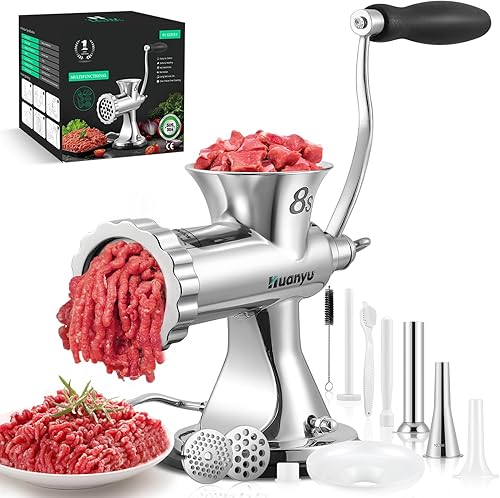
Huanyu Manual Stainless Steel Hand Crank Meat Grinder

VEVOR Manual Meat Grinder #12, Stainless Steel
As an Amazon Associate we earn from qualifying purchases. Product prices and availability are accurate as of the date/time indicated.
Frequently Asked Questions
Can I grind chicken in a food processor?
Yes. Use the same chilled-cube method, but chicken is softer than beef, so it turns to paste faster. Pulse in fewer, shorter bursts, check after about 6 pulses, and work in small batches.
Can I grind meat that is frozen solid?
No. Solid frozen cubes can stall or damage a processor blade and strain a grinder. Chill the cubes until firm on the outside but still cuttable, which takes about 30 minutes in the freezer.
Can a processor grind pork for sausage?
It can chop pork in small, well-chilled batches, but the result tends to be pasty because fat smears. For sausage, a grinder gives the distinct particles and cold fat you want.
Is a blender a substitute for a meat grinder?
Not a good one. A blender is not designed to chop firm meat in a controlled way, and it tends to turn meat to paste and smear the fat. A chilled food processor is the closer option, and a grinder is best.
{“@context”: “https://schema.org”, “@type”: “FAQPage”, “mainEntity”: [{“@type”: “Question”, “name”: “Can I grind chicken in a food processor?”, “acceptedAnswer”: {“@type”: “Answer”, “text”: “Yes. Use the same chilled-cube method, but chicken is softer than beef, so it turns to paste faster. Pulse in fewer, shorter bursts, check after about 6 pulses, and work in small batches.”}}, {“@type”: “Question”, “name”: “Can I grind meat that is frozen solid?”, “acceptedAnswer”: {“@type”: “Answer”, “text”: “No. Solid frozen cubes can stall or damage a processor blade and strain a grinder. Chill the cubes until firm on the outside but still cuttable, which takes about 30 minutes in the freezer.”}}, {“@type”: “Question”, “name”: “Can a processor grind pork for sausage?”, “acceptedAnswer”: {“@type”: “Answer”, “text”: “It can chop pork in small, well-chilled batches, but the result tends to be pasty because fat smears. For sausage, a grinder gives the distinct particles and cold fat you want.”}}, {“@type”: “Question”, “name”: “Is a blender a substitute for a meat grinder?”, “acceptedAnswer”: {“@type”: “Answer”, “text”: “Not a good one. A blender is not designed to chop firm meat in a controlled way, and it tends to turn meat to paste and smear the fat. A chilled food processor is the closer option, and a grinder is best.”}}]}