
For a drip maker, use about 2 level tablespoons (10 grams) of ground coffee per cup, counting each cup as 6 ounces of water.
The Starting Ratio Behind 2 Tablespoons Per Cup
The Specialty Coffee Association’s Golden Cup guideline is roughly 55 grams of coffee per liter of water, and most references put the workable range at 1:15 to 1:18 coffee to water by weight.
Here is how that becomes a spoon measure for one 6 oz cup:
- 6 oz of water is about 177 mL, or 177 g.
- At 55 g per liter, 0.177 L needs about 9.7 g of coffee, rounded to 10 g.
- A level tablespoon of medium-ground coffee weighs about 5 g, so 10 g is 2 level tablespoons.
Check the ratio: 177 g of water divided by 10 g of coffee is about 1:17.7, inside the standard range. The shortcut to remember is 1 level tablespoon per 3 oz of water.
Why a Marked Cup Is Not an 8 oz Cup
Most drip makers mark the carafe in 5 oz or 6 oz cups, not the 8 oz cup used in measuring cups. A 12-cup machine with 5 oz cups holds about 60 oz of water, not 96 oz. Dose by the ounces of water you pour, never by the number printed on the carafe.
Find your machine’s real cup size
- Fill the reservoir with water to the 4-cup line.
- Pour it into a liquid measuring cup and read the ounces.
- Divide by 4. A result near 20 oz means 5 oz cups, and near 24 oz means 6 oz cups.
Your coffee mug is a different unit again. A 12 oz mug is two 6 oz cups, so it takes 4 tablespoons (20 g).
Ground Coffee Per Cup Chart for 4, 8, 10 and 12 Cups
Each row uses 1 tablespoon (5 g) per 3 oz of water. Pick the column that matches your machine’s cup size.
| Marked cups | Water at 5 oz | Coffee at 5 oz | Water at 6 oz | Coffee at 6 oz |
|---|---|---|---|---|
| 4 | 20 oz | 6⅔ tbsp (33 g) | 24 oz | 8 tbsp (40 g) |
| 8 | 40 oz | 13⅓ tbsp (67 g) | 48 oz | 16 tbsp (80 g) |
| 10 | 50 oz | 16⅔ tbsp (83 g) | 60 oz | 20 tbsp (100 g) |
| 12 | 60 oz | 20 tbsp (100 g) | 72 oz | 24 tbsp (120 g) |
Worked example, 12 cups at 5 oz: 12 × 5 oz = 60 oz of water. 60 oz ÷ 3 oz per tablespoon = 20 tablespoons. 20 × 5 g = 100 g, or about 1¼ cups of grounds by volume (16 tablespoons make 1 cup).
Calibrate Your Scoop Before Trusting It
Coffee scoops are not standardized. They hold roughly 7 g to 15 g depending on the brand, so a “scoop per cup” rule only works if you know yours.
- Set a kitchen scale to grams and tare a small bowl.
- Fill the scoop or tablespoon with your usual grind and level it with a knife.
- Record the weight, then divide your target dose by it.
That is also why sources disagree on a tablespoon being 4, 5 or 8 g. Finer grinds pack tighter, a heaped spoon can double the weight of a level one, and shaking the spoon settles the grounds. A scale removes all three variables, which is why the chart lists grams. Use 5 g per tablespoon only if your own weighing lands close to it.
Adjusting Strength Without Making It Bitter
Change the dose in small steps and keep the water the same. For one 6 oz cup:
| Taste goal | Ratio | Coffee per 6 oz cup |
|---|---|---|
| Bolder | 1:15 | 12 g (2⅓ tbsp) |
| Standard | about 1:17.7 | 10 g (2 tbsp) |
| Milder | about 1:20 | 9 g (1¾ tbsp) |
More coffee makes a stronger cup. Letting the water run through too slowly or with grounds that are too fine makes it harsher instead. If you want a heavier, oilier cup than a drip basket gives, the coffee maker vs French press comparison explains how the two methods differ.
Grind Size and Freshness
Drip baskets work best with a medium grind, similar to coarse sand. Too fine and water drags through slowly, pulling out bitterness. Too coarse and it rushes past, leaving a thin, sour cup.
Beans taste best ground just before brewing, because ground coffee goes flat within days. No grinder? A food processor can grind coffee beans in short pulses, though the particle size will be less even.
Use filtered or fresh cold water. Heavily chlorinated or very hard water can dull flavor even when the dose is right.
Fixing Weak, Sour, Bitter or Overflowing Pots
Change one thing at a time, in this order:
- Weak or watery: raise the dose by ½ tablespoon per 6 oz cup.
- Sour: grind slightly finer, since the water is passing through too fast.
- Bitter: grind slightly coarser, then trim the dose if it persists.
- Basket overflows: you have more grounds than the basket holds or the filter has folded over. Reduce the amount or reseat the filter.
If every pot tastes flat and the brew cycle seems slow, mineral buildup may be restricting the machine. Follow the steps in how to descale a coffee maker. Never fill the reservoir past the max line, and handle the carafe carefully because it stays hot after brewing.
Our Top Picks
Ready to shop? These are the top-rated options from our related roundup, Best Drip Coffee Makers of 2026.
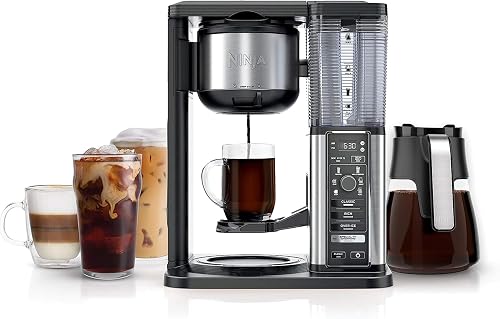
Ninja CM401 Specialty Coffee Maker with 10-Cup Carafe, Fold-Away Frother, 4 Brew Styles, and 6 Brew Sizes

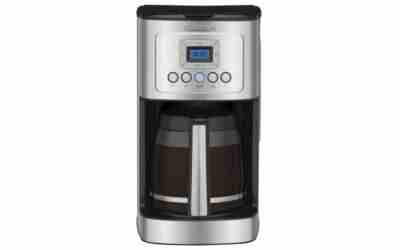
Cuisinart DCC-1200P1 Brew Central 12-Cup Programmable Coffeemaker - Brushed Chrome, Auto-Off, Charcoal Filter

Hamilton Beach FrontFill 12 Cup Programmable Coffee Maker
As an Amazon Associate we earn from qualifying purchases. Product prices and availability are accurate as of the date/time indicated.
Frequently Asked Questions
Can I brew fewer cups than a full pot?
Yes. Fill the reservoir to the line you want and dose for that water. Three 6 oz cups is 18 oz of water, so use 6 tablespoons (30 g). Brewing a small batch with a full-pot dose gives bitter, overly strong coffee.
Can I reuse grounds for a second pot?
No. Most of the flavor is extracted in the first brew, so a second pass gives thin, flat, often bitter coffee. Dump the used grounds and start the next pot with fresh coffee at the same dose.
Does a cone basket need a different dose than a flat basket?
Start with the same dose per ounce of water in either basket. Cone baskets sometimes taste a little stronger because the grounds sit deeper, so adjust by half a tablespoon per cup after tasting.
Should I use less dark roast than light roast?
Weigh it instead of scooping. Dark roast beans are lighter and less dense, so a tablespoon holds fewer grams. Using the same weight, 10 g per 6 oz cup, keeps strength consistent across roasts.
{“@context”: “https://schema.org”, “@type”: “FAQPage”, “mainEntity”: [{“@type”: “Question”, “name”: “Can I brew fewer cups than a full pot?”, “acceptedAnswer”: {“@type”: “Answer”, “text”: “Yes. Fill the reservoir to the line you want and dose for that water. Three 6 oz cups is 18 oz of water, so use 6 tablespoons (30 g). Brewing a small batch with a full-pot dose gives bitter, overly strong coffee.”}}, {“@type”: “Question”, “name”: “Can I reuse grounds for a second pot?”, “acceptedAnswer”: {“@type”: “Answer”, “text”: “No. Most of the flavor is extracted in the first brew, so a second pass gives thin, flat, often bitter coffee. Dump the used grounds and start the next pot with fresh coffee at the same dose.”}}, {“@type”: “Question”, “name”: “Does a cone basket need a different dose than a flat basket?”, “acceptedAnswer”: {“@type”: “Answer”, “text”: “Start with the same dose per ounce of water in either basket. Cone baskets sometimes taste a little stronger because the grounds sit deeper, so adjust by half a tablespoon per cup after tasting.”}}, {“@type”: “Question”, “name”: “Should I use less dark roast than light roast?”, “acceptedAnswer”: {“@type”: “Answer”, “text”: “Weigh it instead of scooping. Dark roast beans are lighter and less dense, so a tablespoon holds fewer grams. Using the same weight, 10 g per 6 oz cup, keeps strength consistent across roasts.”}}]}