A food processor vs hand chopper comes down to volume: a chopper is enough for small, occasional prep, while a processor wins for big batches, dough and slicing.
Three tools people lump together
“Hand chopper” covers very different gadgets, and they do not perform alike.
- Manual chopper: a pull-cord, push-down or rocker design with blades or a dice grid. Your hand is the motor, so it needs no electricity and is quiet.
- Mini electric chopper: a small motorized bowl, typically holding about 1.5 to 4 cups, with one blade.
- Full food processor: a larger motorized base with bowl sizes from roughly 6 to 16 cups, plus discs for slicing and shredding and often a dough blade.
A mini electric chopper sits closer to a manual chopper in what it can do, and closer to a processor in how it feels to use. That is why the comparison below has three columns.
Food processor vs hand chopper side by side
| Factor | Manual chopper | Mini electric chopper | Full food processor |
|---|---|---|---|
| Power source | Your hand | Electric motor | Electric motor; 500 to 750 W suits most home cooks |
| Typical batch | One small handful or one onion | Bowl of about 1.5 to 4 cups | Bowl of about 6 to 16 cups |
| Slicing and shredding | No | No | Yes, with discs |
| Dough, nut butter, emulsions | No | No | Yes |
| Texture control | Coarse to medium mince; fine mince needs many strokes | Pulse control, but small bowl easily over-processes | Pulse control with more room to move food |
| Parts to wash | Fewest: a blade unit and a cup | Bowl, lid and blade; the motor base is only wiped | Bowl, lid, feed tube, pusher, blades and discs |
| Storage | Fits a drawer | Fits a cabinet shelf | Needs counter space or a deep cabinet |
| Cost tier | Lowest of the three | Low to moderate | Highest of the three |
Parts vary by model, so check the box contents. For bowl size by household, see what size food processor you need. Bowl capacity is quoted for dry ingredients, so liquids fill less.
Which gives more even results?
Onions
A manual chopper gives a decent dice if you use short strokes and stop early, but pieces near the blade get smaller than pieces at the edge. A processor or mini chopper is faster, though a few long runs turn onion into watery paste. Pulse in 1-second bursts and stop when the biggest pieces look right.
Nuts
Nuts suit a mini chopper or processor best. They are hard, so a manual chopper needs real hand strength and tends to scatter pieces. Pulse, and shake the bowl between bursts so the bottom does not turn to powder while the top stays whole.
Slaw
Only a processor with a shredding or slicing disc gives uniform ribbons. A chopper of any kind cuts cabbage into short, uneven bits, which suits a fine chopped salad but not a classic slaw.
Dough
Only the full processor makes dough. Choppers do not have the bowl size or torque for it.
Worked example: how batch size decides it
Say a recipe needs 12 cups of cabbage cut for slaw, and you make it twice a month.
- A 4-cup mini chopper is best filled to about 3 cups per load, so 12 cups takes 4 loads.
- A 12-cup processor with a shredding disc can take the same cabbage in 1 to 2 loads, and the disc gives ribbons rather than bits.
Decision rule: if you prep more than one small batch per meal, or you want slicing, shredding or dough at all, buy the processor. If you mostly dice one onion, a handful of herbs or a few nuts, a chopper is enough. For a longer take on frequency, read whether a food processor is worth it.
Cleanup, storage and safety
A manual chopper is the easiest to wash: rinse the blade unit and cup, and most are dishwasher-safe, though check your model. A mini electric chopper adds a motor base you only wipe, so it is nearly as simple. A processor has a bowl, lid, feed tube, pusher, blades and discs, so expect more washing and a place to keep the discs.
For all three, handle blades by the hub or grip, never by the edge. On electric units, unplug before changing blades or cleaning. On manual choppers, keep fingers off the blade grid and use the guard or holder for small pieces. Use the pusher in a processor feed tube, not your fingers.
What a food processor does that a chopper can’t
Beyond chopping, a processor can slice, shred, knead, grind and emulsify. Dough is the clearest dividing line, and making dough in a food processor takes about a minute once the ingredients are in. Nut butters, hummus, pesto and thick purées also need the sustained motor power a hand tool lacks. Torque and blade design matter as much as the wattage number.
Where the processor loses: it is bulky, takes longer to wash, and is overkill for chopping half an onion. A chopper can make small portions of salsa or pesto where the texture can be chunky, but it will not turn chickpeas into smooth hummus.
When a mini processor is the middle answer
If you want motor power and a small footprint, a mini food processor holds a few cups, stores in a cabinet and handles herbs, nuts, small sauces and dips. It will not do large batches or full-size dough. Our guide to the best mini food processor lists models to compare, with bowl size and blade design the two features to check first.
Our Top Picks
Ready to shop? These are the top-rated options from our related roundup, Best Mini Food Processor of 2026.

BLACK+DECKER HC150B 1.5-Cup Electric Food Chopper

Hamilton Beach 3 Cup Mini Food Chopper
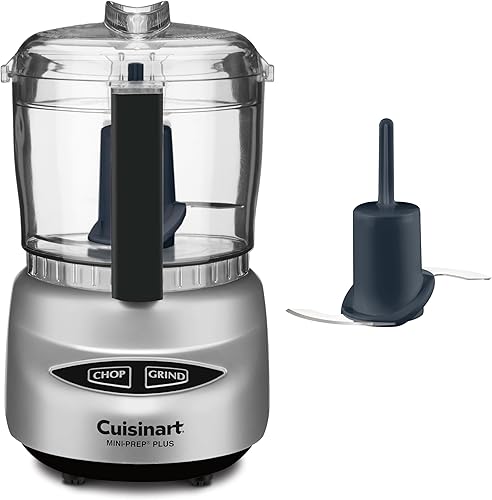
Cuisinart Mini-Prep Plus 3-Cup Food Processor
As an Amazon Associate we earn from qualifying purchases. Product prices and availability are accurate as of the date/time indicated.
Frequently Asked Questions
Is a mini electric chopper better than a manual one?
It is faster and needs no effort, which helps with nuts or larger amounts. A manual chopper is quieter, needs no power and is simpler to store, so the better choice depends on how much you chop.
Can a chopper replace a processor in a small kitchen?
For onions, herbs, nuts and small sauces, yes. It cannot slice, shred, make dough or handle large batches, so if you need those, a processor or a mini processor is the better fit.
Can I use a food processor for just one onion?
Yes, but it is oversized for the job. The blade may miss the onion in a large bowl, so cut it into quarters first and pulse in short bursts. A small chopper is quicker to set up and wash.
Is a manual chopper worth buying?
Yes, if you want a cheap, quiet tool for small amounts of onion, herbs or peppers and have no counter space. It is not worth it if you have weak hands or cook for a crowd.
Which is easier to clean, a chopper or a food processor?
A manual chopper is usually easiest because it has the fewest parts. A processor has a bowl, lid, feed tube, pusher, blades and discs, so expect more washing.
{“@context”: “https://schema.org”, “@type”: “FAQPage”, “mainEntity”: [{“@type”: “Question”, “name”: “Is a mini electric chopper better than a manual one?”, “acceptedAnswer”: {“@type”: “Answer”, “text”: “It is faster and needs no effort, which helps with nuts or larger amounts. A manual chopper is quieter, needs no power and is simpler to store, so the better choice depends on how much you chop.”}}, {“@type”: “Question”, “name”: “Can a chopper replace a processor in a small kitchen?”, “acceptedAnswer”: {“@type”: “Answer”, “text”: “For onions, herbs, nuts and small sauces, yes. It cannot slice, shred, make dough or handle large batches, so if you need those, a processor or a mini processor is the better fit.”}}, {“@type”: “Question”, “name”: “Can I use a food processor for just one onion?”, “acceptedAnswer”: {“@type”: “Answer”, “text”: “Yes, but it is oversized for the job. The blade may miss the onion in a large bowl, so cut it into quarters first and pulse in short bursts. A small chopper is quicker to set up and wash.”}}, {“@type”: “Question”, “name”: “Is a manual chopper worth buying?”, “acceptedAnswer”: {“@type”: “Answer”, “text”: “Yes, if you want a cheap, quiet tool for small amounts of onion, herbs or peppers and have no counter space. It is not worth it if you have weak hands or cook for a crowd.”}}, {“@type”: “Question”, “name”: “Which is easier to clean, a chopper or a food processor?”, “acceptedAnswer”: {“@type”: “Answer”, “text”: “A manual chopper is usually easiest because it has the fewest parts. A processor has a bowl, lid, feed tube, pusher, blades and discs, so expect more washing.”}}]}