Pick a robot with twin rubber brushrolls and a self-emptying base, such as the Roborock S8 MaxV Ultra that RTINGS names for pet hair. Choose by your worst floor: on carpet, brush design comes first; on hard floor, pet-waste avoidance and bin handling matter more.
What Makes a Robot Vacuum Good at Pet Hair
Work through these in order. The first two decide whether hair gets picked up or just wound around the brush.
- Rubber brushrolls, not bristles. Bristles grab long hair and wrap. RTINGS credits the twin rubber brushrolls on the Roborock S8 MaxV Ultra with picking up more pet hair than the single brushroll on the Roborock Saros 10R. A suction-tube design, like the budget iLife V3S Pro CNN lists, has no roller to tangle at all.
- Easy brush access. You will clean the brush often, so look for a roller you can pull out without tools and an end cap that lets you cut hair free.
- Suction rating, used carefully. Pascal (Pa) figures come from each brand’s own test method, so a 7,000 Pa robot from one brand is not directly comparable to a 7,000 Pa robot from another. Compare Pa only within the same brand, and treat it as a tiebreaker after brush design.
- Bin size or a self-emptying base. Pet hair is light but bulky, so small bins fill quickly. A self-emptying dock moves the contents into a larger bag or bin so you handle it less often. Check the dock’s bag capacity and the cost of replacement bags before you buy.
- Obstacle avoidance. Camera-based systems that recognize pet waste are the ones to look for (details below).
- Sealed filtration. A washable or replaceable filter and a sealed dust path keep fine dust from leaking back out. A HEPA label helps capture fine particles, but it does not clear dander from the air in the room.
Which Robot Vacuums Reviewers Pick for Pet Hair
These picks come from published reviewers, chosen because each was singled out for pet hair, and each entry notes the trade-off. Models turn over fast, so confirm a pick is still sold and check the current dock and bag details on the manufacturer’s page.
| Model | Cited by | What they said | Catch |
|---|---|---|---|
| Roborock S8 MaxV Ultra | RTINGS | Top pet hair pick; twin rubber brushrolls pick up more hair than single-brushroll designs | Comes with a self-emptying dock, so it costs more |
| Dreame L40 Ultra | TechRadar | Top pick; handled large volumes of dog hair on hard floor and carpet better than other models it tested | Comes with a dock, so it costs more |
| Roomba j7+ | CNN | Best overall; dog-poop avoidance among its features | Self-emptying dock adds bag costs |
| Wyze Robot Vacuum | RTINGS | Budget pick | No self-empty |
For more models sorted by use, see our robot vacuum roundup.
How Often Hair Wraps the Brush and How to Clear It
Every robot gets hair around the brush eventually. Rubber rolls wrap less and release hair more easily, but long-haired dogs and shedding season will still load them. The schedule below is typical for a heavy-shedding home; your manual’s intervals take priority.
Clearing a wrapped brush
- Power off the robot and flip it over on a towel.
- Pop out the brushroll and slide off the end caps.
- Cut along the hair with scissors or the included cleaning tool, then pull it free.
- Check the bearing ends for hair buildup, wipe them and refit the roll.
- Empty the bin and tap or rinse the filter only if the manual says it is washable. Let it dry fully first.
Typical schedule for a shedding pet
- After each run: empty the bin if it has no self-empty dock.
- Weekly: clear the brushroll and side brush.
- Every 1 to 2 weeks: tap out or rinse the filter as directed.
- Every 2 to 3 months: replace filters that are not washable.
- Every 6 to 12 months: replace brushes and side brushes if bristles or fins are worn.
Running cost is easy to work out before you buy. If a dock bag lasts about 6 weeks with your pets (a sample figure; yours depends on shedding), that is 52 ÷ 6 ≈ 8.7, so 9 bags a year. Multiply by the bag price on the brand’s site and add the filter and brush replacements above.
Can a Robot Vacuum Avoid Pet Accidents?
Some can, but none can be guaranteed to. A robot that runs over pet waste can smear it across the floor, which is the main risk of owning one with pets.
- Look for camera-based recognition that lists pet waste among the objects it avoids. CNN names dog-poop avoidance among the features of the Roomba j7+. A simple bump sensor or lidar alone cannot tell waste from a sock.
- Read the manufacturer’s object list and any lighting requirements. Camera systems often work worse in a dark room.
- Use no-go zones around the spots where a puppy or senior pet tends to have accidents.
- Skip the schedule when accidents are likely during potty training or if a pet is sick, and run the robot only when you are home to see it.
Also keep cords and small items off the floor, check that pets cannot get trapped under or caught in the brushes, and use only the manufacturer’s charger and battery. Do not charge unattended.
Carpet, Hard Floors and Coat Type
Hard floors are easy: nearly any robot moves loose hair into the bin, and the pet-specific differences are brush wrap and how well it handles drifts of fur along baseboards. Carpet is where designs separate, because hair works into the pile and needs agitation as well as suction. TechRadar says the Dreame L40 Ultra handled large volumes of dog hair on both surfaces, while RTINGS points to twin rubber brushrolls as the advantage on pet hair.
Decision rule: choose by your worst floor. Mostly carpet means brush design comes first; mostly hard floor means avoidance and bin handling come first.
Pick by coat
- Long-haired dogs and cats: hair wraps easily, so rubber rolls and a brush you can clear in seconds matter most.
- Double-coated dogs: they blow coat in heavy bursts, so a self-emptying base and daily runs during shedding season save you the most work.
- Short, fine hair: it embeds in carpet, so prioritize agitation and suction on rugs.
If muddy paw prints are the bigger problem, a hybrid with a mop pad may suit you; our eufy E25 robot vacuum review covers one mopping model.
Robot Vacuum or Cordless Stick for Pet Hair?
Use the robot for daily upkeep and a stick for what it cannot reach. Robots keep hair from building up, but they do not climb stairs, clean couches or get fully into corners. Most pet homes end up wanting both, and if you can only buy one, pick by how much of your floor space is open and flat.
Our cordless vacuums for pet hair guide covers the stick side.
Our Top Picks
Ready to shop? These are the top-rated options from our hands-on roundup, Best Robot Vacuum of 2026.
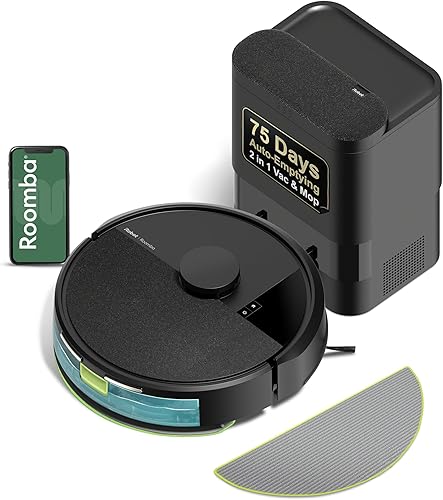
iRobot Roomba 105 Combo Robot Vacuum & Mop with AutoEmpty Dock

iRobot Roomba 415X Robot Vacuum & Mop

eufy E25 Robot Vacuum with HydroJet Mop
As an Amazon Associate we earn from qualifying purchases. Product prices and availability are accurate as of the date/time indicated.
Frequently Asked Questions
Can a robot vacuum handle a heavy-shedding husky?
It can keep up with daily runs, but double-coated dogs blow coat in heavy bursts. Pick a robot with rubber brushrolls and a self-emptying base, and expect to clear the brush more often during shedding season.
Can I run a robot vacuum while my dog or cat is home?
Yes. Start with short supervised runs so the pet gets used to it, and clear cords and small items first. If a pet is anxious or chases the robot, run it when the pet is in another room.
Is a self-emptying base worth it for one short-haired cat?
Not usually. One short-haired cat fills a standard bin slowly, so emptying it by hand is fine. A dock pays off with several pets, long coats or seasonal shedding.
{“@context”: “https://schema.org”, “@type”: “FAQPage”, “mainEntity”: [{“@type”: “Question”, “name”: “Can a robot vacuum handle a heavy-shedding husky?”, “acceptedAnswer”: {“@type”: “Answer”, “text”: “It can keep up with daily runs, but double-coated dogs blow coat in heavy bursts. Pick a robot with rubber brushrolls and a self-emptying base, and expect to clear the brush more often during shedding season.”}}, {“@type”: “Question”, “name”: “Can I run a robot vacuum while my dog or cat is home?”, “acceptedAnswer”: {“@type”: “Answer”, “text”: “Yes. Start with short supervised runs so the pet gets used to it, and clear cords and small items first. If a pet is anxious or chases the robot, run it when the pet is in another room.”}}, {“@type”: “Question”, “name”: “Is a self-emptying base worth it for one short-haired cat?”, “acceptedAnswer”: {“@type”: “Answer”, “text”: “Not usually. One short-haired cat fills a standard bin slowly, so emptying it by hand is fine. A dock pays off with several pets, long coats or seasonal shedding.”}}]}