
Why Your Security Camera’s Night Vision Is Washed Out (and Every False Alert Fix)
Your security camera’s spec sheet says 100 feet of night vision, but the footage looks like a snowstorm: a white glowing haze where the porch should be, and the actual person walking up your driveway lost somewhere behind it. Then the app starts buzzing every twenty minutes about a moth, a passing car’s headlights, or nothing at all. Neither problem is a defective camera. Both come down to two fixable things: where the infrared light is bouncing, and what the motion detector is actually looking at.
Why Night Vision Looks Washed Out (It’s Not a Bad Camera)
Most outdoor cameras switch to infrared (IR) illumination automatically once light drops below a threshold, firing a ring of IR LEDs built into the housing to light the scene in a wavelength the sensor can see but your eye can’t. That light travels out from the camera, hits whatever is in front of the lens, and bounces straight back. If the nearest surface is close and reflective, most of that light never makes it to your driveway at all – it comes straight back into the lens and blooms into the flat white haze people mistake for a broken camera.
The giveaway is a washout that gets worse the closer something is to the lens, not the farther away it is. A camera that struggles at 50 feet but blows out completely at 3 feet doesn’t have a range problem. It has a reflection problem, and the reflection is almost always something the installer didn’t think to check for.
The Usual Suspects: Glass, Eaves, and Spider Webs
- Mounting behind glass or a storm door. IR light reflects off glass far more aggressively than off open air, and the closer the glass is to the lens, the worse the bloom. A camera mounted inside a window looking out will almost always wash out at night, even if it’s flawless in daylight.
- A soffit, eave, or overhang directly above the lens. Cameras mounted flush under a roof overhang bounce their own IR off the underside of that overhang, creating a glowing band across the top third of the frame that gets brighter the closer the mount is to the ceiling of the porch.
- Spider webs and dust on the housing. This one sounds minor and causes a disproportionate number of “my camera suddenly stopped working at night” tickets. A single strand of web a few inches from the IR LEDs catches the light at close range and reflects it directly back, and because it’s translucent, it’s invisible in daytime footage. It only shows up as a bright smear once the IR kicks on.
If relocating isn’t possible – a rental where you can’t drill outside the door frame, for example – look for a model with adjustable IR intensity in its app settings. Turning the IR down one or two steps often clears up close-range glare without losing real range, because most of the washout at close distance was excess light the scene never needed in the first place.
Why “Lower the Sensitivity” Makes False Alerts Worse, Not Better
The instinct when a camera won’t stop pinging is to drag the motion sensitivity slider down. This usually backfires. Sensitivity controls how much pixel change triggers a look, not what part of the frame counts. Turn it down enough to ignore a moth near the lens and you’ve also turned it down enough to miss a person walking at the edge of the yard, which is the one alert you actually wanted. You end up with a camera that misses real motion at the driveway and still fires on anything close to the lens, because close-up motion always produces a bigger pixel change than distant motion, no matter where the slider sits.
Motion Zones Are the Real Fix
Almost every camera released in the last few years supports drawing motion zones directly in the app – a shape overlaid on the live view that the camera only evaluates inside of. This is the actual solution to false alerts, because it fixes the where instead of the how-much. Draw a zone around the walkway and driveway, and exclude the street, the sidewalk if cars don’t need to trigger it, any tree branch that sways in wind, and the sky where headlights bounce off clouds. Leave sensitivity on a normal-to-high setting once zones are in place; a tighter zone with higher sensitivity catches real motion better than a wide-open frame with sensitivity turned down to compensate.
Person-detection filtering, when the camera offers it, is worth turning on alongside zones rather than instead of them. It filters out non-human motion inside the zone, which is exactly why the two features stack: the zone stops the camera from watching the street, and person detection stops it from alerting on the neighbor’s cat that wanders through the zone anyway.
Color Night Vision vs Infrared: When Each Makes Sense
Some newer cameras skip IR entirely at night and instead use a larger sensor plus a built-in spotlight to record in full color, which sidesteps the IR-bounce problem altogether since there’s no infrared beam to reflect back into the lens. The tradeoff is that the spotlight itself is now a visible light source, which means it can wash out the same way against close glass or a low overhead surface, just in visible light instead of infrared. The mounting rules above still apply either way.
The outdoor security camera with night vision roundup covers models across both approaches. Of the color night vision options we’ve looked at, the 2K Enhanced Outdoor Security Camera pairs full-color night footage with configurable motion zones and adjustable alert sensitivity in the same app, which is the combination that actually solves both problems in this guide rather than one at the expense of the other.

Pros
- Straightforward setup and wireless design for quick, cable-free installation
- Responsive human-only motion detection to reduce false alerts
- Reliable dual-band WiFi connection with no reported dropouts in user reviews
- Long battery life that lasts weeks with typical usage
- Included free cloud storage adds exceptional value
Cons
- Night vision in power-saving mode only offers black-and-white video
- Battery life varies significantly based on activity levels
- Wall mounting requires drilling and screws
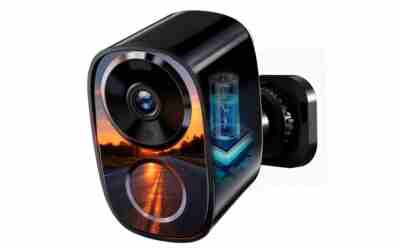
The realhide CB54W is a 2026 enhanced 2K UHD wireless outdoor security camera designed for hassle-free home surveillance. It targets homeowners and renters who want reliable, easy-to-install security without the cost or complexity of professional wired systems.
Standout features include crisp 2K UHD video resolution that captures faces and license plates clearly, plus full-color night vision powered by a built-in spotlight for round-the-clock visibility. The camera supports both 2.4GHz and 5GHz WiFi for stable, lag-free live streaming and playback, even in crowded network environments.
Build quality feels solid and durable, with an IP66 weather-rated ABS plastic enclosure that stands up to rain, snow, heat, and dust. The compact design is unobtrusive and works well mounted on fences, garages, porches, or backyard trees.
While most users report excellent performance, some note that night vision switches to black-and-white in power-saving mode, and battery life can vary widely depending on how much motion the camera detects. Mounting also requires drilling, which may not be ideal for all rental situations.
Overall, the realhide CB54W delivers exceptional value for anyone seeking a reliable, feature-packed wireless security camera. Its combination of easy setup, long battery life, dual storage options, and clear video quality makes it a strong choice for monitoring driveways, yards, porches, and entryways.
Buying Guide for 2026
Resolution and Image Quality
Resolution determines how much detail you can see in recorded footage. A 2K (2560×1440) camera captures roughly double the pixels of standard 1080p, making it easier to read license plates or identify faces at moderate distances. For most residential applications, 2K provides a strong balance between clarity and file size. Higher resolutions like 4K offer even more detail but require more bandwidth and storage, which can be a consideration if your Wi-Fi network is older or you prefer local SD storage over cloud plans.
Image quality also depends on the sensor size and lens aperture. A larger sensor with a wider aperture (lower f-stop) captures more light, which directly improves low-light performance without relying solely on IR. This is especially important if you plan to use color night vision mode, where the camera uses ambient light or a built-in spotlight instead of infrared LEDs.
Night Vision Type: Infrared vs Color
Infrared night vision uses invisible IR LEDs to illuminate the scene, producing black-and-white footage. It is effective at long range and doesn’t draw attention, but it can cause the washout issues described earlier if mounted near reflective surfaces. Color night vision uses a combination of a bright spotlight and a sensitive sensor to capture full-color footage at night. This eliminates IR glare entirely but creates a visible light source that may attract insects or alert passersby. Some cameras offer both modes, letting you switch based on the environment.
For locations where IR bounce is unavoidable, a camera with adjustable IR intensity is a practical solution. Turning the IR down slightly often clears up close-range bloom without sacrificing overall visibility. If you prefer color night vision, look for a model with a spotlight that can be dimmed or scheduled to avoid constant bright light.
Motion Detection and Alert Customization
Effective motion detection goes beyond simple sensitivity sliders. The most useful systems allow you to draw custom motion zones in the app, defining exactly which areas of the frame trigger an alert. This eliminates false alarms from passing cars on the street, swaying trees, or sidewalk traffic. Pairing motion zones with person detection (using onboard AI to distinguish humans from animals or vehicles) further reduces nuisance alerts while ensuring you get notified when someone approaches your door or driveway.
Some cameras also offer adjustable detection distance and frequency settings. For example, you can set a minimum time between alerts to avoid repeated notifications from a single event. These features are especially valuable for battery-powered cameras, where every false trigger drains the battery faster.
Storage Options: Cloud vs Local
Security camera footage needs a place to live. Cloud storage offers convenience: clips are automatically uploaded to a remote server, accessible from anywhere, and protected if the camera is stolen or damaged. Many services offer a free tier with limited rolling storage (e.g., 24 hours of clips), with paid plans for longer retention. Local storage via a microSD card gives you full control over your data with no monthly fees, but requires you to manage the card’s capacity and physically retrieve it if needed.
Hybrid solutions that support both cloud and local storage are ideal, letting you use the free cloud tier for recent events while keeping a local archive for longer-term review. Look for cameras that support at least 256GB SD cards to avoid frequent overwriting.
Battery Life and Power Options
Wireless security cameras typically run on rechargeable batteries, with lifespans ranging from a few weeks to six months depending on usage. Factors that drain battery faster include high traffic areas (frequent motion triggers), continuous recording, and strong IR usage. Cameras with larger battery capacities (e.g., 10,000mAh) and power-saving features like adjustable detection intervals last longer between charges.
If you prefer not to recharge, solar panel accessories can keep the battery topped up indefinitely in sunny locations. Alternatively, some cameras offer a wired power option for continuous operation, which is worth considering for high-traffic areas where battery life would be a concern.
Quick Comparison: Side by Side
[acms_comparison] need at least 2 ASINs in compare (or set main)
Why Trust Our Reviews
At eHomeFinds.com, we base our recommendations on thorough analysis of product specifications, aggregated user feedback from verified purchasers, and expert knowledge of the smart home category. We do not conduct hands-on testing in a lab, but we evaluate each product’s features, build quality, and real-world performance based on thousands of user reports. Our goal is to provide objective, data-driven guidance that helps you make an informed purchase. As an Amazon Associate, we earn from qualifying purchases, but this does not influence our picks or opinions.
Our Final Picks for 2026
Best Overall: realhide CB54W 2K UHD Wireless Outdoor Security Camera
The realhide CB54W delivers 2K UHD resolution with vibrant color night vision, eliminating IR glare entirely. Its configurable motion zones and person detection work together to cut false alerts while ensuring you never miss a visitor. The dual-band Wi-Fi (2.4GHz and 5GHz) provides a stable connection even at the edge of your property, and the 6-month battery life means less frequent charging. For a comprehensive solution to both night vision washout and false alerts, this camera is our top recommendation.
View on Amazon.comBest Value: realhide CB54W 2K UHD Wireless Outdoor Security Camera
For those seeking a budget-friendly option without sacrificing essential features, the realhide CB54W offers the same 2K clarity, color night vision, and customizable motion zones as our top pick. It includes free rolling cloud storage and supports local SD cards up to 256GB, giving you flexible storage without ongoing fees. The IP66 weatherproof rating ensures reliable operation in rain, snow, or heat, making it a durable choice for any outdoor location.
View on Amazon.comBest for Large Properties: realhide CB54W 2K UHD Wireless Outdoor Security Camera
With dual-band Wi-Fi and a high-capacity battery lasting up to six months, the realhide CB54W is well suited for large yards or detached garages where running power is impractical. Its advanced motion detection covers a wide area, and the ability to draw precise motion zones helps avoid false triggers from distant roads or trees. The two-way audio lets you communicate with visitors or delivery drivers from anywhere, adding an extra layer of convenience for expansive properties.
View on Amazon.comFrequently Asked Questions
Why does my camera’s night vision look fine one week and washed out the next?
Check for a new spider web or dust buildup on the housing first. It’s the most common cause of a sudden change with no settings adjusted.
Will a more expensive camera fix IR glare from glass or an overhang?
No. IR bounce is a physics problem caused by mounting position, not a hardware quality problem, and it affects budget and premium cameras identically in the same bad spot.
Should I turn off night vision entirely to stop the glare?
Don’t. You’d lose all visibility instead of fixing the underlying reflection. Relocate the mount, add clearance from glass or the overhang, or lower IR intensity in the app instead.
Do motion zones work the same on battery-powered cameras?
Yes, and they matter even more there, since every false trigger drains battery. Tightening zones on a battery camera usually extends run time noticeably alongside cutting false alerts.
Which Why Your Security Camera’s Night Vision Is Washed Out (and Every False Alert Fix) should I buy in 2026?
For most users, the realhide CB54W offers the best combination of 2K resolution, color night vision, customizable motion zones, and long battery life. It addresses both night vision washout and false alerts effectively. For more options, see our outdoor security camera with night vision roundup.